By: Shelby McCullough| Published: July 28, 2026
A tree appraisal is a formal, written estimate of a tree’s monetary value prepared by a qualified arborist using the CTLA Guide for Plant Appraisal — the recognized industry standard in the United States. It is not a health check, a risk inspection, or a casual opinion. If you need a dollar figure that an insurer, attorney, or tax authority will accept, contact an ISA Certified Arborist or an ASCA Registered Consulting Arborist who explicitly uses CTLA methodology.
A formal appraisal immediately enables you to:
- File an insurance claim with a defensible pre- or post-casualty value
- Support a casualty-loss tax deduction with documented methodology
- Present evidence in a legal or tort dispute that a court will take seriously
Table of Contents
- What is tree appraisal, and how does it differ from a health check?
- Why do people order tree appraisals?
- What standards and credentials should you look for in an appraiser?
- How do appraisers calculate a tree’s value?
- What happens during the appraisal process?
- What does a written appraisal report contain?
- How much does a tree appraisal cost, and how long does it take?
- Common insurer pushback and how to make your appraisal hold up
- How Mcculloughtreeservice approaches appraisals and supports your claim
- Key Takeaways
- Why CTLA appraisals are worth the effort
- Mcculloughtreeservice can handle your appraisal from inspection to signed report
- Authoritative sources and further reading
What is tree appraisal, and how does it differ from a health check?
A tree appraisal produces a monetary valuation backed by measurements, ratings, a stated methodology, and a signed written report. That last part matters more than most homeowners realize. The appraiser is not just giving you a number — they are preparing to defend it in front of an insurance adjuster, an attorney, or a judge.
A health assessment tells you whether a tree is diseased, structurally compromised, or likely to fail. A risk assessment tells you whether that tree poses a hazard to people or property. Neither assigns a dollar value, and neither will satisfy an insurer or a court when money is on the table.
The distinction shows up clearly in practice. Say a mature live oak falls on your fence during a hurricane. Your regular arborist can document the damage and recommend removal. But to recover the tree’s value from your insurer, you need a separate appraisal that calculates what that oak was worth before it fell — using CTLA methods, with photos, measurements, and a signed report. The CTLA Guide for Plant Appraisal, authored by the Council of Tree and Landscape Appraisers and published by the International Society of Arboriculture, is what gives that report its legal and professional standing.
Why do people order tree appraisals?
The short answer: money is at stake, and a casual estimate won’t hold up. Purdue Extension identifies the primary purposes as unexpected losses, tort claims, insurance claims, tax deductions, real estate assessment, and proactive planning.
- Insurance claims (casualty loss): Establishes the tree’s pre-casualty value so the insurer pays based on what you actually lost, not a default low-ball figure.
- Legal and tort disputes: Provides expert-witness-ready evidence when a neighbor’s negligence, a contractor’s error, or a municipality’s action damages your trees.
- Casualty-loss tax deductions: Supports an IRS deduction by documenting the fair market or replacement value with a methodology the IRS can scrutinize.
- Real estate and property assessment: Quantifies how mature trees contribute to assessed value, useful in sales, partitions, or estate settlements.
- Construction and development planning: Identifies which trees carry significant value before a developer or contractor begins work, reducing liability exposure. A qualified arborist in development contexts can cut tree damage risk substantially when appraisals are done before ground breaks.
- Proactive documentation: Getting an appraisal before any incident — while the tree is healthy and well-placed — produces the cleanest, most defensible record.
That last point deserves emphasis. Most appraisals happen after damage, which forces the appraiser to reconstruct pre-casualty condition from photos, witness statements, and comparative sampling. Pre-loss documentation sidesteps all of that. Purdue Extension puts it plainly: the best time to conduct an appraisal is prior to any incident. Yearly photos and maintenance records make a post-loss appraisal far more accurate and far harder for an adjuster to challenge.
What standards and credentials should you look for in an appraiser?
The governing document is the Guide for Plant Appraisal, 10th edition, authored by the Council of Tree and Landscape Appraisers (CTLA) and published by the International Society of Arboriculture (ISA). The Tree Care Industry Association (TCIA) also endorses the guide. When an appraiser cites this document and states the edition used, that is the first signal their report will be taken seriously.
On credentials, look for:
- ISA Certified Arborist with documented appraisal training
- ASCA Registered Consulting Arborist (the American Society of Consulting Arborists credential specifically covers plant valuation)
- Any consultant who explicitly states CTLA methodology in their scope of engagement
Beyond credentials, a defensible report requires professional liability insurance. Appraisers can be called as expert witnesses, and without liability coverage, they — and by extension your claim — are exposed. Most homeowners skip this check entirely and pay for it later.
Questions to ask before you hire:
- Which edition of the CTLA Guide do you use?
- Are you an ISA Certified Arborist or ASCA Registered Consulting Arborist?
- Do you carry professional liability insurance?
- Will the report include a signed scope and assumptions section?
- Can you serve as an expert witness if the claim goes to dispute?
A simple health report from a general arborist will not satisfy insurers or courts. The TreesAreGood consumer brochure warns directly that using an inappropriate valuation method can result in an appraised value that insurers reject outright.
How do appraisers calculate a tree’s value?
The CTLA Guide describes three approaches. Appraisers choose based on tree size, purpose, and available market data.

| Approach | Best Used When | Key Input |
|---|---|---|
| Cost / Trunk Formula | Large landscape trees with no market comparables | Trunk cross-sectional area × regional base value × ratings |
| Income Approach | Revenue-producing trees (orchards, timber) | Capitalized income stream from the tree |
| Sales Comparison | Rare; when comparable sales exist | Adjusted sale prices of similar trees or properties |
For most residential and commercial landscape trees, the Trunk Formula Technique is the standard. The Income Approach applies to orchards or timber stands. Sales Comparison is rarely used for individual landscape trees because comparable sales almost never exist.
How the Trunk Formula Technique works
The formula, as described in the CTLA Guide, is:
Appraised Value = Trunk Cross-Sectional Area (CSA) × Base Value per sq. in. × Species Rating × Condition Rating × Location Rating
Here is a step-by-step worked example for a mature red maple in a Central Florida residential yard:
- Measure DBH. Diameter at breast height (4.5 feet above ground) = 18 inches.
- Calculate CSA. CSA = diameter² × 0.7854 = 18² × 0.7854 = 254.5 sq. in.
- Apply regional base value. Base value per sq. in. is set by the Regional Plant Appraisal Committee (RPAC) or derived from local nursery costs. For this example, use $27 per sq. in. (an illustrative regional figure — your appraiser will source the current local rate).
- Multiply by species rating. Red maple: 80% (0.80) — reflects landscape merit and regional availability.
- Multiply by condition rating. Tree is healthy with minor surface wounds: 70% (0.70).
- Multiply by location rating. Front yard, prominent shade position, good curb appeal: 80% (0.80).
- Calculate raw value. 254.5 × $27 × 0.80 × 0.70 × 0.80 = $3,068
- Round per CTLA convention. Appraisers round to the nearest $1,000 to signal this is an expert opinion, not a fixed market price. Final appraised value: $3,000.
Two inputs drive most of the variance: CSA and the regional base value. Small measurement errors in trunk diameter compound quickly because CSA is a squared function. That is why accurate CSA measurement and a correctly sourced regional base value are the inputs appraisers disclose most carefully in their reports.
Location rating often surprises homeowners. A tree’s contribution to shade, privacy, and curb appeal can outweigh its species rating in the final number. A well-maintained tree in a visible front yard will consistently rate higher than the same species tucked behind a utility easement.
What happens during the appraisal process?
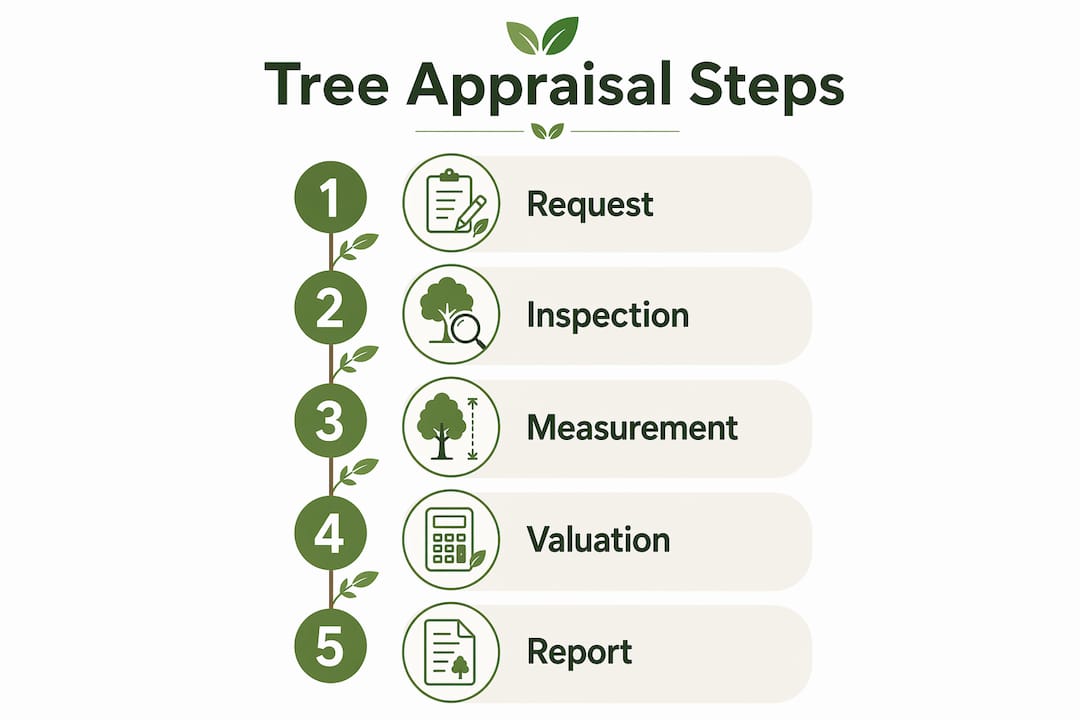
The engagement starts before anyone sets foot on your property. You and the appraiser agree on scope: is this a pre-loss documentation appraisal, a post-casualty valuation, or preparation for a legal dispute? That scope definition shapes everything that follows, including what records the appraiser will need from you.
On-site inspection typically covers:
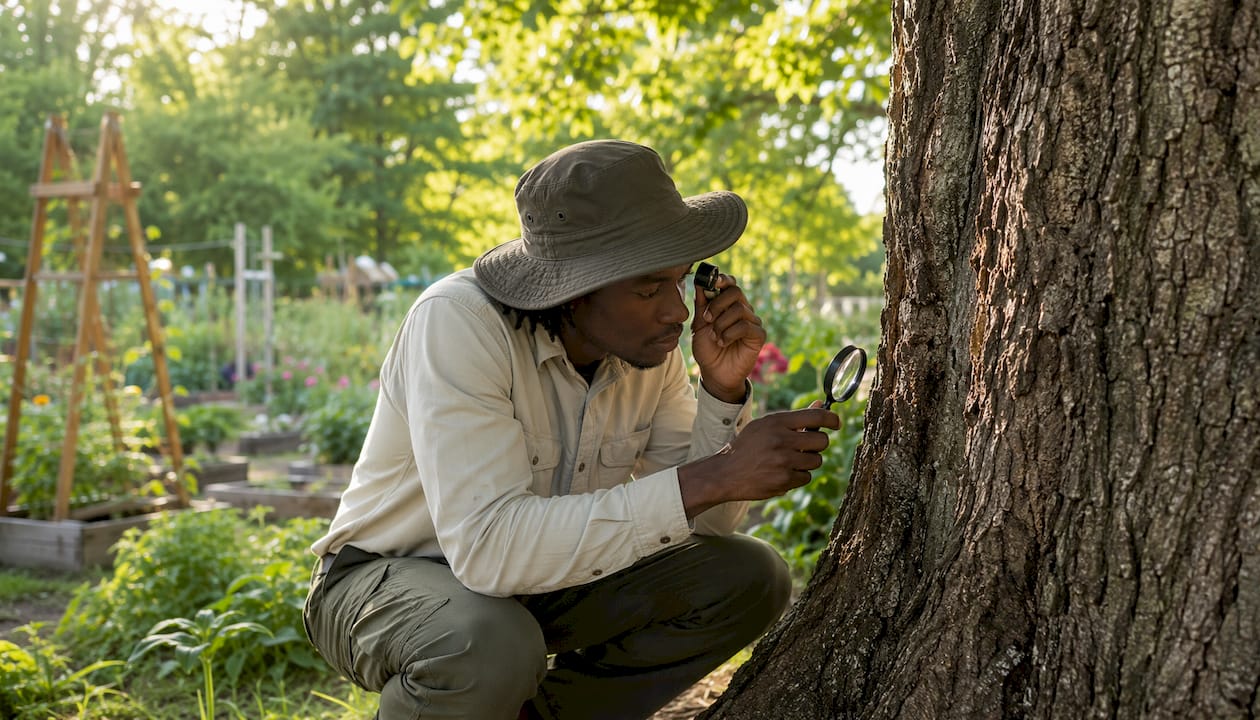
- Species identification and health observation
- DBH and CSA measurements (taken at the correct height per CTLA protocol)
- Condition scoring across three depreciation categories: condition, functional limitations, and external limitations
- Location rating assessment (placement, aesthetic contribution, functional role)
- Photographic documentation from multiple angles
- Review of prior maintenance records, health assessments, or witness statements when available
External limitations — things like utility line conflicts, easements, or pest pressure — can reduce a tree’s appraised value even when the tree itself is healthy. An appraiser who skips this category is cutting corners.
For post-casualty work, the appraiser may need to reconstruct pre-casualty condition using old photos, neighbor accounts, or comparative sampling of similar trees nearby. This is where your own documentation pays off. If you have photos of storm damage taken immediately after an event, hand them over.
Timeline: Scheduling an inspection is usually possible within the same week for non-emergency appraisals. The on-site visit for a single tree runs one to two hours. Report drafting, review, and final signature typically take one to two weeks. If the appraisal requires diagnostic testing — a resistograph for internal decay, for example — add time for lab results.
What does a written appraisal report contain?
A properly prepared report is not just a number on a page. Each section serves a specific purpose when the report lands in front of an adjuster or an attorney.
- Cover and engagement letter: Identifies the appraiser, client, date, and purpose of the appraisal.
- Scope and assumptions: States what the appraiser was asked to value, what conditions were assumed (e.g., pre-casualty condition), and any limitations on the analysis.
- Site description and tree identification: Species, location on property, surrounding context.
- Measurements and photographs: DBH, CSA, height, canopy spread — with photos showing measurement points and overall tree condition. This section is what insurers and opposing experts examine first.
- Valuation method and calculations: The CTLA approach used, the formula applied, and each input value with its source.
- Adjustments and ratings: Species, condition, and location ratings with written justification for each percentage assigned.
- Final opinion of value and signature: The rounded appraised value, the appraiser’s professional credentials, and a dated signature.
Appraisers often include a short appendix with source documents — nursery invoices, local contractor quotes — used to set the base value. That appendix lets an insurer verify assumptions without redoing the entire appraisal.
Sample key data fields an appraiser will document:
| Field | Example Entry |
|---|---|
| Tree ID | Red maple, front yard, north of driveway |
| DBH | 18 in. |
| CSA | 254.5 sq. in. |
| Base value per sq. in. | $27 (RPAC regional rate) |
| Species rating | 80% |
| Condition rating | 70% |
| Location rating | 80% |
| Raw calculated value | $3,068 |
| Final appraised value | $3,000 (rounded per CTLA) |
Keep the original signed report and all supporting photographs. If the claim goes to dispute or deposition, those originals are your evidence. A photocopy without the original signature carries less weight in court.
How much does a tree appraisal cost, and how long does it take?
Cost depends on several factors: the number of trees being appraised, the tree’s size and accessibility, whether pre-casualty research is required, and the appraiser’s credentials. A Registered Consulting Arborist charges more than a general arborist — and for claims or litigation, that credential is worth the premium.
Typical cost range: Single-tree appraisals in the United States generally run $300–$600 for straightforward cases. Multi-tree or complex post-casualty appraisals with research, diagnostic testing, or expert-witness preparation can reach $1,000–$2,500 or more. Regional variation is significant; urban markets and high-cost-of-living areas trend toward the upper end.
Travel to remote or difficult-access sites adds to the fee. If the appraiser needs to source local nursery prices, pull historical records, or conduct resistograph testing, budget for additional time. Insurance adjusters frequently undervalue trees by default, so the cost of a formal CTLA-based appraisal often pays for itself many times over in claim recovery.
Turnaround for a single-tree appraisal is typically one to two weeks from inspection to final signed report. More complex engagements — multiple trees, post-casualty reconstruction, or cases requiring diagnostic lab results — run two to four weeks. If you are facing an insurance filing deadline, communicate that upfront so the appraiser can prioritize.
Common insurer pushback and how to make your appraisal hold up
Insurance adjusters often start from the assumption that trees have low replacement value. Submitting a CTLA-based appraisal frequently shifts a claim from a minor reimbursement to a significant covered loss. But only if the report is airtight.
Common reasons appraisals get reduced or rejected:
- Appraiser lacks recognized credentials (no ISA certification, no ASCA membership)
- Method not stated or wrong method used for the tree type
- No signed scope and assumptions section
- Missing or low-quality photographic evidence
- No professional liability insurance disclosed
Steps to strengthen your claim before and after damage:
- Take annual photos of high-value trees, including placement, canopy spread, and any maintenance work
- Keep maintenance records: pruning invoices, fertilization logs, health assessments
- Request that the appraiser explicitly state “CTLA Guide for Plant Appraisal, 10th edition” in the methodology section
- Attach nursery invoice receipts or local contractor quotes if available — these support the base value used
- Ask for a signed scope and assumptions section before the inspection begins
Red flags when hiring an appraiser:
- Provides a value verbally with no written report
- Cannot name the edition of the CTLA Guide they use
- Declines to disclose professional liability insurance
- Offers a flat per-tree fee with no site visit
Pro Tip: If an adjuster disputes your appraised value, request a written explanation of their methodology and ask for an independent review. Supply your appraiser’s signed report, the measurement photos, and the nursery source documents from the appendix. Adjusters who see a complete CTLA-method package with sourced base values rarely push back further — the documentation burden shifts to them.
Proactive documentation is the single most underused tool homeowners have. Purdue Extension notes that previous site records, assessments, and even witness accounts help determine pre-damage condition when a post-casualty appraisal is needed. A folder of annual photos costs nothing and can be worth thousands.
How Mcculloughtreeservice approaches appraisals and supports your claim
Mcculloughtreeservice operates with ISA Certified Arborists in Orlando and Central Florida, and the team applies CTLA methodology to produce signed, dated appraisal reports that meet insurer and court standards. Every report includes photographic documentation, measurement tables, species and condition ratings with written justification, and a clear statement of the CTLA edition and approach used.
The typical workflow starts with a pre-inspection intake call to define scope — whether the engagement is pre-loss documentation, post-casualty valuation, or legal preparation. On-site, the arborist takes DBH and CSA measurements, photographs the tree from multiple angles, scores condition and location ratings, and checks local nursery rates to anchor the base value to the Central Florida market. That local market knowledge matters: appraisers who use local nursery prices and labor rates produce more defensible reports than those relying on national averages.
Beyond the appraisal report itself, Mcculloughtreeservice offers storm cleanup documentation, debris removal quotes, and post-storm assessment services that pair naturally with a formal valuation when filing a claim. The team can also provide expert witness support if a dispute goes further. For HOA boards and property managers, Mcculloughtreeservice handles multi-tree appraisals for shared-property disputes and development planning.
To request an appraisal or a consultation, contact Mcculloughtreeservice directly through the website. Provide the tree species if known, approximate size, the purpose of the appraisal, and any existing photos or maintenance records.
Key Takeaways
A CTLA-method tree appraisal, signed by a credentialed arborist, is the only valuation format consistently accepted by insurers and courts in the United States.
| Point | Details |
|---|---|
| CTLA is the standard | The Guide for Plant Appraisal (CTLA, published by ISA) governs all defensible tree valuations in the US. |
| Appraisal vs. health check | A health or risk assessment does not assign monetary value; only a formal appraisal satisfies insurers and courts. |
| Trunk Formula basics | Appraised value = CSA × base value per sq. in. × species rating × condition rating × location rating, rounded to the nearest $1,000. |
| When to order | Pre-loss documentation is best; post-casualty appraisals are possible but require more reconstruction work. |
| Mcculloughtreeservice | ISA Certified Arborists in Central Florida produce CTLA-method reports with photos, measurements, and expert witness availability. |
Why CTLA appraisals are worth the effort
Here is what most articles on this topic miss: the appraisal is not just paperwork. It is a power shift. Without a formal CTLA report, an insurance adjuster can assign whatever value they choose to your tree — and in practice, that number is almost always low. With a signed, credentialed, methodology-stated report in hand, the adjuster has to engage with your evidence rather than substitute their own.
The homeowners who get the best outcomes are not the ones with the biggest trees. They are the ones who documented their trees before anything went wrong and hired an appraiser who could defend the methodology under questioning. A post-casualty appraisal on a tree with no prior records is recoverable, but it is harder. The appraiser has to reconstruct condition from whatever is available — old Google Street View images, neighbor accounts, comparative sampling. That reconstruction is legitimate, but it gives the opposing side more room to argue.
The other thing worth saying plainly: the Trunk Formula looks intimidating until you see it worked through once. After that, it is just multiplication with four inputs. The expertise is in sourcing the right regional base value, assigning defensible ratings, and writing a report that holds up. That is what you are paying a credentialed arborist for — not the arithmetic, but the judgment behind each number.
Mcculloughtreeservice can handle your appraisal from inspection to signed report
When a storm takes down a mature tree or a contractor damages a specimen you have spent years growing, the last thing you need is a report that an adjuster dismisses in five minutes. Mccullough Tree Service provides on-site CTLA-method appraisals in Orlando and Central Florida, with ISA Certified Arborists who produce signed, photo-documented reports built to withstand insurer review and, if necessary, court scrutiny.
The process is straightforward: call or contact online, describe the tree and the purpose of the appraisal, and the team schedules an inspection — often within the same week. The final signed report typically arrives within one to two weeks. For storm-related situations, Mcculloughtreeservice pairs the appraisal with storm cleanup services and debris removal documentation, so you have a complete package for your insurer. If the situation involves tree removal as part of the claim, that can be coordinated alongside the appraisal engagement.
Contact Mcculloughtreeservice to request an appraisal, get a fee estimate, or ask about bundled storm documentation packages for Central Florida properties.
Authoritative sources and further reading
These are the primary references used in this article and the most useful resources for homeowners, property managers, and claimants who want to go deeper.
- CTLA Guide for Plant Appraisal, 10th edition — The governing standard for all plant appraisals in the United States. Read this to understand the methodology your appraiser is required to follow.
- Purdue Extension: Tree Appraisal and the Value of Trees — Accessible explanation of appraisal purposes, methods, and the importance of pre-loss documentation. Useful for homeowners preparing for a claim.
- ISA TreesAreGood: Find an Arborist — The ISA’s official directory for locating a Certified Arborist in your area; use it to verify credentials before hiring.
- ASCA: American Society of Consulting Arborists — Directory of Registered Consulting Arborists; the credential most directly tied to appraisal work.
- TreesAreGood: Tree Values Consumer Brochure — Plain-language overview of why method selection matters and what to expect from a qualified appraiser.
- ArborValue: Tree Appraisal Guide — Practitioner-level guide covering cost ranges, rounding conventions, and credential requirements; good pre-hire reading.
- University of Kentucky Urban Forest Initiative — Extension resource on how trees contribute monetary value to properties; useful background for understanding location rating.
- ShunIns: Valuing Trees for Insurance — Insurance-focused guidance on how CTLA-based reports shift adjuster outcomes; read before submitting a claim.
Keep copies of the signed appraisal report and all supporting photographs in a secure location. If a claim goes to dispute or a case proceeds to deposition, those originals are your primary evidence. Digital backups in cloud storage add an extra layer of protection.
This article is general educational information, not legal, tax, or insurance advice. Confirm current standards and your specific situation with a qualified consulting arborist, your insurance carrier, or a licensed professional.
Recommended
- Tree risk assessment checklist: protect your property
- Tree Risk Assessment: What Every Property Owner Should Know
- Tree risk assessment tips for Central Florida owners
- Tree Removal and Property Value in Orlando