By: Shelby McCullough| Published: March 1, 2026
Nearly 40% of tree service providers operate without proper licensing or insurance, leaving Central Florida property owners exposed to liability risks and financial losses. Florida law requires 100% of professional tree care services to hold valid occupational licenses, yet many homeowners unknowingly hire unlicensed contractors. This guide explains Florida’s licensing requirements, how to verify credentials, and why choosing licensed providers protects your property and wallet.
Table of Contents
- Introduction To Tree Care Licensing
- Florida State Licensing Requirements For Tree Care
- Professional Certification And Industry Standards
- Insurance And Liability Protections Linked To Licensing
- Risks And Misconceptions Regarding Unlicensed Tree Care Providers
- Licensing For Storm Response And Emergency Tree Services
- How Property Owners Can Verify Licensing And Credentials
- Summary And Practical Takeaways
- Reliable Licensed Tree Care Services In Central Florida
- Frequently Asked Questions About Tree Care Licensing In Florida
Key Takeaways
| Point | Details |
|---|---|
| Licensing is mandatory | Florida requires all professional tree services to hold occupational licenses for legal operation |
| Insurance protects owners | Licensed providers carry liability and workers’ compensation coverage shielding you from claims |
| Certification complements licensing | ISA credentials demonstrate expertise but don’t replace legal licensing requirements |
| Unlicensed providers risk liability | Hiring unlicensed contractors voids insurance claims and exposes you to fines |
| Verification is essential | Check Florida DBPR databases and request insurance certificates before hiring |
Introduction to Tree Care Licensing
Tree care licensing legally authorizes companies to operate and perform tree work within your state. It’s not just paperwork. Licensing ensures providers meet minimum safety standards, carry required insurance, and comply with regulations protecting property owners from liability.
The industry developed licensing requirements because tree work involves significant risks. Heavy equipment, elevated work, and falling debris create hazards for workers and property. Without proper oversight, unqualified operators cause injuries, property damage, and costly legal disputes.
Licensing coverage varies across the United States. Only about half of states mandate tree care licensing, but Florida requires tree services to hold occupational licenses to legally operate statewide. This makes Florida one of the more protective states for consumers.
Understand the distinction between licensing and certification:
- Licensing provides legal authorization to operate commercially
- Certification demonstrates professional expertise and knowledge
- Licensing is mandatory; certification is voluntary but valuable
- Both serve different purposes in protecting property owners
Licensing acts as your first line of defense. It confirms the company meets baseline legal, safety, and insurance requirements before touching your trees. Florida tree services licensing ensures accountability through state oversight.
Florida State Licensing Requirements for Tree Care
Florida law is clear. 100% of professional tree care services must hold an occupational license as mandated by state regulations. This requirement applies to all commercial tree work, from routine trimming to emergency storm response.
The state occupational license verifies several critical compliance factors. Licensed providers must demonstrate financial responsibility, maintain proper insurance, and follow safety protocols. These requirements protect you from bearing costs when accidents occur.
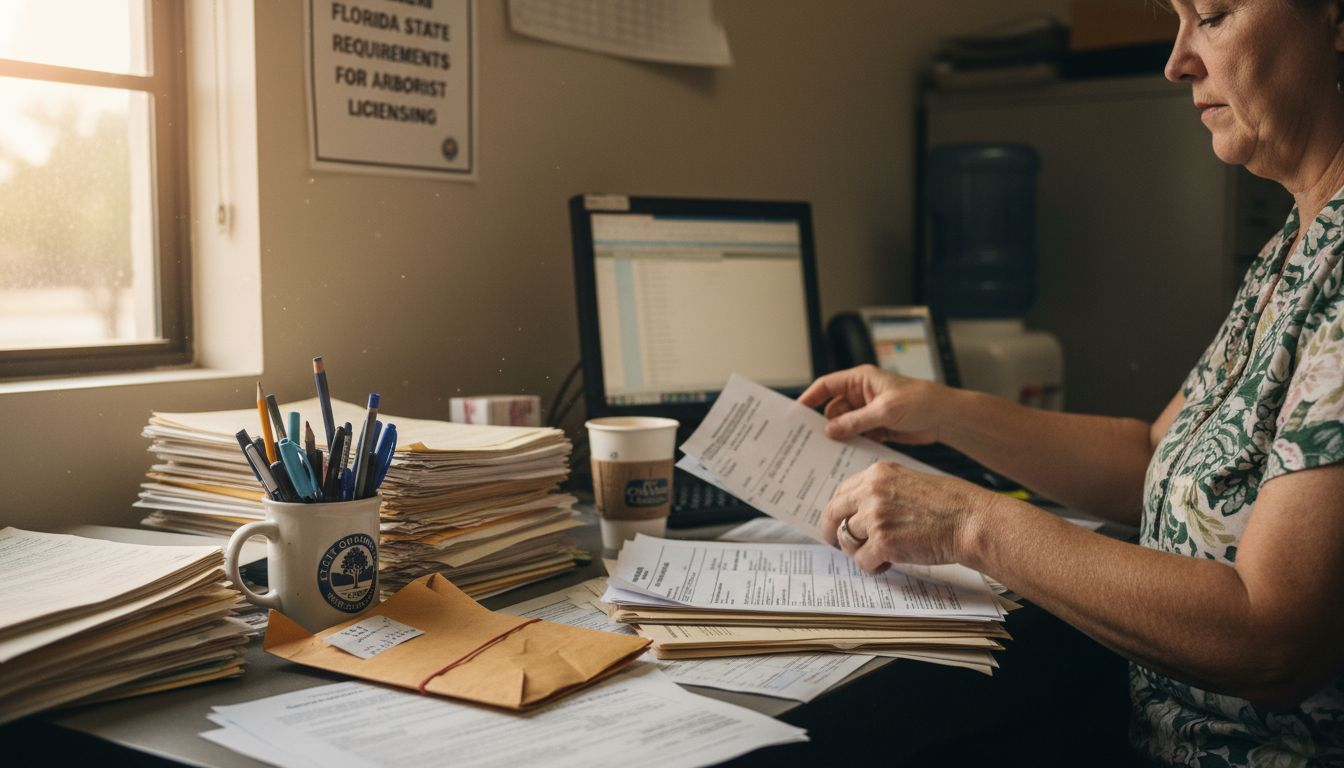
Local jurisdictions may layer additional requirements on top of state licensing. Some counties and cities require separate permits for specific tree work types, especially for protected species or trees in historic districts. Always check both state and local requirements.
Operating without proper licensing carries serious consequences:
- Civil penalties and fines for illegal operation
- Criminal charges in cases of fraud or negligence
- Voided insurance coverage leaving property owners liable
- Inability to pull permits for legal tree work
Licensing ties directly to insurance and safety compliance. Florida requires licensed tree services to maintain minimum insurance levels and follow OSHA safety standards. This creates accountability protecting your property and finances.
Florida occupational licensing details specify coverage requirements and renewal procedures. Licenses expire and require renewal, so verify current status before hiring. The importance of licensed tree services extends beyond legal compliance to quality assurance and consumer protection.
Professional Certification and Industry Standards
While licensing provides legal authorization, professional certifications demonstrate technical expertise. The International Society of Arboriculture (ISA) offers the most recognized credential: Certified Arborist. This voluntary certification requires 3+ years of experience and passing a comprehensive exam covering tree biology, care practices, and safety.
Many property owners confuse certification with licensing. Here’s the key difference:
- Licensing is legally required for commercial operation in Florida
- Certification proves professional knowledge but isn’t legally mandatory
- Licensed companies may not have certified arborists on staff
- Certification signals higher expertise but doesn’t replace licensing
Industry standards embedded in licensing requirements ensure safe practices. Licensing requirements include compliance with ANSI standards covering pruning, removal, and safety protocols. These American National Standards Institute guidelines define proper techniques minimizing risks.
“ANSI A300 standards provide the benchmark for quality tree care, establishing best practices that protect both trees and property while ensuring worker safety.”
Certifications complement licensing by raising service quality above minimum legal requirements. An ISA certification for arborists indicates the provider invests in ongoing education and professional development. This matters for complex diagnoses, treatment plans, and specialized care.
When hiring, look for both valid licensing and relevant certifications. Licensing ensures legal compliance and insurance protection. Certification provides confidence in technical expertise and proper care methods. Together, they offer comprehensive protection for your trees and property.
Insurance and Liability Protections Linked to Licensing
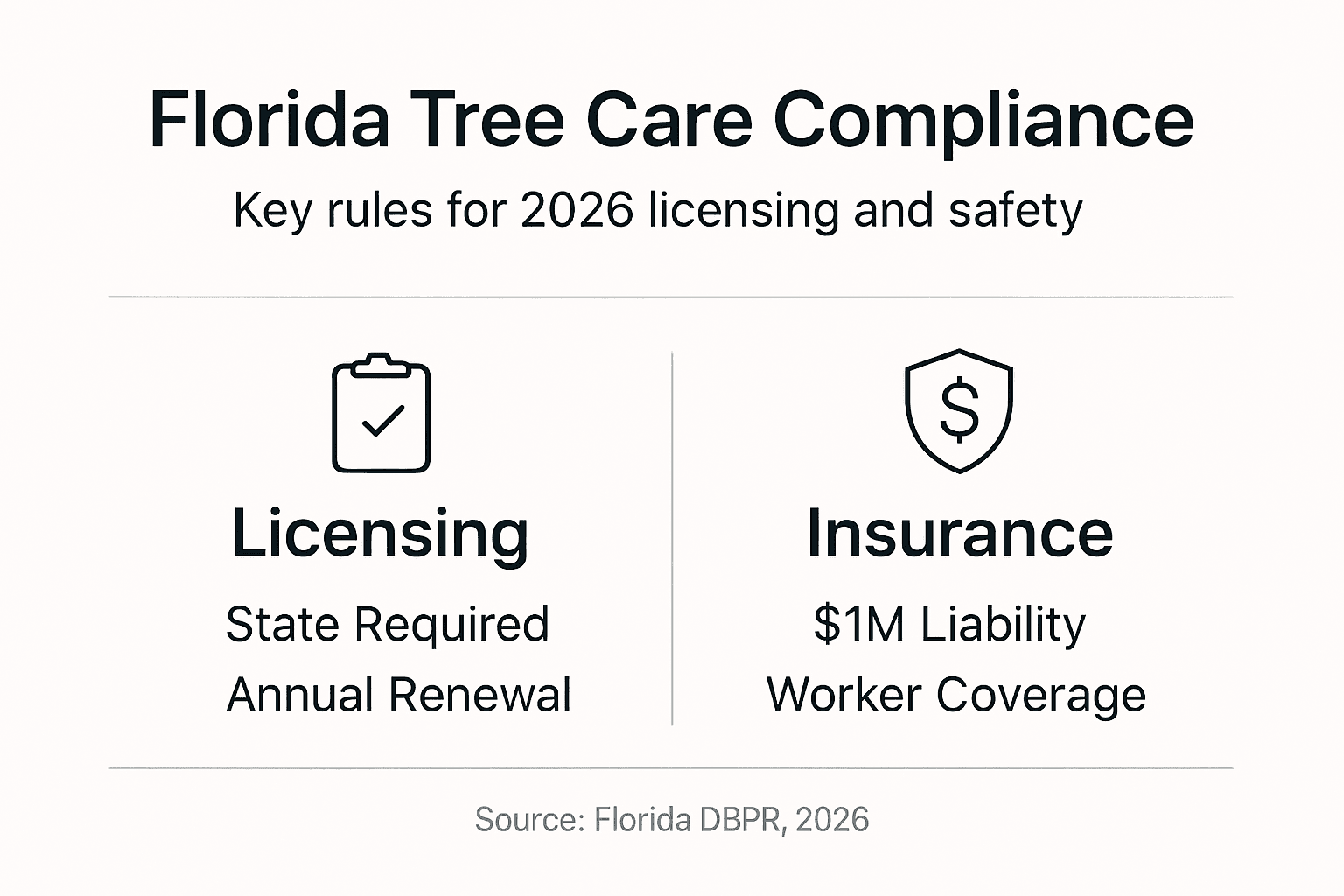
Licensed tree service companies must carry general liability and workers’ compensation insurance, creating a safety net protecting property owners from financial exposure. Without this coverage, you become liable for injuries and damages occurring on your property.
Florida licensing requirements specify minimum insurance coverage levels. General liability typically requires $1 million per occurrence covering property damage and third-party injuries. Workers’ compensation protects you if crew members get injured during tree work on your property.
These insurance requirements serve critical protective functions. If a tree falls on your neighbor’s fence, general liability covers repair costs. If a worker falls from your tree, workers’ compensation handles medical bills and lost wages. Without proper insurance, you pay these costs out of pocket.
Unlicensed or underinsured providers create dangerous financial exposure:
- You inherit liability for worker injuries with no workers’ comp
- Property damage claims fall to your homeowner’s insurance
- Your premiums increase from claims that should’ve been covered
- Legal fees multiply if injured parties sue you directly
Verifying insurance before work starts protects your interests. Request certificates of insurance directly from the provider’s insurance company. Confirm coverage is current and meets minimum requirements. Check that the policy covers the specific work planned on your property.
Pro Tip: Always obtain written proof of insurance before allowing any tree work to begin, and verify coverage directly with the insurance carrier using provided policy numbers.
The importance of insured tree service becomes crystal clear when accidents occur. Licensed providers carry insurance specifically because licensing requires it. This linkage ensures accountability and protection you can’t get from unlicensed contractors.
Risks and Misconceptions Regarding Unlicensed Tree Care Providers
Many property owners hold dangerous misconceptions about licensing and insurance requirements. These myths expose you to significant legal and financial risks when hiring tree care providers.
Myth: Insurance alone suffices without licensing. Reality: Insurance coverage is often void if the tree care company is unlicensed, leaving you unprotected. Insurance companies require valid licensing as a policy condition.
Myth: Certification replaces licensing requirements. Reality: While ISA certification demonstrates expertise, it doesn’t fulfill legal licensing mandates. You need both for complete protection.
Myth: All states require tree care licensing. Reality: Only about half of U.S. states mandate licensing, but Florida does. This makes verification especially important here.
The legal risks of hiring unlicensed providers extend beyond voided insurance:
- You may face fines for allowing unpermitted work on your property
- Insurance claims for storm damage get denied without licensed providers
- You inherit full liability for accidents and property damage
- You have no legal recourse against unlicensed contractors
“When property damage occurs during unlicensed tree work, homeowners often discover too late that their insurance won’t cover claims, leaving them responsible for thousands in repairs and legal fees.”
The prevalence of unlicensed tree care providers in Florida creates heightened risk for unaware property owners. Lower prices from unlicensed contractors seem attractive until problems arise. Then you discover the “savings” cost far more in liability exposure and invalid insurance.
Financial dangers multiply quickly. A single worker injury can result in hundreds of thousands in medical costs and legal liability. Property damage to your home or neighbors’ properties becomes your responsibility. These risks far outweigh any upfront cost savings.
The risks of unlicensed tree service providers aren’t theoretical. Real property owners face lawsuits, denied insurance claims, and financial ruin from hiring unlicensed contractors. Licensing verification takes minutes but prevents years of legal and financial problems.
Licensing for Storm Response and Emergency Tree Services
Storm damage creates urgent tree care needs, but licensing remains critical even in emergencies. Licensed providers must maintain valid credentials to respond legally to storm damage, directly affecting insurance claim validity and your liability protection.
Central Florida’s hurricane season brings fallen trees, damaged limbs, and urgent removal needs. Property owners desperate for quick help sometimes hire the first available contractor without verifying credentials. This decision often leads to denied insurance claims and voided coverage.
Licensing authorizes tree care companies to operate during declared emergencies. State and local emergency management systems track licensed providers for rapid deployment. Unlicensed contractors operating during emergencies face enhanced penalties and immediate cease operations orders.
Insurance companies scrutinize storm damage claims carefully. Most policies require licensed contractor involvement for covered repairs:
- Claims documentation must include licensed provider information
- Insurance adjusters verify licensing before approving payments
- Unlicensed work voids coverage even for legitimate storm damage
- Your deductible doesn’t apply if claims get denied for licensing issues
Central Florida faces unique storm response challenges. Hurricane season brings widespread damage requiring coordinated licensed response. Local municipalities maintain lists of pre-approved licensed contractors for emergency callouts. These vetted providers ensure safe, compliant work protecting your insurance coverage.
Storm urgency doesn’t excuse licensing shortcuts. Licensed emergency tree services balance rapid response with proper credentials and insurance. Taking time to verify licensing even during emergencies protects your claim validity and financial interests.
How Property Owners Can Verify Licensing and Credentials
Verifying licensing and credentials before hiring protects you from liability and ensures quality service. Checking state licensing boards and requesting insurance proof reduces liability while confirming legal compliance.
Florida makes license verification straightforward through official databases. The Department of Business and Professional Regulation maintains searchable records of all licensed tree care providers. Local building departments track additional permits and local licensing requirements.
Follow these verification steps to confirm legitimate credentials:
- Request the company’s Florida occupational license number upfront
- Search the Florida DBPR online database using the license number
- Verify the license is current, not expired or suspended
- Request certificates of insurance directly from their insurance carrier
- Call the insurance company to confirm active coverage and limits
- Check for ISA certification if the company claims arborist credentials
- Review online ratings and complaint records with consumer protection agencies
Insurance certificates require careful review. The certificate should name you as additional insured for the work period. Verify coverage amounts meet or exceed minimum requirements. Confirm the policy covers the specific tree work planned.
Recognizing legitimate licenses prevents fraud. Florida occupational licenses include unique identification numbers, issue and expiration dates, and official state seals. Counterfeit documents often lack these security features or show obvious alterations.
| Verification Action | Information Source | What to Check |
|---|---|---|
| License Status | Florida DBPR Database | Current, not expired/suspended |
| Insurance Coverage | Insurance Carrier Direct | Active policy, adequate limits |
| ISA Certification | ISA Verification Tool | Valid credential, not expired |
| Complaint History | Consumer Protection Bureau | Unresolved complaints, patterns |
Pro Tip: Always document your verification efforts by saving copies of licenses, insurance certificates, and database searches for your records in case disputes arise later.
The verify Florida tree service licenses process takes minimal time but provides maximum protection. Don’t accept verbal assurances or photocopies. Verify directly with issuing authorities to confirm legitimacy and current status.
Summary and Practical Takeaways
Florida’s mandatory licensing requirements exist to protect property owners from liability, ensure safety compliance, and maintain service quality standards. Understanding these requirements empowers you to make informed hiring decisions minimizing risks.
Licensing serves as the legal gateway authorizing tree care operations. It verifies insurance coverage, safety compliance, and financial responsibility. Without valid licensing, providers operate illegally and expose you to significant liability.
Certification complements licensing by demonstrating professional expertise beyond minimum legal requirements. ISA Certified Arborists bring specialized knowledge for complex tree care needs. Both licensing and certification together offer comprehensive protection.
Insurance linked to licensing creates your primary financial protection. General liability and workers’ compensation coverage shield you from accident costs and property damage claims. Unlicensed providers lack this critical safety net.
Key actions to protect yourself:
- Always verify Florida occupational license status before hiring
- Request and confirm insurance certificates directly with carriers
- Check for additional local permits required in your jurisdiction
- Document all verification steps for your records
- Never hire based solely on price without credential verification
The risks of unlicensed providers far outweigh any cost savings. Voided insurance, legal liability, and financial exposure create expensive problems. Taking time to verify credentials upfront prevents years of legal and financial complications.
Reliable Licensed Tree Care Services in Central Florida
Choosing licensed and insured tree care providers protects your property and peace of mind. McCullough Tree Service maintains all required Florida occupational licenses and comprehensive insurance coverage, ensuring full compliance with state regulations.
Our team includes ISA Certified Arborists bringing professional expertise to every project. We combine legal compliance with technical excellence, offering professional tree trimming services and licensed tree removal services throughout Central Florida.
Local expertise matters for Orlando area tree care. We understand regional tree species, storm response needs, and municipal requirements. Our certified arborist experts provide reliable service you can trust, backed by proper licensing and insurance protecting your interests.
Frequently Asked Questions About Tree Care Licensing in Florida
What is required to legally operate a tree care service in Florida?
Florida requires all professional tree care services to hold valid occupational licenses issued by the state. These licenses verify insurance coverage, financial responsibility, and compliance with safety regulations. Local jurisdictions may require additional permits for specific work types.
How can I check if a tree care company is licensed?
Search the Florida Department of Business and Professional Regulation online database using the company’s license number. Request the license number upfront and verify it shows active, current status without suspensions. Always confirm directly through official state databases rather than accepting copies.
Does certification replace the need for a license?
No, ISA certification demonstrates professional expertise but doesn’t fulfill legal licensing requirements. Licensing provides legal authorization to operate commercially while certification shows technical knowledge. You should look for both licensed status and relevant certifications for best protection.
Why is insurance important even if a company is licensed?
Licensing requires minimum insurance coverage, but you should verify it’s current and adequate for your project. Insurance protects you from liability if workers get injured or property damage occurs during tree work. Always request certificates of insurance and confirm coverage directly with the insurance carrier.
What are risks of hiring unlicensed tree care providers?
Unlicensed providers expose you to full liability for worker injuries, property damage claims, and legal fees. Insurance coverage often becomes void if unlicensed contractors perform work, leaving you responsible for all costs. You may also face fines for allowing unpermitted work on your property.
Recommended
- Florida Tree Service Licenses: Verify Now
- Florida Protected Trees: Regulations and Care
- Tree Care Certification Explained: Florida’s New Standards
- Licensed Tree Service: Why Safety Matters in Florida