By: | Published: April 17, 2026
TL;DR:
- Proper planning, permitting, and awareness of Florida’s environmental protections are essential for land clearing.
- Professional land clearing offers safety, efficiency, and compliance advantages over DIY methods.
- Common mistakes include skipping permits, improper debris disposal, and neglecting regrowth and erosion control.
Overgrown lots don’t just look bad. They delay construction timelines, create fire and pest hazards, and can quietly drain your property’s value while you wait to act. Whether you’ve just bought a raw parcel in Osceola County or you’re finally tackling that brushy back acre in Orange County, knowing how to clear land the right way in Central Florida can save you thousands of dollars and weeks of frustration. This guide walks you through every stage: assessing your property, getting the right permits, choosing your tools, executing the clearing, and avoiding the mistakes that trip up even experienced landowners.
Table of Contents
- Assessing your land and legal requirements
- Essential tools, equipment, and safety gear
- Step-by-step process: How to clear your land
- Common pitfalls and how to avoid them
- A professional’s perspective: What most guides miss about Central Florida land clearing
- How we can help with your Central Florida land clearing
- Frequently asked questions
Key Takeaways
| Point | Details |
|---|---|
| Start with legal checks | Always verify permits and property rules before starting any clearing work. |
| Choose the right method | Match your clearing technique and equipment to your land type and project size. |
| Safety above speed | Proper gear and hazard checks prevent injuries and avoid costly mistakes. |
| Consider the Florida environment | Local soil, weather, and plant types make Central Florida land clearing unique. |
| Professional help saves time | Hiring experienced crews avoids headaches and speeds up the entire process. |
Assessing your land and legal requirements
Before diving into the physical labor, the first step is to ensure you’re operating within the law and setting yourself up for a successful project.
Start by walking your entire property and making a rough map. Note every large tree, dense brush cluster, drainage low point, and any structures like old fences or buried debris. This isn’t just busywork. A clear picture of what you’re dealing with helps you estimate costs, plan equipment access routes, and flag anything that might require special handling. Use your phone’s GPS or a simple sketch to mark obstacles.
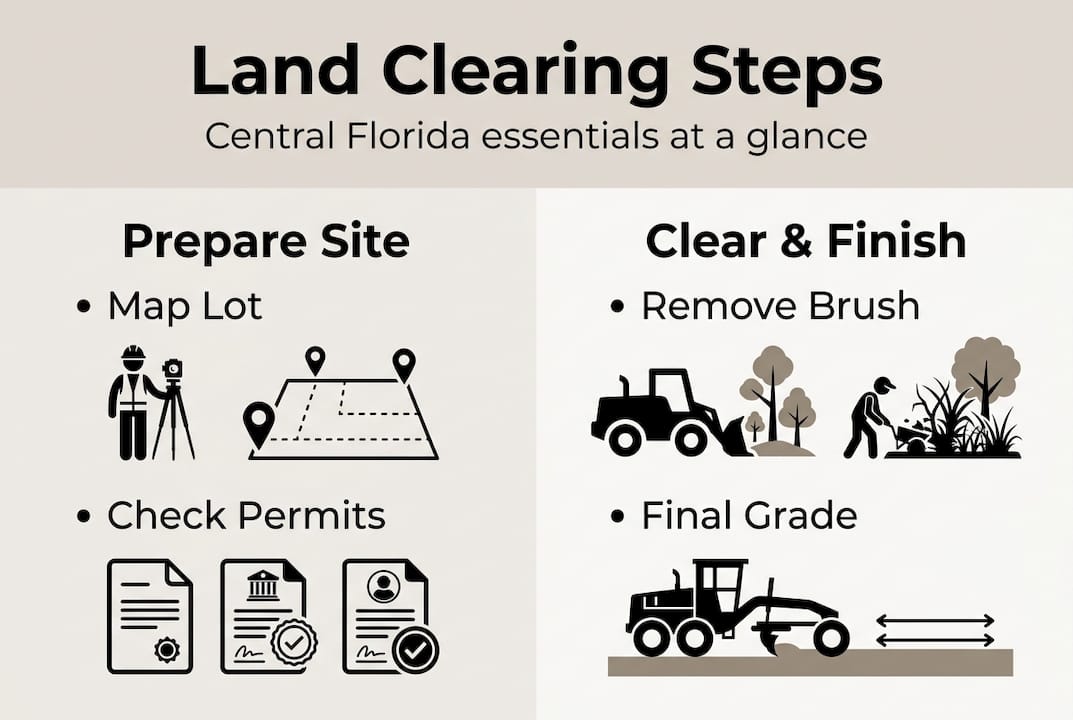
Next, check your local rules. Clearing land in Central Florida requires compliance with local regulations, which may include permits and protected species surveys. Florida has strict protections for certain trees like live oaks and gopher tortoises, which are a federally protected species commonly found on undeveloped lots. Disturbing a gopher tortoise burrow without a relocation permit can result in federal fines. Review the Central Florida clearing checklist before you schedule any equipment.
You also need to locate all underground utilities before any digging or grubbing begins. Call 811 at least three business days before your project starts. It’s free, it’s required by law, and it prevents accidents that can shut down your project entirely.
Key permit and compliance requirements at a glance:
| Requirement | Who to contact | When needed |
|---|---|---|
| Tree removal permit | County zoning office | Before removing protected trees |
| Gopher tortoise survey | Florida FWC | Before clearing undeveloped land |
| Erosion control plan | County environmental dept. | Projects near wetlands or water |
| Utility locate | Call 811 | At least 3 days before any digging |
| Wetlands delineation | Army Corps of Engineers | If land borders wetlands |
Essential documents to gather before you start:
- Property survey or plat map
- County zoning classification
- Any existing easements or deed restrictions
- Proof of utility locate (811 confirmation number)
- Wildlife survey results if required
- Permit approval letters from county
For a full breakdown of land clearing requirements and what applies to your specific parcel, cross-reference your county’s website with the complete clearing guide to avoid surprises.
Regulatory warning: Skipping the permit step in Florida is not a minor oversight. Counties like Orange and Osceola actively enforce land clearing violations, and fines can exceed $10,000 per protected tree removed without authorization. Always verify before you cut.
Essential tools, equipment, and safety gear
Once you know what rules to follow, it’s time to gather the right gear and prep your work zone.
Primary land clearing methods for Central Florida include forestry mulching, traditional bulldozing and grubbing, selective thinning, cut-and-grind, and manual clearing. Each has a different cost profile, speed, and ideal use case. Choosing the wrong method for your lot size or vegetation type wastes money and time.
Method comparison:
| Method | Best for | Relative cost | Speed |
|---|---|---|---|
| Forestry mulching | Dense brush, small trees | Moderate | Fast |
| Bulldozing/grubbing | Large-scale clearing | High | Very fast |
| Selective thinning | Preserving some trees | Moderate | Moderate |
| Cut-and-grind | Stumps, targeted removal | Moderate | Moderate |
| Manual clearing | Small lots, light brush | Low | Slow |
For smaller jobs, a chainsaw, loppers, and a brush cutter can handle most light vegetation. Heavier lots need skid steers, forestry mulchers, or excavators, which most homeowners rent or hire out. Explore clearing methods for all budgets to match your project scope with the right approach.
Preparing your site before equipment arrives:
- Walk the perimeter and flag all utility lines, tree drip lines you want to preserve, and any buried hazards.
- Remove any trash, old lumber, or metal debris manually to prevent equipment damage.
- Mark your property corners clearly with stakes or bright spray paint.
- Identify your debris staging area and confirm it’s accessible for haul-off trucks.
- Notify neighbors if equipment noise or debris will affect adjacent properties.
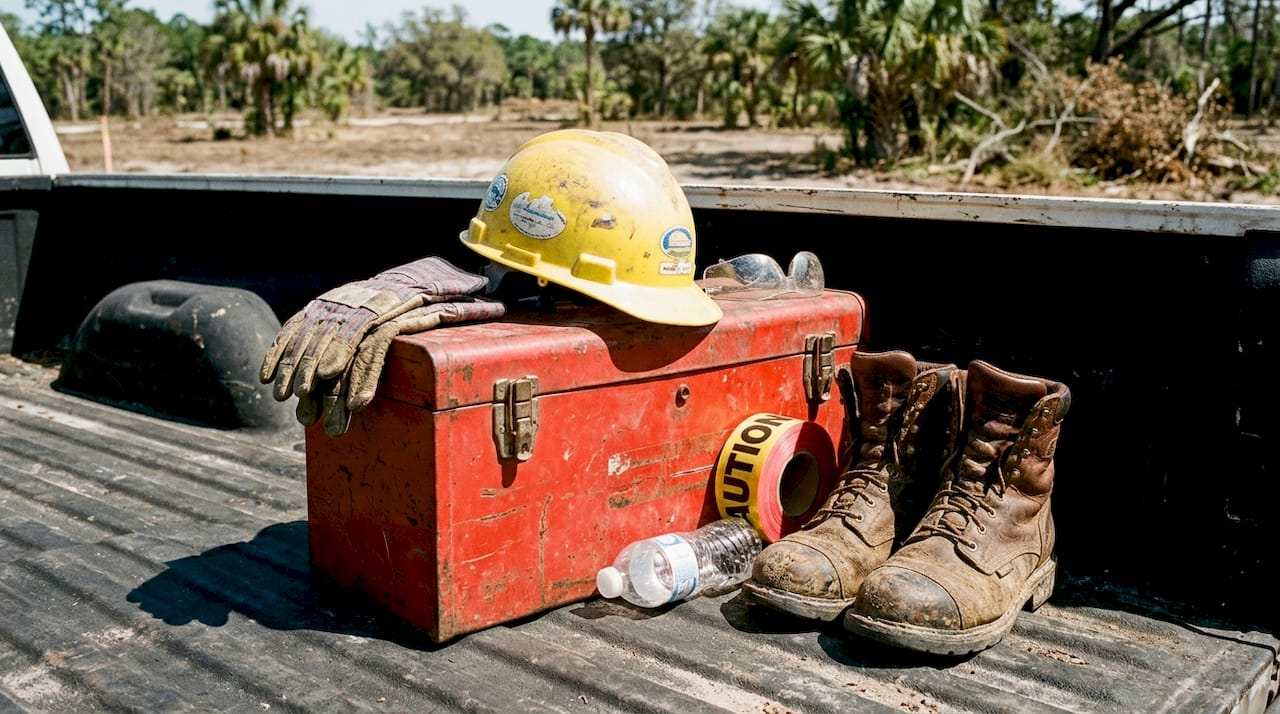
Safety gear you must have on site: hard hat, steel-toed boots, cut-resistant gloves, safety glasses, hearing protection, and a first-aid kit. Don’t skip these. Chainsaw kickback and flying debris cause serious injuries every year on residential clearing jobs.
Pro Tip: Before your equipment operator arrives, use bright orange marking paint to outline any trees you want to keep. It takes 15 minutes and prevents costly mistakes that are impossible to undo. Check the site prep tips for a full pre-arrival checklist.
Step-by-step process: How to clear your land
With tools in hand and a solid plan, let’s break down the entire clearing process step by step.
The clearing sequence:
- Remove large trees first. Start with any trees that require permits or professional removal. Don’t skip this step. Taking down a large tree after brush clearing is far more dangerous and expensive.
- Clear brush and understory. Use a forestry mulcher or brush cutter to work through dense palmetto patches, vines, and shrubs. Work in rows for efficiency.
- Grind or pull stumps. Stumps left in the ground cause problems for foundations, grading, and future planting. Stump grinding is typically faster and less disruptive than full extraction.
- Collect and dispose of debris. Burn piles require a county burn permit and are subject to air quality rules. Chipping, hauling, or mulching on-site are often better options in populated areas.
- Grade and compact the soil. Final grading levels the surface and addresses drainage. In Central Florida’s sandy soil, this step is critical before any construction or landscaping begins.
Florida lots have specific quirks. Sandy soil shifts easily, which means grading errors can cause drainage problems that flood your foundation or landscaping. Palmetto root systems are dense and surprisingly deep, making manual removal impractical on any lot larger than a quarter acre. And Florida’s warm, wet climate means vegetation regrowth happens fast. A cleared lot left unattended for even two months can show significant new growth.
The DIY vs. professional decision comes down to lot size, vegetation density, and your comfort with equipment and permits. Local expertise handles Florida-specific issues like sandy soil, palmettos, and regulations that change frequently. DIY is risky when heavy equipment or permit compliance is involved. Most Central Florida property owners with lots over half an acre find that professional land clearing services save both time and total cost when equipment rental, fuel, and disposal fees are factored in.
Pro Tip: Call 811 and flag your utility lines at least three days before clearing begins. Then walk the site with your equipment operator before they start. A five-minute walkthrough prevents hours of delays and potential liability.
For a detailed breakdown of methods and costs in Central Florida, review your options before committing to a single approach.
Common pitfalls and how to avoid them
Even when you follow instructions, some mistakes can be costly. Here’s what to watch out for in Central Florida.
Florida’s environment adds layers of risk that property owners in other states simply don’t face. Protected wildlife, wetland buffers, and aggressive vegetation regrowth create problems that can derail your project and your budget. DIY clearing is risky when it comes to equipment and permits, and hiring professionals delivers better results in most Central Florida scenarios.
Top 5 avoidable errors and how to sidestep them:
- Skipping the wildlife survey. Gopher tortoises, bald eagles, and sandhill cranes all have legal protections in Florida. A pre-clearing survey costs a few hundred dollars. Violating federal wildlife law costs far more.
- Improper debris disposal. Burning without a permit or dumping green waste off-site are both violations. Confirm your disposal method with the county before clearing begins.
- Ignoring erosion control. Cleared land in Florida’s rainy season erodes fast. Install silt fencing along any slope or drainage path before you start clearing.
- Underestimating regrowth. Palmettos and Brazilian pepper trees come back aggressively. Plan for follow-up clearing or herbicide treatment after the initial job.
- Not checking for deed restrictions. Some HOAs and deed covenants restrict what you can remove, even on your own property. Review your title documents before you pick up a chainsaw.
Think about boosting property value by clearing the right way. A well-executed clearing job increases usable square footage and curb appeal. A poorly executed one can trigger code enforcement, erosion damage, or expensive remediation.
For more detail on common mistakes in land clearing and how Florida’s rules differ from other states, review your county’s environmental compliance guidelines before you start.
Worst-case scenario: A property owner in Seminole County cleared a half-acre lot without checking for wetland buffers. The county issued a stop-work order, required full restoration of the disturbed area, and levied a $15,000 fine. The restoration cost more than the original clearing job. Permits exist for a reason.
A professional’s perspective: What most guides miss about Central Florida land clearing
Having covered the mechanics, here’s what years of Florida land work has really taught us.
Every clearing job is different. We’ve worked lots that looked straightforward on paper and turned into multi-day projects because of buried debris, unexpected wetland encroachment, or a gopher tortoise colony right in the clearing zone. Florida’s land surprises even experienced crews regularly.
Most guides focus on the physical steps and skip the planning phase, which is where projects actually succeed or fail. Permits change. County rules get updated. Protected species lists expand. What was legal to clear two years ago may require a survey today. Staying current with local regulations is not optional. It’s the difference between a smooth project and a stop-work order.
The other thing most guides miss: shortcuts always cost more in the long run. Skipping erosion control saves a few hours upfront and creates a drainage problem that costs thousands to fix. Leaving palmetto roots in place saves a day of grinding and causes foundation issues later. Hire specialists for major projects. The top landscaping services in the region exist because the work is genuinely complex and the stakes are high.
How we can help with your Central Florida land clearing
If you’d rather have an expert handle it safely or just want the job done fast, here’s how we can help.
At McCullough Tree Service, we handle every stage of the land clearing process for residential and commercial property owners across Central Florida. From permitted tree removal to full-scale brush clearing and debris haul-off, our certified arborists know exactly how to navigate Florida’s regulations, soil conditions, and vegetation challenges.
Whether your project involves a single overgrown lot or a large commercial parcel, we bring the right equipment and local expertise to get it done correctly the first time. We also handle professional tree removal and storm cleanup for properties dealing with post-storm debris. Review our land clearing process guide or contact us directly to request a free estimate.
Frequently asked questions
What permits do I need to clear land in Central Florida?
Most projects require a permit, especially if protected species or large trees are involved. Check with your county zoning and environmental departments before starting any clearing work.
Is it better to hire pros or DIY land clearing?
Hiring professionals is usually safer and more efficient because they handle equipment, permits, and Florida-specific hazards that most DIYers underestimate, especially on lots larger than half an acre.
What are the fastest ways to clear brush and small trees?
Forestry mulching and cut-and-grind are among the quickest methods. Primary clearing methods also include traditional bulldozing, selective thinning, and manual clearing depending on your lot and budget.
How do I avoid damaging utility lines during clearing?
Always call 811 at least three business days before you dig or use heavy equipment, and physically flag all located utility lines before your crew or equipment operator begins work.
What common mistakes do property owners make during land clearing?
The most frequent mistakes include skipping permits, failing to check for protected species, and not planning for fast regrowth. DIY clearing without professional guidance often leads to legal or ecological issues that cost far more to resolve than the original job.
Recommended
- Complete Land Clearing Guide for Central Florida Homes
- Land Clearing in Central Florida: Methods, Costs & Tips
- Land clearing checklist 2026: Central Florida guide
- Land Clearing Service in Orlando & Central Florida