By: Shelby McCullough| Published: April 16, 2026
TL;DR:
- Selecting trees with appropriate mature size and Florida-friendly traits ensures landscape success.
- Top recommended ornamental trees include Crape Myrtle, Bottlebrush, and Trumpet Trees for seasonal color and drought tolerance.
- Proper site matching and expert care can significantly enhance property value and reduce landscape failures.
Choosing the right ornamental tree for a Central Florida property is harder than it looks. The region’s sandy soils, intense summer heat, periodic drought, and hurricane-season wind loads mean that a tree that thrives in Atlanta or Dallas can struggle or fail entirely here. Get the selection right, however, and the payoff is real: trees can add $15,000 to $30,000 in property value while cooling your yard and creating curb appeal that stands out in any neighborhood. This guide walks you through the selection criteria, the best species, a side-by-side comparison, and site-specific recommendations so you can plant with confidence.
Table of Contents
- How to choose ornamental trees for Central Florida
- Central Florida favorites: Top examples of ornamental trees
- Head-to-head: Comparing ornamental tree features
- Situational picks: Best ornamental trees for specific Central Florida sites
- Our expert perspective: Proven strategies for ornamental tree success
- Next steps: Enhance your Central Florida property with expert tree care
- Frequently asked questions
Key Takeaways
| Point | Details |
|---|---|
| Choose Florida-Friendly species | Opt for non-invasive, UF/IFAS approved ornamental trees for lasting beauty and easy maintenance. |
| Match trees to site conditions | Select species based on sunlight, soil, space, and proximity to utilities or structures. |
| Mix flowering and foliage types | Combine vibrant bloomers and structural evergreens to maximize landscape appeal year-round. |
| Follow best planting practices | Plant trees at least 15 feet from your home, mulch properly, and irrigate during the first year for healthy establishment. |
| Consult experts for maintenance | Professional tree care ensures ornamental trees live longer and add value to Central Florida properties. |
How to choose ornamental trees for Central Florida
Selecting an ornamental tree for Central Florida is not simply a matter of picking something that looks great in a garden center. You need to think through the full lifecycle of the tree, from its first season in the ground to its mature canopy 15 years from now.
Mature size comes first. Before you fall in love with a variety, check its mature height and spread. Hillsborough County recommends ornamental species with a mature height in the 15 to 25 foot range, which keeps trees clear of utility lines while still providing shade and visual structure. A tree planted too close to a roofline or power line will either need constant pruning or eventual removal.
Prioritize Florida-Friendly and non-invasive species. Florida’s landscape law and local ordinances favor plants that require minimal irrigation once established and pose no threat to native ecosystems. UF/IFAS Marion County guidelines are an excellent vetting resource, listing species that perform well and cause no ecological harm.
Here are the core selection criteria to check before buying:
- Soil compatibility: Most Central Florida soils are sandy and fast-draining. Confirm the species tolerates low-nutrient, well-drained conditions unless you plan to amend heavily.
- Sun exposure: Full sun trees need 6+ hours of direct sun. Partial shade species suit spots near fences or larger trees.
- Spacing from structures: Allow at least 15 feet from foundations, fences, and driveways for most small ornamental trees.
- Utility clearance: Trees planted under power lines should stay under 25 feet at maturity.
- Irrigation needs: Young trees need regular watering for the first two growing seasons. After that, drought-tolerant varieties should thrive on rainfall alone.
- Wind resistance: Choose species rated for Central Florida’s wind exposure. Weak-wooded trees can become projectiles in summer storms.
Our tree planting guide covers the mechanics of proper installation, including depth, mulching, and early irrigation. For a closer look at site variables, review the planting considerations for Florida before you commit to a species.
Pro Tip: Cross-reference any tree you’re considering against your county’s approved species list and the UF/IFAS extension database. Both resources are free, regularly updated, and will save you from costly mistakes.
Central Florida favorites: Top examples of ornamental trees
With the selection criteria in mind, here are the species that consistently perform well for Central Florida homeowners and property managers.
Flowering trees create seasonal color and draw wildlife. The most recommended options include:
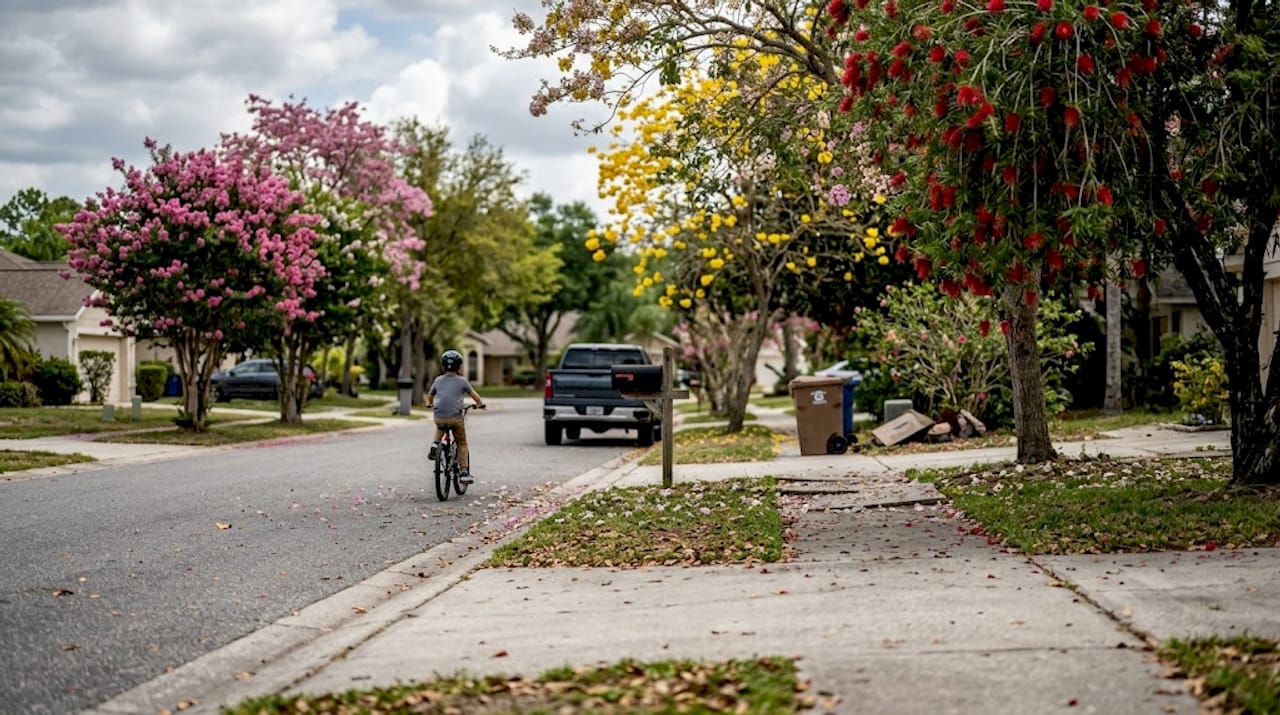
- Bottlebrush: Bright red brush-shaped blooms, drought tolerant, and hummingbird-friendly. Grows 10 to 15 feet tall.
- Crape Myrtle (Comanche): Long summer blooms and outstanding drought tolerance. Coral-pink flowers from late spring through early fall.
- Tabebuia (Golden and Pink Trumpet): Spectacular seasonal bursts of yellow or pink that stop traffic. Grows 15 to 25 feet with a rounded canopy.
- Redbud: Lavender-pink spring blooms on bare branches before the leaves emerge. Excellent for understory planting.
- Fringe Tree: Fragrant white cloud-like blooms in spring. Tolerates partial shade well.
- Chastetree: Lavender flower spikes in summer, aromatic foliage, and strong drought tolerance once established.
- Pineapple Guava: Unusual red and white blooms with edible petals, plus fruit that attracts wildlife.
UF/IFAS recommends Scentless Mockorange, Red Buckeye, Native Plum, Sweet Almond, Bottlebrush, Pineapple Guava, and Chastetree as standout performers for Florida yards.
Foliage and structural trees provide year-round interest even when they are not blooming:
- American Holly: Dense evergreen canopy with red berries. Great for screening and bird habitat.
- Lacebark Elm: Interesting mottled bark with good heat tolerance and urban adaptability.
- Southern Red Cedar: Native, evergreen, and wind-resistant. Works well as a windbreak or specimen tree.
- River Birch: Multi-stem form with peeling bark. Attractive texture and good in moist areas.
- Bald Cypress: Striking feathery foliage and strong structure. Tolerates flooding and wet soils.
| Tree | Mature height | Bloom color | Drought tolerant |
|---|---|---|---|
| Crape Myrtle | 10 to 20 ft | Coral/Pink/White | Yes |
| Tabebuia | 15 to 25 ft | Yellow/Pink | Yes |
| Bottlebrush | 10 to 15 ft | Red | Yes |
| Redbud | 15 to 20 ft | Lavender/Pink | Moderate |
| American Holly | 15 to 25 ft | White (spring) | Moderate |
| River Birch | 20 to 30 ft | N/A (foliage) | No |
For more species options tailored to the area, browse best tree species for Orlando. Planting thoughtfully can also boost property value in measurable ways.
Pro Tip: Mix at least one flowering and one foliage-focused species in every landscape zone. You get seasonal color bursts plus structure during the off-bloom months.
Head-to-head: Comparing ornamental tree features
With individual species covered, a side-by-side comparison helps you pick the right fit for your specific property goals.
| Tree | Bloom period | Sun needs | Water needs | Special notes |
|---|---|---|---|---|
| Crape Myrtle | 90 to 120 days (summer) | Full sun | Low | Powdery mildew risk if overcrowded |
| Tabebuia | 2 to 4 weeks (spring) | Full sun | Low | Spectacular but brief bloom |
| Bottlebrush | Spring/fall flushes | Full sun | Low | Hummingbird magnet |
| Fringe Tree | 2 to 3 weeks (spring) | Part shade | Moderate | Fragrant, good understory |
| American Holly | N/A | Full to part | Moderate | Salt tolerant, coastal use |
| Bald Cypress | N/A | Full sun | High (wet OK) | Handles flooding and wet sites |
| River Birch | N/A | Full to part | Moderate to high | Multi-stem, peeling bark interest |
| Chastetree | Summer | Full sun | Low | Aromatic foliage, late-season color |
A few key callouts from this comparison:
- Crape Myrtle wins on bloom duration. Blooming up to 120 days in summer, it delivers more visible color per season than almost any competitor. It is also one of the most urban-friendly ornamental trees available for Central Florida.
- Tabebuia wins on impact. Fast-growing and non-invasive, its short bloom season is so visually dramatic that one mature tree can anchor an entire front yard.
- Bald Cypress and River Birch fill a gap most flowering trees cannot: wet or flooded areas where standard ornamentals quickly die back.
Understanding common tree planting challenges in the region helps you avoid the most frequent failures. For a deeper look at what ornamental plantings do for your investment, see the full tree planting benefits breakdown. Validated property value data confirm that tree selection is one of the highest-return landscape investments available to Central Florida homeowners.
Situational picks: Best ornamental trees for specific Central Florida sites
To truly maximize success, match your chosen species to the site’s unique conditions rather than planting based on looks alone.
Shady spots: Most flowering trees need full sun, but two standouts handle shade well. Red Buckeye produces bold red flower clusters in partial shade and is native to Florida. Fringe Tree also tolerates reduced light and works well under the canopy of a larger live oak or near a north-facing fence.
Wet or low-lying areas: Sandy Central Florida soil usually drains fast, but low spots after summer storms can stay saturated for days. Bald Cypress handles wet soils and even periodic flooding with ease. River Birch is another strong choice for poorly drained zones, offering multi-stem structure and attractive peeling bark.
Coastal or salt-exposed sites: Properties near lakes or within a few miles of the coast need salt-tolerant species. American Holly and Date Palms are both rated for coastal exposure and hold up well under wind and salt spray.
Small yards and tight spaces: When your planting zone is under 20 feet wide, compact species are essential. Bottlebrush, Native Plum, and Sweet Almond all stay under 15 feet and deliver strong bloom color without overwhelming the space. Review county-approved choices for additional compact options vetted for your municipality.
Urban or high-traffic areas: Crape Myrtle and Tabebuia are both urban-tough. They tolerate heat reflected from pavement, compacted urban soils, and the occasional root restriction that comes with sidewalk or parking lot planting strips.
“Prioritize Florida-Friendly and non-invasive species vetted by UF/IFAS. Small to medium trees in the 10 to 30 foot range are ideal for most residential and commercial landscapes in Central Florida.”
For long-term success, follow tree preservation tips once your trees are established. Our lasting results guide also details how to set trees up for a healthy first five years.
Pro Tip: Never plant a tree deeper than its root flare. Burying the root collar causes slow decline over years, and many homeowners never connect the symptom back to the original planting mistake. Also, avoid “topping” Crape Myrtles. That practice destroys the tree’s natural form and invites disease.
Our expert perspective: Proven strategies for ornamental tree success
Here is what years of working in Central Florida landscapes have taught us: most ornamental tree failures are not about the tree. They are about the site. Homeowners chase whatever is blooming at the nursery in March and plant it wherever there happens to be open space. That approach works sometimes. But it fails often enough to make tree planting feel riskier than it needs to be.
The conventional wisdom is to pick popular, widely available varieties. That is reasonable advice, but it skips the harder question: is this the right tree for this specific spot? A Crape Myrtle in full sun on well-drained soil is nearly indestructible. That same tree planted in a poorly drained corner near a downspout will struggle for years and never reach its potential.
We have also seen the consequences of ignoring Florida tree regulations when removing trees that were planted in the wrong spot. That paperwork and expense is entirely avoidable with a thoughtful upfront decision.
UF/IFAS-vetted species are recommended for a reason. They have been tested in Florida’s specific conditions, not just recommended because they look good in a photo. Trust that research over social media trends.
Next steps: Enhance your Central Florida property with expert tree care
You now have a clear picture of which ornamental trees perform best in Central Florida and how to match them to your site. The next move is putting that knowledge to work on your actual property.
McCullough Tree Service works with Central Florida homeowners and property managers to select, plant, and maintain ornamental trees that last. Our certified arborists handle everything from initial species selection through ongoing tree trimming services that protect the form and health of your investment. When older trees need to come down to make room for a better fit, our tree removal services are fully licensed and efficient. Review our tree care guide for trimming vs. pruning basics, then contact us for a free estimate.
Frequently asked questions
Which ornamental trees are best for small Central Florida yards?
Bottlebrush, Native Plum, and Sweet Almond stay compact and deliver vibrant seasonal blooms, making them ideal choices for tight spaces. Crape Myrtle dwarf cultivars are another option when you want color without canopy spread.
What are the most drought-tolerant ornamental trees for Central Florida?
Crape Myrtle and Tabebuia are both highly drought-tolerant and recommended by UF/IFAS for Central Florida’s dry spells. Crape Myrtle in particular thrives on minimal irrigation once it is established after the first two growing seasons.
How far should I plant ornamental trees from my house?
Plant ornamental trees at least 15 feet from foundations to prevent root conflicts and structural damage. Larger canopy trees may need even more distance depending on their mature spread.
How much do ornamental trees increase property value in Central Florida?
Strategically placed trees can raise property value by $15,000 to $30,000 and reduce cooling costs by shading the home during Florida’s long hot season.
Recommended
- Central Florida tree planting guide: steps for lasting results
- Tree Planting Guide Central Florida for Homeowners
- Tree Planting Considerations for Central Florida Homes
- Tree planting: boost property value in Central Florida