By: Jeff Chua| Published: April 29, 2026
TL;DR:
- Trees in Central Florida provide significant financial and environmental benefits, including increasing property value by up to 10% and reducing stormwater runoff. Proper species selection, strategic placement, and professional care are essential for maximizing tree benefits and avoiding costly mistakes. Well-maintained trees grow in value over time, making investment in expert tree care a smart, long-term property strategy.
Most Central Florida property owners think of trees as decoration. That’s a costly misconception. Trees on your property reduce stormwater runoff by 50 billion gallons annually across Florida, cut your cooling bills by up to half, and push property values up by nearly 10%. When you understand that your tree choices are financial decisions as much as aesthetic ones, the entire approach to landscaping shifts. This article walks you through what trees really do for your property, which species work best here, where to put them, and how to keep them thriving long-term.
Table of Contents
- Why trees matter: The multi-layered value for Central Florida properties
- Choosing the best tree species for your landscape
- Strategic tree placement: Enhancing aesthetics, energy savings, and property value
- Caring for landscape trees: Key practices and common pitfalls
- The hidden ROI: Why tree care is the smart investment most property owners underestimate
- Transform your landscape with professional tree care services
- Frequently asked questions
Key Takeaways
| Point | Details |
|---|---|
| Trees deliver real ROI | Thoughtful landscaping with trees boosts property value, reduces costs, and pays off for decades. |
| Native species thrive best | Selecting resilient, local tree species reduces maintenance and improves survival rates. |
| Proper placement matters | Strategic tree location maximizes shade, comfort, and curb appeal for Central Florida properties. |
| Professional care prevents problems | Working with certified arborists helps avoid costly mistakes and preserves landscape health. |
| Tree health benefits everyone | Healthy trees clean the air, reduce stormwater runoff, and cool urban spaces for the whole community. |
Why trees matter: The multi-layered value for Central Florida properties
Let’s start with money, because that’s what moves most landscaping decisions. A well-planned tree canopy is one of the highest-return investments you can make in a Central Florida property. We’re not talking abstract feel-good benefits. We’re talking measurable dollars.
Financial and environmental benefits you can measure
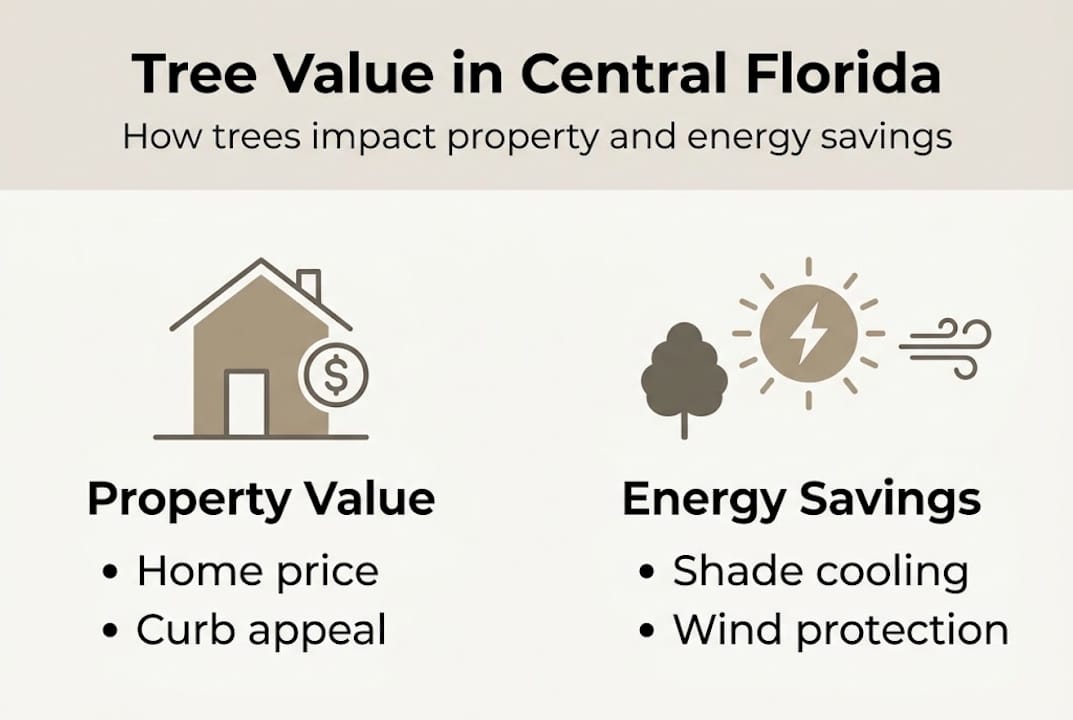
Trees boost property value in ways most homeowners don’t fully realize until they’re trying to sell. The research is clear: mature trees on a well-maintained property deliver real returns. Here’s a breakdown of what you can reasonably expect:
| Benefit | Measurable impact |
|---|---|
| Property value increase | Up to 10% |
| Cooling energy savings | 10 to 50% reduction |
| Urban air temperature reduction | Up to 3°F cooler |
| Statewide stormwater reduction | 50 billion gallons annually |
Those numbers come from verified data on tree planting benefits across Central Florida properties, and they represent outcomes that compound over time. A tree planted today that matures in 15 to 20 years will be delivering energy savings and value increases long after its initial cost has been forgotten.
Beyond the financial picture, there’s a real public health dimension. Urban areas with more canopy cover consistently show improved air quality and fewer respiratory health issues among residents. In Central Florida, where summer heat is oppressive and humidity is relentless, a 3°F reduction in ambient air temperature isn’t a small thing. That’s the difference between a backyard you actually use and one you avoid from May through September.
“Trees are not just landscaping elements. They are working infrastructure that cools your home, manages water, cleans air, and builds lasting wealth in your property.”
Key benefits at a glance:
- Reduced stormwater runoff lowers flood risk on your lot
- Shade trees directly cut air conditioning costs
- Windbreaks on the north side reduce winter heating needs
- Canopy cover shields hardscaping and reduces UV damage to driveways and patios
- Improved air quality and reduced urban heat stress for families using outdoor spaces
Research from FR276 confirms that mature trees can push property values up by 7 to 19%, a range that reflects everything from the species selected to the condition and placement of the tree. That’s not a minor bonus on resale. For a $400,000 home, that’s potentially $28,000 to $76,000 in added value from well-managed trees.
Now that we’ve set the stage for why trees matter, let’s explore how to choose the right trees for your landscape.
Choosing the best tree species for your landscape
Picking the wrong tree is one of the most expensive mistakes Central Florida property owners make. A tree that’s beautiful at the nursery but wrong for your soil, your space, or Central Florida’s climate can become a liability within a few years. Correct species selection requires matching the tree to your specific site conditions, your goals, and your long-term maintenance capacity.
Why native species outperform everything else here
The Gainesville urban forest is 89% native species, with slash pine and laurel oak dominating. That’s not an accident. Native trees evolved in this climate, which means they handle drought, humidity, sandy soils, and Florida storm conditions far better than ornamental imports.
When you choose the best tree species for Orlando, native options consistently win on three critical dimensions: survival rate in the first five years, resistance to common Florida pests and diseases, and long-term property value contribution.
Comparison: Popular Central Florida trees
| Tree species | Mature height | Drought tolerance | Storm resistance | Best use |
|---|---|---|---|---|
| Live oak | 40 to 80 ft | Moderate | Very high | Shade, property value |
| Slash pine | 60 to 100 ft | High | High | Privacy, windbreak |
| Laurel oak | 60 to 70 ft | Moderate | High | Shade, urban landscapes |
| Southern magnolia | 60 to 80 ft | Moderate | Moderate | Aesthetic, fragrance |
| Crape myrtle | 15 to 25 ft | Very high | Moderate | Color, smaller spaces |
| Bald cypress | 50 to 70 ft | Very high | Very high | Wet areas, resilience |
How to choose the right tree for your property
- Assess your site first. Check soil drainage, available space at maturity, and proximity to structures, power lines, and septic systems. A tree’s mature size is what matters most, not its nursery size.
- Match species to your goals. Shade for energy savings? Go with a large live oak or laurel oak on the west or south side. Privacy screening? Slash pine or wax myrtle. Color and visual interest? Crape myrtle or flowering dogwood.
- Prioritize drought tolerance. Central Florida goes through serious dry spells. Trees that can’t handle two to three weeks without rain in their establishment phase are risky choices.
- Consider pest and disease resistance. Some ornamental species are beautiful but vulnerable to laurel wilt, citrus greening, and other regional threats. A certified arborist can flag these risks before you plant.
- Think about the full tree planting guide. Knowing how deep to plant, how wide to mulch, and what the establishment period requires will determine whether your investment survives.
Pro Tip: Avoid planting large trees within 15 feet of your home’s foundation, underground utilities, or septic systems. The savings you’re hoping for from shade will be offset quickly by root damage repair costs if placement is wrong.
Knowing which species to choose is only one step. Let’s look at how to position and care for trees for maximum impact.
Strategic tree placement: Enhancing aesthetics, energy savings, and property value
Even the right tree in the wrong location underperforms. Strategic placement is where many Central Florida homeowners leave money on the table. A certified arborist doesn’t just identify healthy trees. They think about solar angles, prevailing winds, drainage patterns, and sight lines that a typical landscaper won’t consider.
Placement principles that pay off
Shade trees positioned on the west and south sides of your home can cut cooling costs by up to 50%. The west side matters most in Central Florida because afternoon sun drives interior temperatures up dramatically from around 2 p.m. to sunset. A mature canopy intercepting that direct sun can make a measurable difference on your monthly electric bill within five to ten years of planting.
Smart placement priorities:
- Place large shade trees 15 to 20 feet from the west and southwest walls of your home for afternoon sun interception
- Use evergreen trees like wax myrtle or southern red cedar on the north side as windbreaks
- Position trees to frame views from inside the home and from the street for maximum curb appeal
- Keep large trees 25 to 30 feet from the roofline and gutters to reduce debris and damage risk
- Avoid planting beneath power lines regardless of species. Even “small” trees often exceed height estimates
Statistic callout: Shade from strategically placed trees can reduce energy costs by 10 to 50% annually, which adds up to thousands of dollars over a tree’s lifespan.
For commercial properties, tree placement also addresses safety, ADA compliance, and visual branding. Trees that frame the entrance of a business property communicate care, permanence, and quality. That’s a soft but real influence on customer perception.
Working with landscaping services in Central Florida that understand both horticulture and storm resilience is critical here. Central Florida’s hurricane exposure means that poorly placed trees aren’t just bad for energy efficiency. They become projectiles during high wind events. Understanding tree planting considerations before you start saves expensive removal and replanting later.
Pro Tip: Ask your arborist to walk your property at different times of day to observe where summer shadows fall. This hands-on assessment identifies the highest-value placement zones that no site plan on paper can fully reveal.
Once you’ve got strong, healthy trees in the right spots, maintenance is the next crucial step.
Caring for landscape trees: Key practices and common pitfalls
Planting a tree is about 20% of the job. The next several years of care determine whether that tree becomes a thriving asset or a declining liability. Florida’s heat, sandy soils, and heavy rainfall create care challenges that are different from almost anywhere else in the country.
The most important first-year rule
The single most critical guideline for new trees comes from well-established horticultural research: water one week per inch of trunk caliper during the first year of establishment. So a tree with a two-inch trunk caliper needs two weeks of careful watering per inch, meaning consistent irrigation for the first year to help roots extend into native soil. Neglecting this one rule is the leading cause of early tree failure in Central Florida landscapes.
Step-by-step care framework for newly planted trees
- Water correctly and consistently. Follow the one week per inch trunk caliper rule. Use a slow trickle at the root zone, not overhead sprinkler coverage. Deep, slow watering builds deep roots.
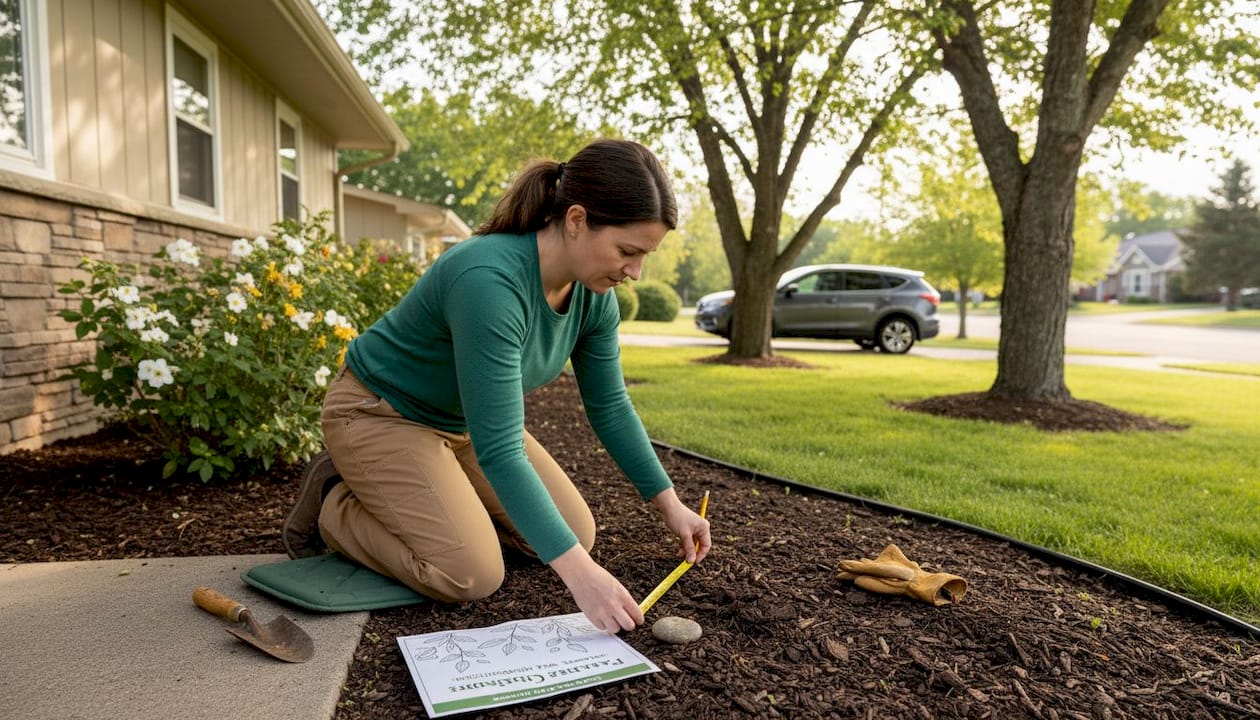
- Mulch properly. Apply two to three inches of mulch in a wide ring around the base, keeping it a few inches away from the actual trunk. This conserves moisture, moderates soil temperature, and reduces competing weeds.
- Stake only if necessary. Over-staking prevents the trunk from developing natural strength. If staking is needed for wind stability, remove it after one growing season.
- Schedule professional pruning early. Corrective pruning in the first two to three years shapes the tree’s structure. Trying to correct bad branch angles in a mature tree is far more expensive and sometimes impossible.
- Monitor for pests and disease. In Central Florida, laurel wilt and fungal issues can move fast. Early detection through regular arborist inspections is the most cost-effective form of tree preservation.
Common mistakes to avoid
“The most expensive tree problems we see were all preventable. Overwatering, planting too deep, and skipping early pruning account for the majority of Central Florida tree failures.”
Tree preservation in Florida starts with avoiding the basic errors. Overwatering is a bigger problem than most owners expect. In Florida’s wet season, newly planted trees in low-drainage areas can get waterlogged, which promotes root rot faster than drought would. Planting too deep is another silent killer. The root flare, the point where the trunk widens at ground level, should be visible at or just above the soil surface.
Research shows that common reasons tree plantings fail often come down to these preventable errors, combined with insufficient follow-through during the first two critical growing seasons. Partnering with a certified arborist eliminates most of these risks through proper planning, correct installation, and scheduled care.
With a full picture of the role and care of trees in landscaping, let’s address perspectives most guides overlook.
The hidden ROI: Why tree care is the smart investment most property owners underestimate
Here’s something most landscaping articles won’t tell you: trees are the only landscaping investment that grows in value over time rather than depreciating. Hardscaping fades, sod requires constant inputs, and ornamental plantings cycle in and out. A well-placed, properly maintained live oak on a Central Florida property fifty years from now is worth more than when it was planted, both ecologically and financially.
The deeper issue is that most property owners make landscaping decisions based on what looks good today rather than what delivers value over a decade or more. That’s understandable, but it’s backward. A crape myrtle popped in for immediate color is a short-term win. A live oak planted in the right spot with proper establishment care is a long-term wealth-building decision.
We also see the community-level dimension constantly here in Central Florida. After major storm events, the properties that suffer the least damage from falling trees are almost always the ones that received regular arborist attention. Weak branch attachments, co-dominant trunks that split in wind, and root systems compromised by construction damage are all identifiable and correctable before a storm hits. Trees that get professional care don’t just survive storms better. They shape entire neighborhoods.
Tree planting and property value research backs this up clearly. The 7 to 19% property value premium from mature trees doesn’t happen without intentional care. It requires the right species, the right placement, and the professional maintenance that keeps those trees healthy and structurally sound for decades.
The investment in certified arborist expertise isn’t an add-on to landscaping. It’s the strategy that makes everything else work. Most property owners who engage professional tree care report that they wish they had started earlier, not because they didn’t see the value but because they hadn’t realized how much compounding benefit they were leaving behind.
Transform your landscape with professional tree care services
At McCullough Tree Service, we work with Central Florida property owners every week who are surprised by how much their existing trees are worth and by how much value properly planned new plantings can add.
Whether you need a full property assessment to understand what your current trees need, a certified arborist to design a long-term planting and maintenance plan, or professional tree trimming to keep your canopy healthy and structurally sound, our team brings the credentials and local knowledge that Central Florida properties require. We also provide tree removal guidance when a tree poses a safety risk or simply no longer fits your landscape plan. Contact us for a customized landscape estimate and start building a property that performs as well as it looks.
Frequently asked questions
How do trees help lower my energy bills in Central Florida?
Properly placed shade trees on the west and south sides of your home can reduce cooling costs by 10 to 50% by blocking direct sun and lowering ambient air temperatures around your home.
What are the best tree species for storm resistance in Central Florida?
Native species tend to perform best, and slash pine and laurel oak dominate Central Florida’s most resilient urban forests because they are adapted to local wind, soil, and weather conditions.
How much can mature trees increase my property value?
Research shows that mature trees boost property values by 7 to 19% in well-maintained Central Florida landscapes, depending on species, placement, and overall tree health.
What is the proper way to water a newly planted tree?
Follow the one week per inch trunk caliper rule, providing consistent deep watering throughout the first year to establish strong roots in Central Florida’s sandy soils.
Recommended
- Tree planting: boost property value in Central Florida
- Tree planting benefits Central Florida properties 2026
- Tree preservation: boost health & beauty in Florida
- How tree care boosts property value in Central Florida