By: | Published: April 14, 2026
TL;DR:
- Hidden internal decay and pests can cause tree failure without visible signs.
- Regular professional inspections and maintenance reduce storm damage costs and liability risks.
- Working with certified arborists ensures accurate risk assessment and long-term tree health.
A tree that looks perfectly healthy from your backyard can be quietly failing from the inside. Many homeowners and property managers in Central Florida focus on curb appeal, lawn care, and exterior upkeep, yet overlook the trees that frame their properties. Hidden hazards in trees can threaten your home, your family, and your investment without any obvious warning. This guide walks you through the real risks, the measurable benefits of staying proactive, and the practical steps you can take to protect your property before a problem becomes a crisis.
Table of Contents
- Understanding tree safety risks on your property
- How tree safety protects people, property, and value
- Signs your trees need immediate attention
- Working with certified arborists for tree safety
- The truth most property owners miss about tree safety
- Professional help for tree safety in Central Florida
- Frequently asked questions
Key Takeaways
| Point | Details |
|---|---|
| Hidden risks | Even healthy-looking trees can threaten property and safety. |
| Preventative action | Routine inspections and care help avoid costly emergency repairs. |
| Expert assessment | Certified arborists spot issues that most homeowners miss. |
| Value protection | Tree safety protects property value and reduces liability. |
Understanding tree safety risks on your property
Tree safety is not just about whether a branch looks dead or a trunk appears crooked. It covers three core areas: structural integrity (how sound the tree’s internal structure is), disease and pest status, and proximity to structures, power lines, or high-traffic areas. A tree can fail on any one of these fronts while looking completely normal from the outside.
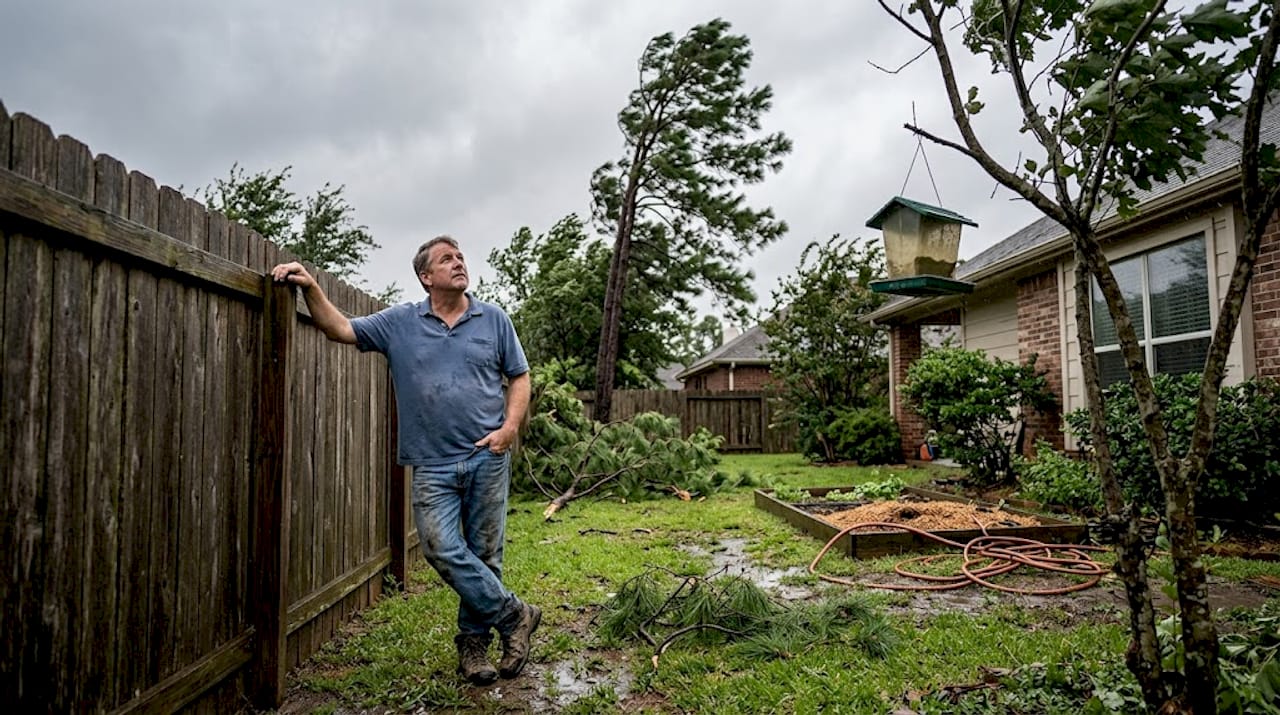
The most common risks homeowners think about are falling branches and storm surge. Florida’s hurricane season makes both very real concerns. But the less obvious risks are often the ones that cause the most damage. Hidden internal decay, fungal rot at the root collar, and pest infestations like wood-boring beetles can hollow out a tree’s core over months or years before any visible sign appears.
Common tree safety risks to watch for:
- Falling limbs from weak branch unions or deadwood
- Root failure caused by soil compaction, construction disturbance, or disease
- Storm hazards from trees growing too close to structures or power lines
- Hidden decay inside the trunk, often invisible until the tree splits
- Pest infestations that weaken wood from the inside out
- Girdling roots that slowly choke a tree’s vascular system
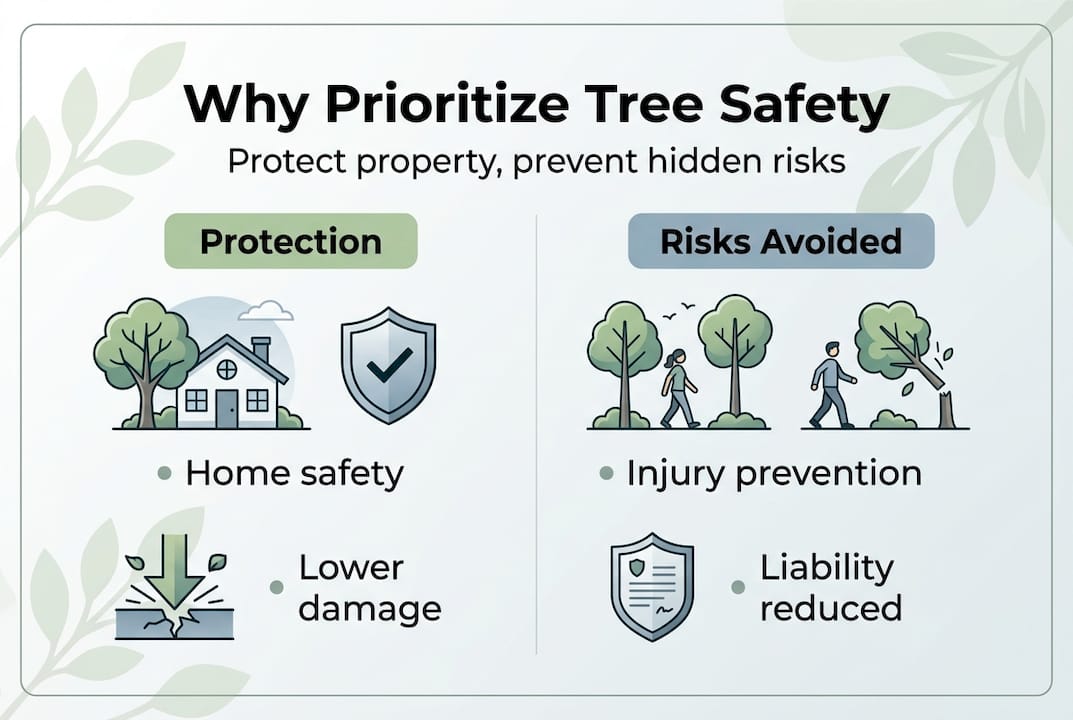
The liability side of tree safety is something many property owners underestimate. If a tree on your property falls and damages a neighbor’s home or injures someone, you can be held legally responsible, especially if there was evidence of prior neglect. Routine tree inspections create a documented record of due diligence that can protect you in those situations.
“Unstable or overgrown trees can collapse unexpectedly, causing significant property or personal harm.”
Insurance companies are paying closer attention to tree-related claims. Some policies now require documented maintenance records before covering storm damage caused by trees. Knowing what your trees look like structurally, and having that assessed by a professional, is no longer optional for responsible property ownership. Learning about the benefits of professional tree trimming is a smart starting point for any property owner who wants to get ahead of these risks.
How tree safety protects people, property, and value
Understanding potential risks is just the first step. Let’s look at how prioritizing tree safety delivers real benefits.
Well-maintained trees do more than just look good. They actively protect your property, reduce your liability exposure, and can add measurable value to your home. Studies from the real estate industry consistently show that mature, healthy trees can increase residential property values by 10 to 15 percent. That’s a significant return on a relatively modest investment in annual care.
In Central Florida, the stakes are higher because of storm season. Routine tree maintenance reduces the risk of storm damage and costly emergency removals. A single emergency tree removal after a hurricane can cost two to three times more than a scheduled removal done proactively. That cost difference does not include potential structural repairs to your home or vehicle.
| Factor | Proactive tree safety | Emergency response |
|---|---|---|
| Average cost | $200 to $800 per year | $1,500 to $5,000+ per incident |
| Property damage risk | Low | High |
| Insurance impact | Favorable | Potential claim or denial |
| Disruption to property | Minimal | Significant |
| Long-term tree health | Preserved | Often lost |
Beyond the numbers, there is a personal safety dimension that matters just as much. Families with children who play outside, guests who park in driveways, and neighbors who walk nearby are all affected by the condition of your trees. Preparing your trees for storms is one of the most direct ways to protect the people around your property.
Pro Tip: Schedule your annual tree inspection in late winter or early spring, before Florida’s storm season ramps up. This gives you time to address any issues before high winds and heavy rain put pressure on vulnerable trees.
The importance of regular tree maintenance also extends to your insurance premiums. Some insurers offer better rates to homeowners who can demonstrate consistent tree care, because it signals lower risk overall.
Signs your trees need immediate attention
Even with regular maintenance, it’s vital to know the warning signs that mean your trees need immediate care.
Not every tree problem announces itself loudly. Some of the most dangerous conditions develop gradually and can be easy to dismiss as cosmetic issues. Knowing what to look for puts you in a much stronger position to act before something fails.
Here are the key warning signs that require urgent professional assessment:
- Cracks or splits in the trunk running vertically or through major branch unions
- Excessive leaning that has developed recently or after a storm
- Mushrooms or fungal growth at the base of the tree or on the trunk, which signal internal rot
- Dead or hanging branches in the upper canopy, sometimes called widow-makers
- Heaving soil around the base of the tree, indicating root movement or failure
- Bark that is peeling, missing, or discolored in large sections
- Insect galleries or sawdust at the base, pointing to active pest infestation
Florida’s intense storm seasons can turn a borderline tree into a dangerous one almost overnight. High winds, saturated soil from heavy rain, and lightning strikes all stress root systems and structural wood. Symptoms like splitting trunks or excessive leaning signal imminent failure and should never be ignored.
Pro Tip: After any major storm or nearby construction project, walk your property and look at every tree from multiple angles. Construction activity can sever roots that won’t show visible stress for months, making post-construction inspections especially important.
If you spot any of these warning signs, the right move is to stay clear of the area and call a certified arborist promptly. Do not attempt to remove branches or assess structural damage yourself. Reviewing tree trimming safety tips can help you understand what’s involved, but hands-on work near a compromised tree is a job for a trained professional. Scheduling tree safety inspections after any notable weather event is a smart habit to build.
Working with certified arborists for tree safety
Often, the best way to ensure safety isn’t just doing it yourself. It’s working with an expert.
There is a meaningful difference between a general landscaper and a certified arborist. Landscapers handle aesthetics: mowing, trimming hedges, keeping things tidy. Certified arborists are trained specifically in tree biology, structural assessment, disease diagnosis, and risk evaluation. They carry credentials from organizations like the International Society of Arboriculture (ISA), which requires ongoing education and adherence to industry standards.
| Service type | Certified arborist | DIY | Uninsured contractor |
|---|---|---|---|
| Hazard identification | Thorough and documented | Limited | Inconsistent |
| Pruning technique | ISA-standard | Often harmful | Variable |
| Liability protection | Fully insured | None | Risky |
| Long-term tree health | Prioritized | Often overlooked | Not guaranteed |
| Cost | Moderate to high | Low upfront | Low but risky |
Certified arborists use specialized assessment tools and safety protocols to ensure both health and hazard reduction. This includes resistograph testing to detect internal decay, root collar excavations to check for hidden rot, and canopy evaluations to identify structural weaknesses invisible from the ground.
When choosing an arborist, look for:
- ISA certification or equivalent credentials
- Proof of liability insurance and workers’ compensation
- Local experience with Central Florida’s specific tree species and weather patterns
- Written assessments rather than verbal-only recommendations
- No pressure tactics around unnecessary removals
The role of certified arborists goes well beyond cutting branches. They act as advocates for your trees’ long-term health while keeping safety at the center of every recommendation. Pairing that expertise with professional trimming and assessment gives you the most complete picture of your property’s tree risk.
The truth most property owners miss about tree safety
After years of working with homeowners across Central Florida, one pattern stands out clearly: most people only think about their trees after something goes wrong. A branch falls on a car, a storm exposes a rotting trunk, or a neighbor’s tree lands on a fence. That reactive mindset is understandable, but it is also consistently more expensive and more disruptive than staying ahead of problems.
Tree safety is not a one-time checkbox. It is an ongoing relationship with living things that change every season. A tree that passed inspection two years ago may have developed a fungal infection or root problem since then. Regular tree maintenance is what catches those changes before they become emergencies.
Generic online advice about tree safety often misses the local dimension entirely. Central Florida has specific soil conditions, a distinct storm season, and native and non-native species that behave very differently under stress. What works in the Pacific Northwest does not apply here. Local expertise, built through years of working in this specific environment, is worth far more than any general guide.
Professional help for tree safety in Central Florida
For those who want to make tree safety a priority without guesswork, help is just a call away.
McCullough Tree Service works with homeowners and property managers across Central Florida to keep trees healthy, safe, and well-maintained year-round. Whether you need a full property assessment, routine trimming, or urgent removal of a hazardous tree, our certified arborists bring the training and local knowledge to handle it right.
You can explore our work through our certified arborist consultations and see examples of completed professional tree trimming projects. If you have a tree that concerns you right now, our hazardous tree removal services are available to address urgent situations quickly and safely. Reach out today to schedule your consultation and get a clear picture of where your property stands.
Frequently asked questions
What are the main dangers of ignoring tree safety?
Ignoring tree safety can lead to property damage, personal injury, and increased insurance liability. Unstable trees can damage structures and harm people without warning, making proactive care essential.
How often should I schedule tree safety inspections?
At minimum, schedule a professional inspection once a year and after any severe storm. Annual inspections before storm season are especially critical for Florida properties where weather conditions are extreme.
Can I assess my trees myself, or should I hire a pro?
Basic visual checks are helpful for spotting obvious issues, but only a certified arborist can accurately identify hidden structural and disease risks. Certified arborists use professional tools that go well beyond what the naked eye can detect.
What if a tree looks healthy but has hidden issues?
Even a visually healthy tree can hide internal decay, root disease, or structural weakness. Tree inspections reveal hidden risks that only trained professionals with the right equipment can reliably identify.
Recommended
- Why regular tree maintenance matters for property owners
- Spot Tree Hazards: Real Examples & Solutions for Central Florida
- Tree Trimming Safety Protocols to Remember
- Why remove hazardous trees: key benefits for properties