By: Shelby McCullough| Published: April 1, 2026
Many Central Florida property owners assume that a struggling or overgrown tree is best removed and replaced. That assumption costs more than most people realize. Tree preservation is guided by both regulation and horticultural best practices in Florida, meaning the goal is always to keep healthy trees standing whenever possible. This article explains what tree preservation actually covers, how local rules affect your decisions, and the practical steps you can take to keep your trees healthy, attractive, and legally protected. Whether you manage a residential yard or a commercial property, understanding preservation gives you real options.
Table of Contents
- What tree preservation really means in Central Florida
- Key laws and exemptions: What homeowners need to know
- Best practices for healthy, beautiful trees
- When to consult an arborist and local guidelines
- Why preservation beats replacement: An owner’s perspective
- Expert help for your trees in Central Florida
- Frequently asked questions
Key Takeaways
| Point | Details |
|---|---|
| Preservation protects value | Healthy, regulated trees enhance landscape beauty and property resale worth. |
| Rules and exemptions | Understanding local ordinances and risk exemptions is essential to avoid legal trouble and maximize benefits. |
| Expert advice pays off | Consulting certified arborists can help you keep your trees healthier and your property safer. |
| Proven care methods | Proper pruning, mulching, and species selection are key to long-lived, resilient trees in Central Florida. |
What tree preservation really means in Central Florida
Tree preservation is not just a feel-good concept. It covers two distinct areas: the legal side, which includes permits, designated species, and minimum canopy requirements, and the hands-on care side, which includes pruning, mulching, and soil management. Both matter, and ignoring either one can lead to fines, tree loss, or property damage.
On the legal side, regulatory and horticultural practices work together to protect trees on private property. Florida gives individual counties and cities the authority to set their own tree codes. Orange County’s tree ordinance, for example, sets clear standards for both residential and commercial properties, including which species are protected, what size triggers a permit requirement, and how many trees must be replaced if removal is approved.
Understanding tree permits in Central Florida is a smart first step before touching any large or mature tree on your property. Many homeowners are surprised to learn that a tree growing entirely on their own land may still require a permit to remove.
Why preservation outperforms removal and replanting:
- Mature trees store significantly more carbon than newly planted saplings
- Established root systems manage stormwater far better than young trees
- Preserved trees maintain shade, cooling, and aesthetic value immediately
- Replanting adds years before equivalent canopy cover is restored
| Factor | Preserved mature tree | Newly planted replacement |
|---|---|---|
| Canopy coverage | Immediate, full | 10 to 20 years to match |
| Stormwater absorption | High | Low to moderate |
| Carbon storage | High | Very low initially |
| Property value impact | Positive, immediate | Gradual |
Familiarizing yourself with protected trees regulations in your county is the fastest way to avoid costly surprises when planning any landscape project.
Key laws and exemptions: What homeowners need to know
Florida law is more nuanced than a simple yes or no on tree removal. Some trees are always protected regardless of condition, while invasive, dead, or hazardous trees may be removed with fewer restrictions depending on your municipality.
The most important exemption for homeowners is found under Florida Statute §163.045, which allows permit-free removal if an ISA-certified arborist (a credentialed tree care professional recognized by the International Society of Arboriculture) documents that the tree poses a risk to people or structures. This is the residential risk exemption, and it applies specifically to single-family and two-family properties.
Commercial properties face stricter rules. DBH, which stands for diameter at breast height and is measured at 4.5 feet above the ground, often determines whether a tree is protected. Commercial sites typically require replacement planting or mitigation fees when protected trees are removed.
Steps to stay compliant before removing any tree:
- Identify the species and measure the DBH
- Check your county or city ordinance for protected status
- Consult an ISA-certified arborist if the tree appears hazardous
- Apply for a permit if required, or document the risk exemption
- Keep records of all arborist reports and permit approvals
Pro Tip: When in doubt about cutting trees legally in Florida, always get a written arborist report first. It protects you legally and often speeds up the permit process.
For proper tree removal on complex sites, a certified arborist can also help document compliance with local tree preservation regulations, making the whole process smoother and less stressful.
| Property type | Permit threshold | Mitigation requirement |
|---|---|---|
| Residential | Varies by species and DBH | Simpler, often waived with risk exemption |
| Commercial | Lower DBH triggers protection | Replanting or mitigation fees common |
Best practices for healthy, beautiful trees
Knowing the rules is only half the story. Keeping your trees genuinely healthy and visually appealing requires consistent, well-timed care. The good news is that a few proven techniques make a major difference.
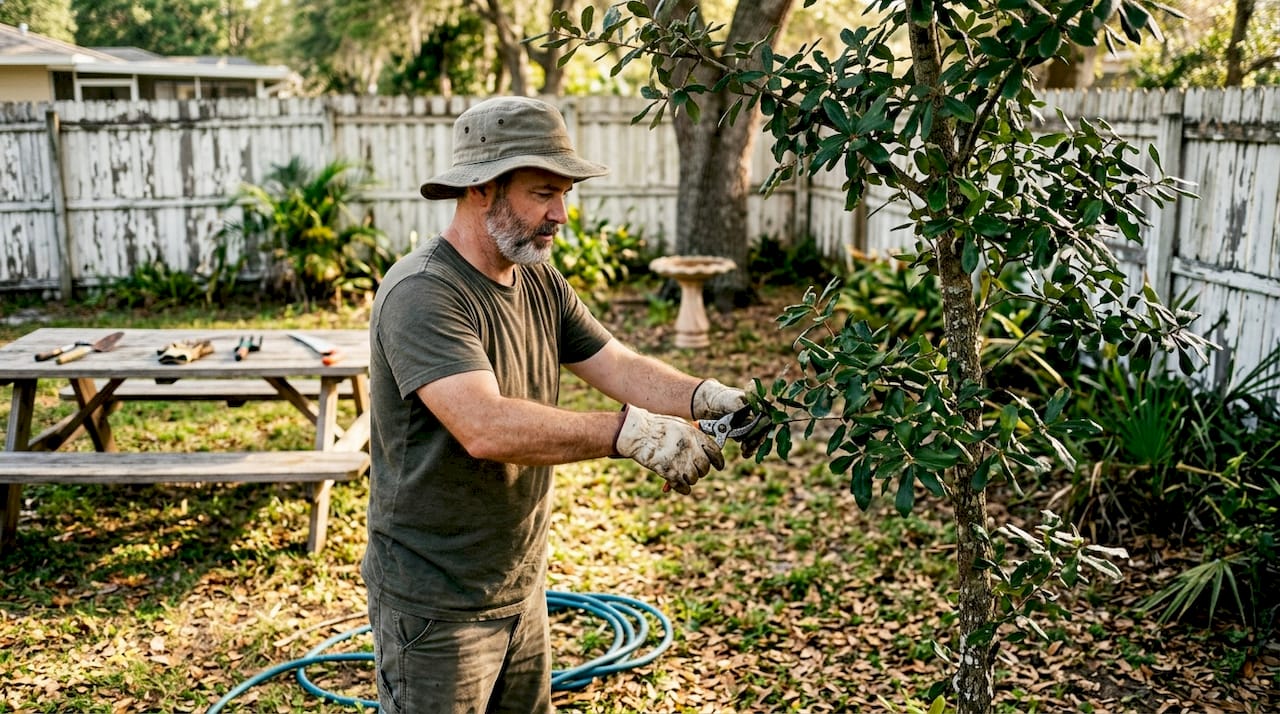
Structural pruning is one of the most valuable investments you can make in a young tree. It shapes the tree’s growth pattern early, reducing the risk of weak branch attachments, split trunks, and wind damage later. Structural pruning and mulching techniques are proven to improve tree strength and health, and starting early means less corrective work as the tree matures.
Mulching is equally important and often done wrong. Apply a 3-inch layer of mulch in a ring extending at least 3 feet from the trunk. Keep the mulch pulled back from the bark itself. Piling mulch against the trunk, sometimes called volcano mulching, traps moisture and invites rot and pests. Following mulching best practices is one of the simplest ways to extend a tree’s life.
Key care practices for Central Florida trees:
- Prune during the dormant season or after storm season when possible
- Remove crossing branches before they cause bark damage
- Choose drought-tolerant, Florida-native species for new plantings
- Water deeply but infrequently to encourage deep root growth
- Inspect for pests and disease at least twice a year
Pro Tip: Review tree trimming best practices before scheduling any pruning work. Improper cuts create entry points for disease and can shorten a tree’s life by years.
“The goal of every pruning cut is to support the tree’s natural form while removing only what is necessary. Less is almost always more.” — UF/IFAS Extension
For a deeper look at timing and technique, our guide on pruning strategies covers the specifics for common Florida species.
When to consult an arborist and local guidelines
Some tree situations are straightforward enough for a confident homeowner to handle. Others are not. Knowing the difference protects your trees, your property, and your legal standing.
Call a certified arborist when you are dealing with any of the following situations. Large trees near structures or power lines require professional risk assessment before any work begins. Trees showing signs of disease, structural failure, or root damage need expert evaluation, not guesswork. Any removal or major pruning that might trigger a permit requirement should involve an arborist who can document the work properly.
ISA-certified arborists are essential for risk assessments, and local ordinances like Orange County’s clarify standards for heritage trees, which are typically older, larger specimens given extra legal protection.
Situations that call for a certified arborist:
- Tree is within striking distance of a home, fence, or utility line
- You suspect root damage from construction or soil compaction
- A tree has lost major limbs in a storm and needs a health check
- You need permit documentation or a risk exemption letter
- You are planning a landscape renovation near existing trees
Pro Tip: Before planting anything new, review tree planting considerations and use a tree species selection guide to choose trees that fit your site. The right species in the right place needs far less intervention over time.
For questions about tree pruning and trimming standards in Florida, county extension offices and university resources offer reliable, locally tested guidance. A quick call to your county arborist can also clarify whether a specific tree on your property has protected status.
Working with certified arborist guidance from the start of any project saves time, reduces risk, and keeps your landscape looking its best.
Why preservation beats replacement: An owner’s perspective
Here is something we see regularly in Central Florida: a homeowner removes a mature oak or magnolia because it looks messy or seems risky, replants a small sapling, and then spends the next decade wondering why their yard feels exposed and their energy bills are higher. The replacement tree will not provide meaningful shade, stormwater absorption, or aesthetic presence for 15 to 20 years at minimum.
Preserved mature trees provide storm resistance, aesthetics, and health benefits that removal and replanting simply cannot match in the short or medium term. A well-maintained mature tree is also a significant financial asset. Studies consistently show that mature trees add 10 to 15 percent to residential property values.
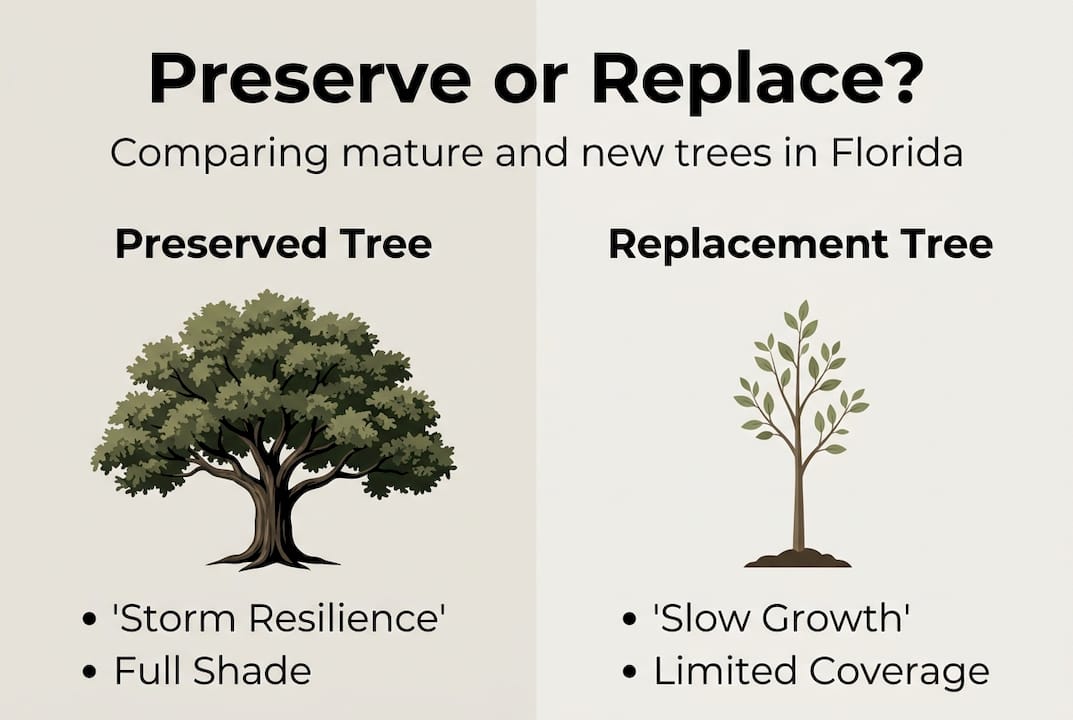
The real risk is not the tree. It is the hasty decision to remove it without expert input. Most trees that appear dangerous can be made safe through targeted pruning, cabling, or root zone management. Learning about protected tree care before acting is always the smarter move. We have seen properties transformed by investing in preservation rather than replacement, and the results speak for themselves.
Expert help for your trees in Central Florida
If this article has made one thing clear, it is that tree preservation involves real decisions with real consequences for your property and your wallet.
At McCullough Tree Service, our certified arborist team provides on-site risk evaluations, permit documentation, and customized care plans for both residential and commercial properties across Central Florida. Whether you need professional tree trimming to improve structure and appearance, or you are weighing your options and need honest tree removal guidance, we are here to help you make the right call. Reach out today for an estimate and let us put our expertise to work for your landscape.
Frequently asked questions
Do I need a permit to trim or remove a tree in Central Florida?
Many trees require a permit for removal based on species, size, and location, but exemptions exist for hazardous, invasive, or residential risk situations when an ISA-certified arborist documents the condition. Always check your local ordinance before starting any work.
What is the 3:1 or 5:1 mitigation rule for tree replacement?
If a specimen or heritage tree is removed, local codes may require you to plant 3 or 5 new trees for each one removed, depending on the species and size. These mitigation ratios are standard across many Florida ordinances.
How can I tell which trees are protected on my property?
Protected status depends on species, DBH measurement, and your local ordinance; use county species lists or consult an ISA-certified arborist to confirm what applies to your specific trees.
What is structural pruning and why is it important?
Structural pruning shapes a young tree for long-term strength and stability by removing competing leaders and weak attachments early, making the tree healthier and more wind-resistant as it matures.
Recommended
- Tree planting benefits Central Florida properties 2026
- Why seasonal tree care boosts Central Florida health 40%
- How tree care boosts property value in Central Florida
- Tree Trimming in Florida: DIY Tips & Tricks