By: Shelby McCullough| Published: April 3, 2026
TL;DR:
- Central Florida landscapes require proactive safety, storm readiness, and native plant integration for resilience.
- Proper tree pruning, removal, and stump grinding are essential for safety and long-term property value.
- Strategic planning with certified arborists reduces costs and protects homes from storm damage.
Central Florida’s climate is unlike anywhere else in the country. You’re dealing with intense summer heat, heavy rainfall, and a hurricane season that runs nearly half the year. Choosing the right landscaping services isn’t just about making your yard look good. It’s about protecting your property, keeping your family safe, and making smart long-term investments. From tree trimming and stump grinding to native plant installation and emergency storm cleanup, the range of decisions can feel overwhelming. This guide walks you through the services that matter most, when to call in professionals, and how to get the most value from every dollar you spend.
Table of Contents
- How to evaluate landscaping services for your property
- Tree trimming, pruning, and palm care
- Tree removal, stump grinding, and land clearing services
- Aesthetic and functional landscape enhancements
- Emergency tree services and storm preparation
- Our expert take: What most homeowners miss about landscaping services
- Professional landscaping: Get it done right in Central Florida
- Frequently asked questions
Key Takeaways
| Point | Details |
|---|---|
| Certified expertise matters | Hiring ISA-certified pros ensures safety, healthier trees, and smart storm prep. |
| Native plants save money | Choosing native and drought-tolerant plants can cut maintenance costs up to half. |
| Emergency readiness is crucial | Proactive emergency and storm services protect your property and lower risk. |
| Service selection is strategic | Matching the right landscaping service to your property’s needs delivers the best results. |
How to evaluate landscaping services for your property
With the importance of local expertise in mind, let’s break down what to look for when selecting services. Every property is different, and the right mix of landscaping services depends on your goals, your budget, and the specific challenges your land presents.
Start by asking three core questions: What do you want your property to look like? Are there any immediate safety concerns like leaning trees or overgrown limbs near power lines? And how does your landscape hold up during storm season? These questions help you prioritize instead of spending money on services that don’t move the needle.
Common landscaping services in Central Florida include tree trimming and pruning, tree removal, stump grinding, land clearing, arborist consultations, mulch, rock, and sod installation, plant installation, palm tree trimming, emergency tree services, and aesthetic enhancements like hardscaping and irrigation. That’s a wide menu. Knowing which items apply to your situation is half the battle.
Here’s what to factor in when evaluating your options:
- Property goals: Are you focused on safety, curb appeal, resale value, or all three?
- Regional weather patterns: Central Florida’s wet and dry seasons affect which plants thrive and which services you’ll need most.
- Safety concerns: Dead branches, diseased trees, and root intrusion near structures require professional attention, not a weekend DIY project.
- Sustainability: Choosing sustainable landscaping tips and native plants reduces water use and long-term maintenance costs.
Pro Tip: Before calling any company, walk your property after a heavy rain. Drainage problems, leaning trees, and bare patches all become obvious when the ground is saturated.
When safety or tree health is involved, certified arborist expertise is non-negotiable. A licensed professional can spot problems that aren’t visible to the untrained eye, saving you from costly surprises down the road.
Tree trimming, pruning, and palm care
Now that you have a solid evaluation framework, let’s look closer at specific service examples, beginning with tree and palm care. These are the most frequently requested services in Central Florida, and for good reason.
Professional tree trimming isn’t just about making trees look neat. There are four distinct types of pruning, and each serves a different purpose:
- Cleaning: Removing dead, diseased, or broken branches to improve tree health.
- Raising: Lifting the canopy by removing lower limbs to improve clearance for structures, vehicles, and pedestrians.
- Reduction: Reducing the overall size of a tree, often to manage risk near buildings or utility lines.
- Thinning: Selectively removing branches to improve light penetration and air circulation through the canopy.
Proper pruning mechanics matter enormously in Central Florida, where the wrong cut can leave a tree vulnerable to fungal infections that spread fast in humid conditions. Pruning young trees early builds strong structure and reduces the need for costly corrective work later.
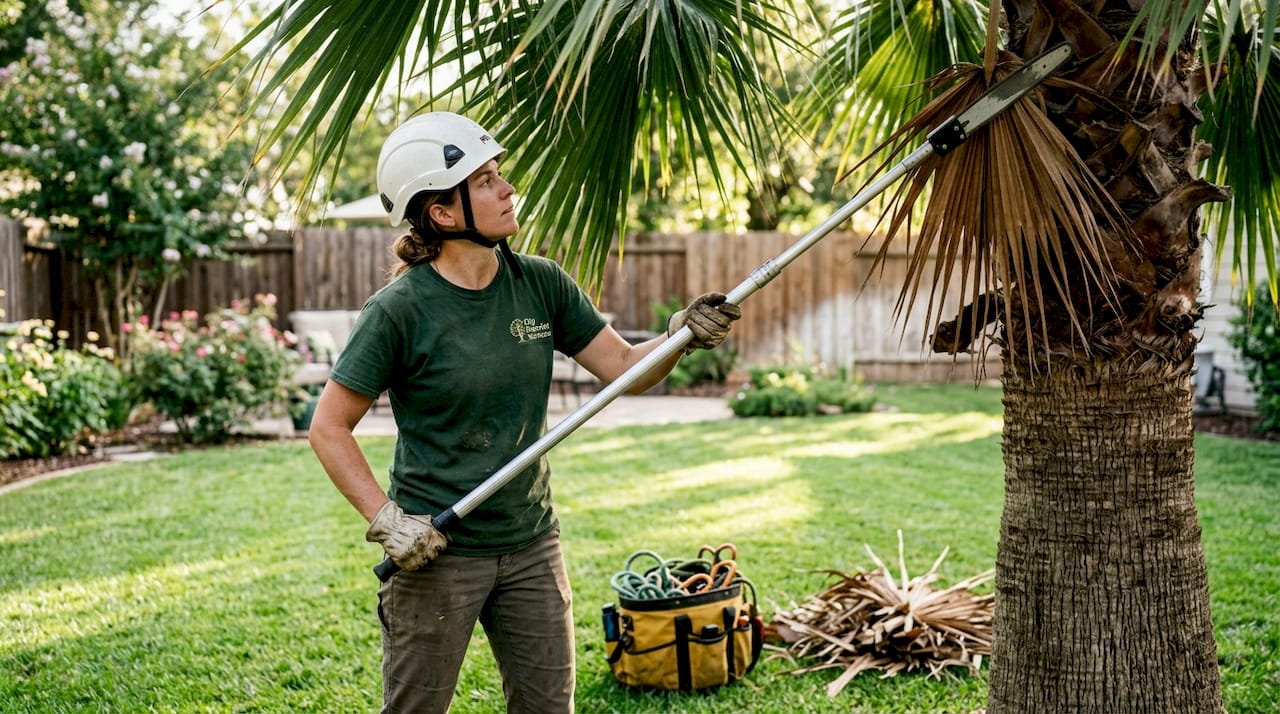
Palm trees are a special case. They don’t follow the same growth rules as hardwood trees, and over-trimming is one of the most common mistakes homeowners make. Removing too many fronds weakens the tree and makes it more susceptible to wind damage. Palm tree trimming options should always follow species-specific guidelines.
“ISA Certified Arborists follow ANSI A300 standards for all pruning work, ensuring cuts are made correctly and the tree’s long-term health is protected.”
Pro Tip: Never hire someone who suggests topping your trees. Topping is widely rejected by arborists because it creates weak regrowth, increases storm risk, and often kills the tree over time.
For both shade trees and palms, working with a professional who offers tree trimming services means you get the right cut at the right time, which is especially critical before hurricane season. A comprehensive tree service provider can assess your entire property and prioritize which trees need attention first.
Tree removal, stump grinding, and land clearing services
Beyond routine trimming, more intensive services become necessary for safety and property upgrades. Knowing when to move from maintenance to removal is one of the most important decisions a property owner can make.
Tree removal becomes necessary when a tree is dead or dying, structurally compromised, diseased beyond recovery, or poses a direct threat to structures or people. A detailed tree removal guide can help you understand the full process, but the short version is this: don’t wait until a storm makes the decision for you.
Once a tree is removed, the stump is often left behind. Stumps are more than an eyesore. They attract termites, fungi, and pests, and they make mowing and landscaping around them a hassle. Understanding stump grinding basics helps you see why grinding is almost always worth the added cost.
Here’s a quick comparison of these three intensive services:
| Service | When you need it | Typical outcome |
|---|---|---|
| Tree removal | Dead, diseased, or dangerous trees | Clears space, eliminates risk |
| Stump grinding | After removal or existing stumps | Smooth ground, pest prevention |
| Land clearing | New construction, overgrown lots | Prepares land for new use |
Key reasons homeowners invest in these services:
- Safety: A leaning tree near your home is a liability, not just an inconvenience.
- Property value: Cleared, well-maintained land is more attractive to buyers.
- Expansion: Adding a pool, driveway, or garden often requires clearing first.
Preventive pruning costs significantly less than emergency removal, which can run several times higher when urgency, equipment, and debris disposal are factored in. The land clearing process is also more affordable when planned in advance rather than rushed after storm damage.
Aesthetic and functional landscape enhancements
A safe and clean landscape sets the stage for enhancements that deliver lasting beauty and value. Once the structural and safety work is done, aesthetic upgrades are where your property really starts to shine.
Mulching is one of the highest-return investments you can make. It retains soil moisture, regulates temperature, suppresses weeds, and gives planting beds a polished look. Sod installation creates instant green coverage, while decorative rock adds low-maintenance texture to areas where grass struggles to grow.
Irrigation systems are another game-changer in Central Florida. The dry season can be brutal, and hand-watering is inefficient. A properly designed irrigation system delivers water where it’s needed, when it’s needed, without waste.
Here’s how common enhancements stack up:
| Enhancement | Primary benefit | Climate fit |
|---|---|---|
| Mulching | Moisture retention, weed control | Excellent year-round |
| Sod installation | Instant turf coverage | Best in spring or fall |
| Native plant installation | Low water, low maintenance | Ideal for Central Florida |
| Drip irrigation | Efficient water delivery | Critical during dry season |
| Decorative rock | Low maintenance, durable | Great for shaded areas |
Native plants reduce maintenance costs by 30 to 50 percent, and UF/IFAS recommends a “right plant, right place” approach that matches species to your soil, light, and water conditions. Choosing plants adapted to Central Florida’s climate means fewer replacements, less water, and a yard that handles heat and heavy rain without constant intervention.
For tips on building a sustainable yard, native landscaping strategies from UF/IFAS are a solid starting point. The goal is a landscape that looks great and works with the environment rather than against it.
Emergency tree services and storm preparation
Finally, some of the most valued landscaping services protect your property during Florida’s harshest weather. Hurricane season runs from June through November, and the trees on your property are either an asset or a liability depending on how well they’ve been maintained.
Emergency tree services typically include fallen tree removal, storm debris cleanup, hazardous limb removal, and temporary stabilization of damaged trees. But the real value comes from preparation before a storm hits, not cleanup after.
Here’s how to get your landscape storm-ready:
- Schedule a pre-season inspection: Have a certified arborist assess every mature tree on your property before June.
- Trim overhanging branches: Limbs near your roof, windows, or power lines should be cleared well before storm season.
- Remove dead or compromised trees: These are the first to fall in high winds.
- Secure or remove loose items: Planters, decorative rocks, and garden furniture become projectiles in a hurricane.
- Mulch your beds: A thick layer of mulch helps protect root systems from flooding and soil erosion.
Pre-storm pruning is one of the most cost-effective steps you can take in a hurricane-prone region. It reduces wind resistance in the canopy and removes the weak points that break off first.
“The difference between a tree that survives a hurricane and one that doesn’t often comes down to how well it was maintained in the years before the storm.”
Pro Tip: After a major storm, don’t rush to clean up yourself. Downed trees can be under tension and shift suddenly. Always let professionals handle the emergency tree service process first. Learn more about tree trimming for storm safety to understand how proactive care reduces post-storm damage.
Our expert take: What most homeowners miss about landscaping services
Here’s the honest truth: most homeowners treat landscaping reactively. They call for help when a tree falls, when the yard looks embarrassing before a family event, or when a neighbor complains. That approach costs more and delivers less.
The properties that look the best and hold their value longest are the ones where owners think a few seasons ahead. They schedule trimming before storm season, not after. They remove a struggling tree before it becomes a hazard. They choose plants that fit the soil instead of fighting it every summer.
Chasing instant curb appeal without addressing structure and safety is one of the most common mistakes we see. A yard full of beautiful plants surrounding a rotting oak is a disaster waiting to happen. The value of a certified arborist isn’t just in what they do. It’s in what they catch before it becomes a crisis.
Long-term savings come from getting the right services in the right order. Start with safety, build structure, then add beauty. That sequence protects your investment at every stage.
Professional landscaping: Get it done right in Central Florida
A strategic approach to your property’s landscape makes the Central Florida climate far more manageable. Whether you need routine maintenance or a full property overhaul, working with a trusted local team means every service is done safely, correctly, and with your long-term goals in mind.
At McCullough Tree Service, we handle everything from professional tree trimming and safe tree removal to stump grinding service and emergency storm response. Our certified arborists bring real expertise to every job, and we’re happy to walk your property and give you an honest, obligation-free assessment. You don’t have to figure this out alone. Reach out today and let’s build a landscape plan that protects your property and looks great doing it.
Frequently asked questions
What are the most common landscaping services in Central Florida?
Tree trimming, removal, stump grinding, land clearing, plant installation, mulching, palm care, and emergency tree services are especially common in Central Florida due to the region’s climate and storm exposure.
When should I hire a certified arborist versus doing it myself?
Hire certified arborists for tree health evaluations, risk assessments, structural pruning, and post-storm cleanup. DIY is only appropriate for basic planting or light mulching in low-risk areas.
What landscape upgrades offer the best long-term value?
Installing native and drought-tolerant plants alongside efficient irrigation and mulching cuts maintenance costs by 30 to 50 percent while boosting your property’s overall appeal and resilience.
How does storm preparation impact my landscaping choices?
Frequent storms require regular pre-storm pruning, palm care, and smart plant selection to prevent wind damage, reduce cleanup costs, and keep your property safe throughout hurricane season.
Recommended
- Land clearing checklist 2026: Central Florida guide
- Tree Planting Considerations for Central Florida Homes
- Tree Planting Guide Central Florida for Homeowners
- Tree planting for Central Florida landscapes: 50% fail
- Outdoor Projects Can Boost Curb Appeal When You Sell [INFOGRAPHIC]