By: Shelby McCullough| Published: April 28, 2026
TL;DR:
- Proper site assessment and species selection are essential for successful tree planting in Central Florida.
- Correct planting, watering, and ongoing care are crucial to ensure long-term tree health and avoid common mistakes.
- Consulting local experts and regional resources increases success and prevents costly infrastructure or storm damage.
Planting a tree on your Central Florida property is one of the best investments you can make, but the difference between a thriving shade tree and a dead sapling often comes down to decisions made before you ever pick up a shovel. The wrong species in the wrong spot can crack your foundation, buckle your driveway, or simply die within a season, costing you money and frustration. Get it right, though, and you’ll gain decades of shade, lower energy bills, improved curb appeal, and real environmental value. This guide walks you through every step, from evaluating your yard to keeping your new tree healthy for years.
Table of Contents
- Assessing your space and site conditions
- Choosing the right tree for Central Florida
- Step-by-step process: How to plant a tree and get it right
- Caring for your new tree: First year and beyond
- Common mistakes and how to avoid them
- Lessons learned from decades of Central Florida tree planting
- How McCullough Tree Service can help with tree planting and care
- Frequently asked questions
Key Takeaways
| Point | Details |
|---|---|
| Right location matters | Choosing the best spot and assessing site conditions prevents costly mistakes and tree loss. |
| Select suitable trees | Picking species adapted to Central Florida increases landscape longevity and property value. |
| Follow proven steps | Proper planting techniques greatly increase the survival and health of your trees. |
| Ongoing care is essential | Regular watering, mulching, and monitoring are key to a thriving landscape. |
| Avoid common errors | Learning what not to do saves time, money, and keeps your trees strong for years. |
Assessing your space and site conditions
Before you even choose a tree, you need to thoroughly understand your property’s unique conditions. Central Florida’s environment is not like the rest of the country. Sandy soils drain fast, clay pockets hold water too long, and summer storms can push 60 mph wind gusts through your neighborhood in minutes. Skipping this assessment phase is the single biggest reason new trees fail.
Start by mapping your space. Walk your yard at different times of day and note where full sun falls, where shade pools, and where water tends to collect after heavy rain. Mark underground utilities before you dig. In Central Florida, the distance between a buried power line and a fast-growing tree root system can become a very expensive problem.
Here’s a quick overview of the most common soil and drainage conditions you’ll find in the region:
| Condition | What it means for your tree | What to do |
|---|---|---|
| Sandy soil | Fast drainage, low nutrients | Amend with compost, choose drought-tolerant species |
| Clay soil | Slow drainage, root rot risk | Raise planting area, choose flood-tolerant species |
| Mixed loam | Balanced drainage | Broadest species selection available |
| Low-lying yard | Flooding risk in rainy season | Choose cypress, red maple, or water-tolerant natives |
| High, exposed area | Wind exposure, dry conditions | Choose wind-resistant, deep-rooted species |
Key site factors to evaluate before you plant:
- Sunlight: Full sun (6+ hours), partial shade, or deep shade all require different species.
- Overhead lines: Stay at least 25 feet away with large-canopy trees.
- Drainage patterns: Watch your yard during and after a rainstorm.
- Wind corridors: Note which direction storms typically approach from.
- Proximity to structures: Driveways, fences, and foundations all need buffer zones.
“Choosing the right tree for the right place is the foundation of successful landscaping. Site conditions, not just aesthetics, should drive every planting decision.” This is why the UF/IFAS Florida Trees Tool is so valuable. It gives site-specific recommendations based on your soil type, drainage, wind exposure, and flood tolerance, so you’re not guessing.
Our tree planting guide Central Florida breaks down these site factors in more detail, and our page on planting considerations for Florida homes covers how to factor in storm risk specifically. If you want a thorough checklist, our guide on what to consider when planting trees is a great starting point.
Choosing the right tree for Central Florida
Once you’ve mapped your site’s possibilities and limitations, it’s time to choose a suitable tree. This step is where many homeowners get excited and rush straight to the nursery without a clear plan. Don’t do that. Knowing your goals first will save you from buying a beautiful tree that’s completely wrong for your yard.
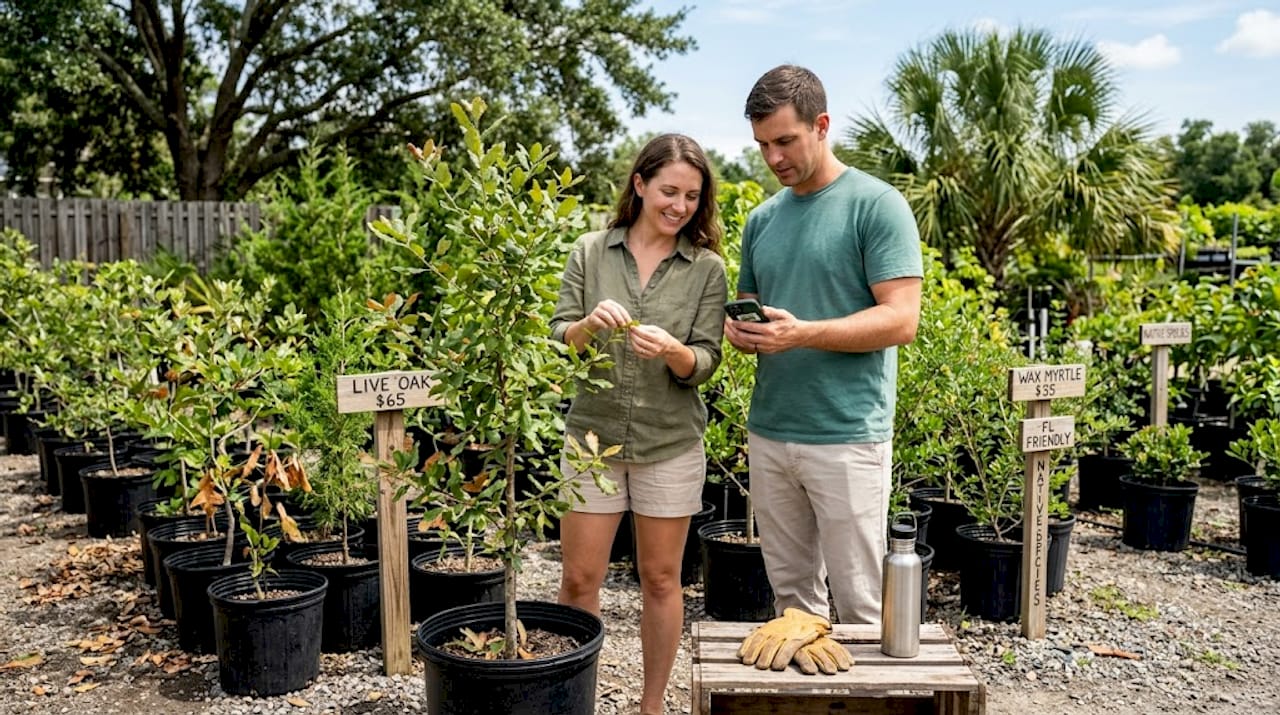
Define your primary goal. Are you planting for shade over a patio? Privacy screening along a fence line? Attracting pollinators and wildlife? Or do you want to boost your property’s curb appeal and resale value? Each goal points to a different shortlist of species.
Here’s a comparison of popular trees for Central Florida landscapes:
| Tree species | Growth rate | Mature height | Best use | Native? |
|---|---|---|---|---|
| Live oak (Quercus virginiana) | Slow to moderate | 40-80 ft | Shade, long-term value | Yes |
| Southern magnolia | Moderate | 60-80 ft | Aesthetics, privacy | Yes |
| Crape myrtle | Fast | 15-30 ft | Color, smaller yards | No |
| Bald cypress | Moderate | 50-70 ft | Wet areas, flood zones | Yes |
| East Palatka holly | Moderate | 30-45 ft | Privacy screening | Yes |
| Sycamore | Fast | 70-100 ft | Large properties only | No |
| Winged elm | Moderate | 40-70 ft | Shade, storm resistance | Yes |
Native vs. non-native trees. Native species like the live oak, bald cypress, and East Palatka holly are adapted to Florida’s wet summers, dry winters, and hurricane-force winds. They require less water once established, support local wildlife, and generally survive storms better. Non-native species can work well too, but they often need more maintenance and may not handle Florida’s extremes as gracefully.
Follow these steps when narrowing down your selection:
- List your top two goals (shade, privacy, aesthetics, wildlife, etc.).
- Cross-reference those goals with your site assessment results.
- Check the UF/IFAS Florida Trees Tool to confirm species suitability for your exact location.
- Visit a local nursery and ask for Florida-grown stock, not trees shipped from out of state.
- Check mature size against your available space. A tree that looks small at the nursery can reach 60 feet.
Pro Tip: Avoid fast-growing trees like the Bradford pear or Leyland cypress in Central Florida. They look appealing at the nursery but are weak-wooded, prone to splitting in storms, and can become liabilities rather than assets. For guidance on selecting the right trees for your property’s specific needs, a certified arborist can save you from costly mistakes.
Step-by-step process: How to plant a tree and get it right
With your tree chosen and your spot selected, the next step is to ensure you plant it properly. This is where good intentions often go wrong. Studies consistently show that improper planting depth is one of the leading causes of early tree death, and it’s entirely preventable.
Follow these steps carefully:
- Dig the hole correctly. Make it two to three times wider than the root ball but no deeper than the root ball’s height. A wide, shallow hole encourages roots to spread outward.
- Inspect the root ball. Remove any burlap, wire, or container material. Look for circling roots and straighten or cut them before planting.
- Set the correct depth. The root flare (where the trunk widens at the base) must sit at or slightly above the soil surface. Planting too deep is one of the most common reasons plantings fail.
- Backfill with native soil. Don’t amend the backfill heavily. Using the same soil you removed encourages roots to grow outward into the native ground rather than staying in an amended pocket.
- Water deeply and immediately. Soak the entire root zone right after planting to eliminate air pockets.
- Apply mulch. Spread a 3-inch layer of mulch in a ring around the tree, keeping it 3 to 4 inches away from the trunk to prevent rot.
Watering in the first year. Central Florida’s rainy season runs June through September, which can actually help newly planted trees. But the dry season (October through May) requires you to water consistently. For the first three months, water every other day. From months four through twelve, taper to two to three times per week. Always water slowly and deeply at the root zone, not the trunk.
Staking. Most young trees do not need staking. If your tree is tall, top-heavy, or planted in an exposed, windy location, use two flexible stakes with wide straps that allow some movement. Movement actually encourages the trunk to strengthen. Remove stakes after the first year.
Avoid the urge to fertilize immediately after planting. New roots are fragile and fertilizer salts can burn them. Wait until the tree shows healthy new growth before feeding.
Caring for your new tree: First year and beyond
After planting, proper care is key to ensuring your new tree thrives for decades to come. The first year is the most critical window. Your tree is spending almost all of its energy building a root system rather than putting on visible growth, so don’t panic if it looks slow.
First-year must-dos:
- Maintain your mulch ring, refreshing it as it breaks down.
- Keep the area around the trunk free of grass and weeds, which compete for water and nutrients.
- Avoid heavy pruning. Only remove dead, damaged, or crossing branches in year one.
- Check the soil moisture before watering. Stick your finger 2 to 3 inches into the soil. If it feels dry, water. If moist, wait.
- Monitor for pests like aphids, scale insects, or borers, which are common in Florida’s warm climate.
Warning signs to watch for:
- Wilting that doesn’t recover after watering (possible root damage or disease)
- Yellowing leaves (nutrient deficiency or overwatering)
- Bark discoloration or oozing sap (fungal infection or pest damage)
- Leaning after a storm (root disturbance, may need re-staking)
- Stunted or no new growth after three months (planting depth issue)
Pro Tip: Keep a simple log of your watering schedule and any changes you notice in the tree’s appearance. This record becomes invaluable if you need to call in a professional. It helps the arborist diagnose problems faster and more accurately.
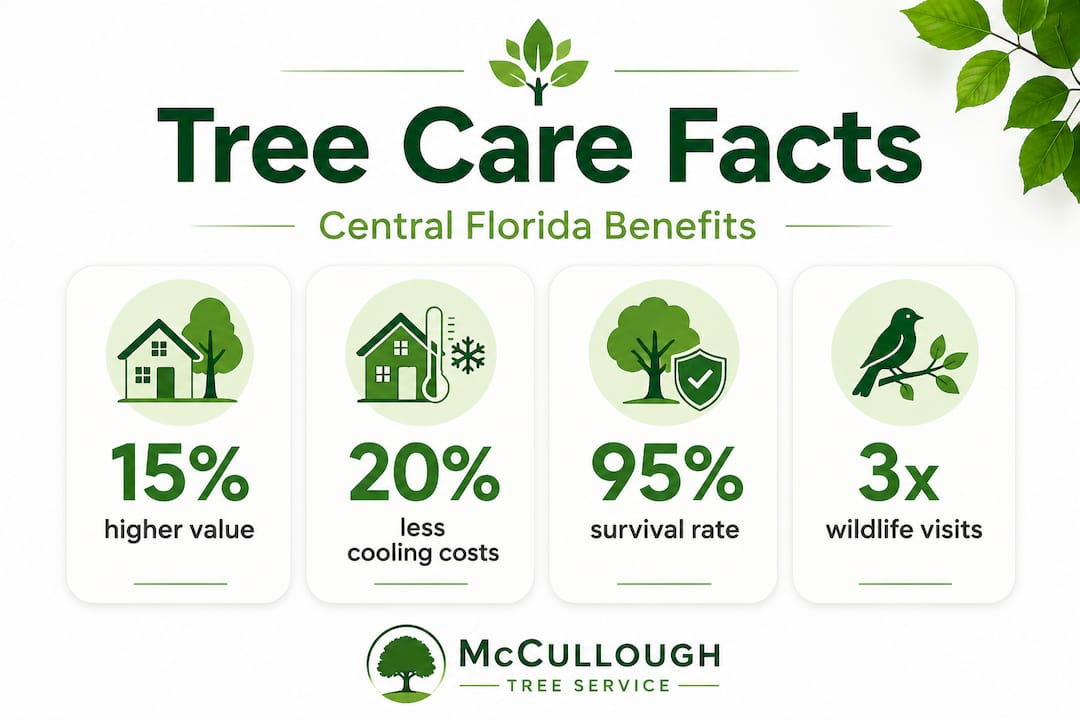
Long-term, a well-cared-for tree can boost your property value by up to 15 percent, according to real estate research. Regular professional trimming every two to three years keeps the canopy healthy, reduces storm risk, and maintains the shape that adds curb appeal. Our guide on caring for newly planted trees covers long-term maintenance in detail.
Common mistakes and how to avoid them
Even with the best of intentions, small mistakes can lead to big problems. Central Florida’s climate is unforgiving when it comes to tree care errors. Here are the most frequent mistakes we see and how to sidestep them.
Top planting and care mistakes:
- Planting too deep. The root flare must be visible above the soil. Burying it causes slow decline over years, not overnight, making it hard to diagnose.
- Ignoring wind and flood risk. Central Florida gets hurricanes and tropical storms. A tree planted in a wind corridor or low-lying flood zone without the right species selection is a future hazard.
- Overwatering during the rainy season. Many homeowners keep their irrigation schedule running through summer. This drowns roots and invites fungal disease.
- Underwatering during the dry season. The opposite problem. Trees planted in fall or winter need supplemental irrigation even when it doesn’t feel hot.
- Skipping site-specific research. Generic planting advice from national gardening sites doesn’t account for Central Florida’s sandy soils, high humidity, or hurricane exposure. The UF/IFAS Florida Trees Tool is built specifically for Florida conditions and should be your first resource.
- Planting too close to structures. Roots follow water and nutrients. A tree planted 8 feet from your house today can have roots under your foundation in ten years.
The drawbacks of improper planting go beyond aesthetics. A poorly placed tree can damage infrastructure, create storm hazards, and require expensive removal down the road.
Avoiding these mistakes doesn’t require expertise. It just requires slowing down, doing the site assessment, and using the right regional resources before you plant.
Lessons learned from decades of Central Florida tree planting
Here’s something most planting guides won’t tell you: the checklist matters far less than the mindset behind it. We’ve seen homeowners follow every step perfectly on paper and still lose trees because they applied advice designed for Georgia or the Carolinas to a Central Florida yard. The climate here is genuinely different, and that difference shows up in ways that surprise even experienced gardeners.
The most consistent pattern we’ve seen over the years is this: trees fail when homeowners treat planting as a one-time event rather than the beginning of a relationship. A tree planted in August in Orlando is going into one of the most stressful environments imaginable. Heat, humidity, afternoon storms, and sandy soil that drains water almost instantly. That tree needs attention, not just good intentions.
What actually separates successful plantings from failures in our experience is the willingness to adapt. The homeowners who do best are the ones who check on their trees regularly, adjust their watering when the weather shifts, and call for help before a problem becomes a crisis. They don’t wait until a tree is half-dead to ask questions.
We’d also push back on the idea that native trees are always the easiest choice. Yes, they’re adapted to Florida conditions, but a native tree planted in the wrong microclimate on your property, say, a bald cypress in a dry, elevated corner, will struggle just as much as any non-native. The species matters, but placement and ongoing care matter more.
The honest truth is that most tree failures are preventable. They come from skipping the site assessment, buying the wrong species on impulse, or planting and walking away. Central Florida rewards homeowners who take a thoughtful, site-specific approach and punishes those who treat it like anywhere else in the country.
How McCullough Tree Service can help with tree planting and care
If this guide has shown you anything, it’s that successful tree planting in Central Florida takes real preparation, the right species, and consistent follow-through.
At McCullough Tree Service, our certified arborists work with homeowners across Orlando and Central Florida at every stage of the process, from initial site evaluation and species selection to planting, first-year care, and long-term maintenance. Whether you’re planting to increase your property’s value or simply want a shaded backyard, we bring the local expertise to get it right. And if a tree ever becomes a hazard or needs to come down, our tree removal services handle that safely and efficiently. Contact us today to request a free estimate and get started with a plan built for your specific yard.
Frequently asked questions
What’s the best time of year to plant trees in Central Florida?
The best time is late fall through early spring, when cooler temperatures reduce transplant stress and seasonal rains help roots establish. The UF/IFAS Florida Trees Tool can help you confirm timing based on your specific site conditions.
How far should new trees be planted from a house?
Most landscape trees should be planted at least 15 to 20 feet from buildings to allow for safe root spread and future canopy growth. Large-canopy trees like live oaks may need even more clearance depending on their mature size.
Do I need to stake my newly planted tree?
Staking is only necessary for tall trees in windy areas or if the root ball is loose after planting. Most young trees establish better without stakes, since natural movement encourages trunk strength, per UF/IFAS guidelines.
What are signs my new tree is struggling?
Look for wilting that doesn’t improve after watering, yellowing leaves, bark discoloration, or visible pests. Acting quickly when you spot these signs gives the tree the best chance of recovery before long-term damage sets in.
Recommended
- Central Florida tree planting guide: steps for lasting results
- Tree planting for Central Florida landscapes: 50% fail
- Tree Planting for Central Florida Developers: 50% Survival Boost
- Tree planting: boost property value in Central Florida