By: Shelby McCullough| Published: April 17, 2026
TL;DR:
- Land clearing in Central Florida involves permits, protected species surveys, and environmental regulations.
- Methods include forestry mulching, mechanical clearing, manual work, cut-and-grind, and controlled burning, each with specific costs and impacts.
- Hiring licensed local professionals ensures compliance, minimizes environmental harm, and prevents costly fines and delays.
Most property owners assume land clearing means hiring someone to knock down a few trees and haul off the brush. The reality is far more layered. In Central Florida, clearing even a modest parcel can trigger permit requirements, protected species surveys, and wetland regulations that catch unprepared owners completely off guard. Get it wrong, and you’re looking at fines that can reach $15,000 per violation. This guide breaks down exactly what land clearing involves, which methods work best in Florida’s unique environment, what the law requires, and how to choose the right team to get the job done without costly surprises.
Table of Contents
- What is land clearing?
- Methods of land clearing and cost comparison
- What permits and regulations affect land clearing in Central Florida?
- Choosing equipment and clearing professionals
- Common pitfalls and expert advice property owners miss
- Ready to clear your land? Connect with trusted Central Florida experts
- Frequently asked questions
Key Takeaways
| Point | Details |
|---|---|
| Land clearing is complex | Land clearing requires careful planning, legal compliance, and the right methods for your property. |
| Multiple clearing methods | Forestry mulching, mechanical, and manual are main methods, each with pros, cons, and cost ranges. |
| Permits prevent penalties | Skipping permits or ignoring regulations can result in fines up to $15,000 and restoration costs. |
| Use local professionals | Central Florida specialists know local rules, protect ecosystems, and streamline the process for property owners. |
What is land clearing?
Land clearing is the process of removing vegetation, debris, trees, stumps, rocks, and other obstacles from a site to prepare it for a specific use. That use might be new home construction, a commercial development, a landscaping overhaul, agricultural expansion, or even ecological restoration. The scope of the work varies enormously depending on the size of the property, what’s growing on it, and what you plan to do with it afterward.
In Central Florida, land clearing carries an extra layer of complexity. The region’s subtropical climate produces dense, fast-growing vegetation that can include protected native species. Wetland buffers, wildlife corridors, and sensitive soil types are common across Orange, Osceola, Lake, and Seminole counties. That means a clearing project here isn’t just a physical job. It’s also a regulatory one.
Common reasons property owners clear land include:
- Construction preparation: Grading and building require a clean, stable surface free of roots and debris.
- Residential landscaping: Overgrown lots need clearing before new sod, gardens, or hardscaping can be installed.
- Agricultural development: Farmers and hobby farmers need open acreage for crops, livestock, or irrigation systems.
- Wildfire risk reduction: Removing excess brush and dead wood lowers the chance of fire spreading to structures.
- Ecological restoration: Some landowners clear invasive species to restore native plant communities.
“Primary methodologies include forestry mulching, mechanical clearing, manual clearing, cut-and-grind, and controlled burning.”
Each method carries different cost implications, environmental impacts, and regulatory considerations. Our land clearing guide for Central Florida goes deeper on how these factors interact for local property owners.
One thing that surprises many clients: improper clearing can result in fines up to $15,000 per violation under Florida environmental statutes. That’s not a worst-case outlier. It’s a real risk for anyone who skips the permit process or disturbs a protected wetland boundary.
Methods of land clearing and cost comparison
Understanding what land clearing means leads naturally to the question: which methods are available, and how do they compare? There are five primary approaches used in Florida, and each one fits a different type of property and project goal.
Forestry mulching uses a single machine equipped with a rotating drum of carbide teeth to grind vegetation directly into mulch on-site. No hauling, no burning, no separate stump grinding. The mulch stays on the ground, protecting topsoil and reducing erosion. Forestry mulching is preferred in Florida specifically because it preserves the soil structure that Florida’s sandy terrain depends on.
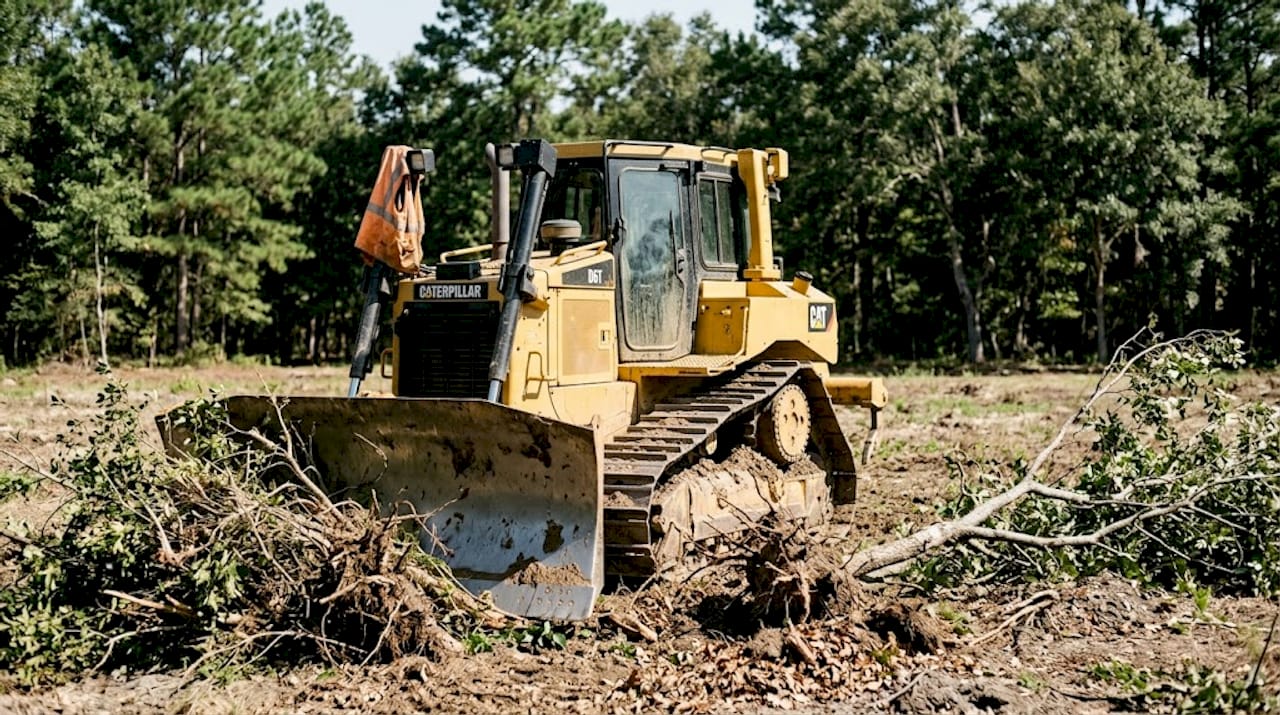
Mechanical clearing uses bulldozers and excavators to push and pile vegetation for removal or burning. It’s fast and effective for large, dense areas but can cause significant soil disturbance and compaction.
Manual clearing involves crews using chainsaws, machetes, and hand tools. It’s precise and low-impact but labor-intensive and expensive per acre on larger properties.
Cut-and-grind combines chainsaw felling with stump grinding afterward. It’s a common hybrid approach for wooded residential lots.
Controlled burning is used primarily in agricultural and rural settings. It’s cost-effective but heavily regulated in Florida due to air quality and wildfire concerns.
Pro Tip: If your property has sensitive soil, shallow root systems, or is near a wetland buffer, forestry mulching is almost always the smarter choice. It costs less in the long run when you factor in avoided erosion repairs and permit complications.
Mulchers can clear 1 to 15 acres per day depending on vegetation density and terrain, making them highly efficient for most Central Florida lots.
Here’s a side-by-side comparison of the five methods:
| Method | Avg. cost per acre | Best use cases | Environmental notes |
|---|---|---|---|
| Forestry mulching | $400–$2,500 | Wooded lots, wetland edges, residential | Low impact, preserves topsoil |
| Mechanical clearing | $1,000–$5,600 | Large tracts, commercial sites | High soil disturbance |
| Manual clearing | $500–$2,000 | Small areas, precision work | Minimal disruption |
| Cut-and-grind | $600–$3,000 | Residential wooded lots | Moderate impact |
| Controlled burning | $200–$800 | Rural, agricultural land | Heavily regulated in FL |
For a deeper look at which approach fits your specific situation, the methods for clearing land page and our land clearing process tips walk through real-world scenarios.
What permits and regulations affect land clearing in Central Florida?
Before you choose a method, it’s essential to understand local laws and rules. Central Florida’s regulatory environment is one of the most layered in the state, and that’s not an exaggeration.
Here’s how to approach the permitting process step by step:
- Check zoning and setback requirements with your county’s planning department before any work begins.
- Apply for tree removal permits if any trees on the property exceed 12 inches in diameter at breast height. Most counties require this.
- Commission a wildlife survey if your property may contain gopher tortoises, scrub jays, or other protected species. Relocation must happen before clearing.
- Determine wetland boundaries using a licensed environmental consultant. Any clearing near wetlands requires an Environmental Resource Permit (ERP) from the Florida Department of Environmental Protection or the U.S. Army Corps of Engineers.
- Meet erosion control requirements by installing silt fencing or other barriers before ground disturbance begins.
Permits are often required for large tree removal, wetland proximity, protected species presence, and erosion control compliance, and fines can reach $15,000 per violation.
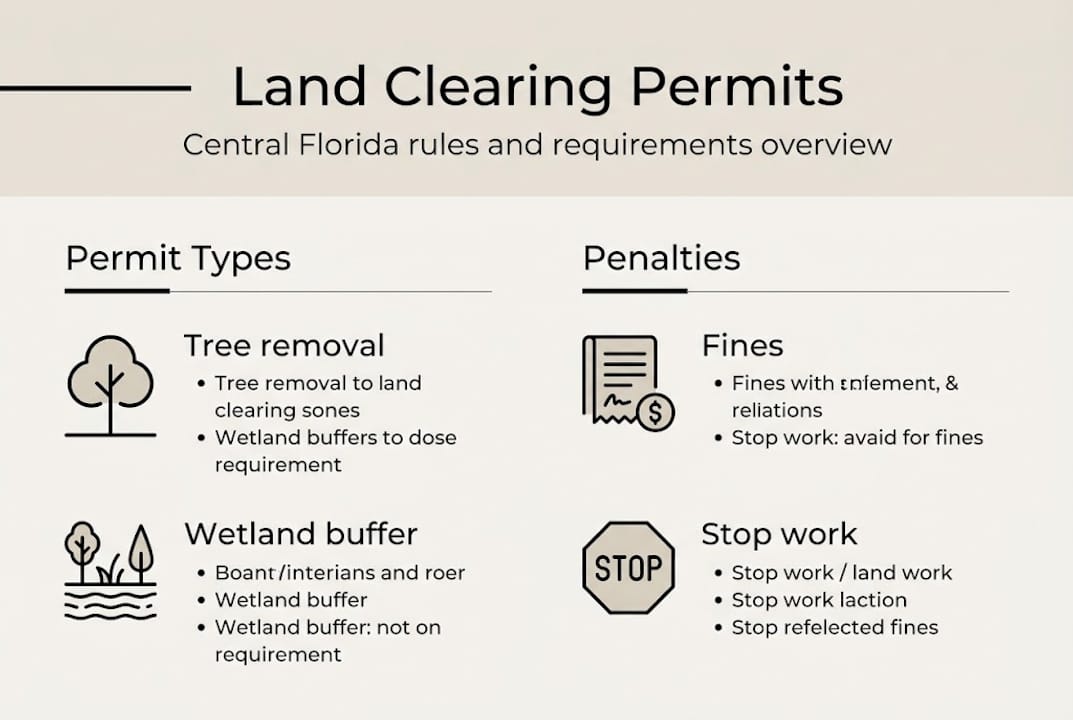
Here’s a quick reference for common violations and their consequences:
| Violation | Permit required | Maximum penalty |
|---|---|---|
| Removing protected trees without permit | Tree removal permit | $15,000 per tree |
| Clearing within wetland buffer | ERP from FDEP or USACE | $15,000 per violation |
| Disturbing gopher tortoise habitat | FWC relocation permit | $15,000 per violation |
| Inadequate erosion control | Stormwater permit | Varies by county |
Our land clearing checklist covers each of these steps in detail. You can also review the full land clearing regulations page and our legal guide to cutting trees for county-specific rules.
Choosing equipment and clearing professionals
With legal and environmental concerns addressed, you’ll need to consider how the work gets done and by whom. The equipment used in land clearing is specialized, and using the wrong machine for your terrain can cause damage that costs more to fix than the clearing itself.
The four main categories of equipment are:
- Forestry mulchers: Track or wheeled machines with a drum head that grinds trees and brush into mulch in a single pass.
- Bulldozers: Heavy push equipment for large-scale mechanical clearing. Best for open, flat terrain.
- Flail mowers: Tractor-mounted mowers for lighter brush and grass. Good for maintenance clearing.
- Stump grinders: Dedicated machines that remove stumps below grade after trees are felled.
Equipment types including mulchers, bulldozers, flail mowers, and stump grinders each perform differently based on vegetation density and terrain conditions.
DIY clearing can work for small, accessible areas with light brush and no regulatory concerns. But the moment you’re dealing with large trees, protected zones, permit requirements, or heavy equipment, professional help isn’t optional. It’s the financially responsible choice.
Before hiring any contractor, ask these questions:
- Are you licensed and insured in Florida?
- Do you have experience with Central Florida’s specific permit requirements?
- Can you handle wildlife surveys or do you subcontract that work?
- What erosion control measures do you use?
- Will you provide a written scope of work and timeline?
Pro Tip: Local contractors who specialize in Central Florida clearing know which county inspectors to call, which species surveys are typically required in your area, and how to protect your investment from regulatory delays.
Our land clearing services page outlines what a professional engagement looks like, and our tree removal safety guide explains why safety protocols matter on every job.
Common pitfalls and expert advice property owners miss
Here’s something we see repeatedly: property owners who did their homework on cost and method but completely underestimated the regulatory side. They get started, disturb a wetland edge or a gopher tortoise burrow, and suddenly the project is frozen while fines accumulate. One client we worked with had already paid a contractor to begin clearing before realizing the property contained a protected scrub habitat. The stop-work order alone cost them weeks and thousands in delays.
DIY clearing creates a different set of problems. Without the right equipment, it’s easy to compact soil around root zones of trees you want to keep, or to strip topsoil in ways that trigger erosion problems during Florida’s rainy season. These aren’t hypothetical risks. They’re common outcomes.
Forestry mulching is genuinely underused in this region, largely because property owners don’t know it exists or assume it costs more. In many cases, it’s actually cheaper when you factor in avoided hauling fees and the soil protection it provides.
The most reliable path, especially for anything beyond a small residential lot, is hiring a local team that knows Central Florida’s ecosystem and permit landscape. Explore the land clearing tips that experienced crews use to keep projects on schedule and within budget.
Ready to clear your land? Connect with trusted Central Florida experts
Now that you understand the full picture of land clearing in Central Florida, from methods and costs to permits and equipment, the smartest next step is working with a team that handles all of it.
McCullough Tree Service brings certified arborist expertise and deep knowledge of Central Florida regulations to every land clearing project. Whether you need a single lot cleared for construction or a multi-acre commercial site prepped for development, our team manages the land clearing process from permits to final grade. Explore your options through our land clearing methods guide or contact us directly to schedule an estimate for Central Florida clearing services that protect both your property and your budget.
Frequently asked questions
Are permits always required for land clearing in Central Florida?
Yes, most land clearing projects require permits, especially for removing large trees, wetland areas, or where wildlife is protected. Permits are required for tree removal, wetlands, and protected species across most Central Florida counties.
What is the most eco-friendly way to clear land?
Forestry mulching is considered the most eco-friendly method because it preserves topsoil and minimizes erosion. It is preferred for soil protection and efficiency in Florida’s sensitive ecosystems.
How much does land clearing cost per acre?
Costs in Central Florida range from $400 to $5,600 per acre depending on method and terrain. Forestry mulching runs $400 to $2,500 per acre, mechanical clearing from $1,000 to $5,600, and manual clearing from $500 to $2,000.
Can I clear land myself?
You can handle small areas of brush or minor vegetation yourself, but professionals are strongly recommended for larger properties, regulated zones, or any job requiring permits or wildlife surveys.
What risks come with poor land clearing?
Improper clearing can cause soil erosion, invasive regrowth, and fines reaching $15,000 per violation for breaking Florida’s environmental protection rules.
Recommended
- Complete Land Clearing Guide for Central Florida Homes
- Land clearing in landscaping: boost your property value
- Land Clearing Service in Orlando & Central Florida
- Expert Tips on the Land Clearing Process