By: Shelby McCullough| Published: May 13, 2026
TL;DR:
- Tree transplantation is a complex, multi-stage process requiring precise timing, root handling, and site preparation to ensure success. Proper root pruning months before the move and careful replanting with aftercare dramatically improve survival odds, especially for mature trees. Professional arborists provide vital assessment, equipment, and guidance, reducing risks and costs associated with DIY efforts.
Moving a tree sounds straightforward until you watch a perfectly healthy oak struggle through its first summer in a new location and slowly decline. The truth is that tree transplantation is a precise, multi-stage process that demands the right timing, proper root handling, and careful site preparation long before you ever pick up a shovel. Replanting without this prep can kill even a tree that looked strong and well-established. This guide walks you through every critical phase, from root pruning months in advance to aftercare strategies that actually keep trees alive, so you can make confident decisions for your Central Florida property.
Table of Contents
- Understanding the tree transplantation process: Key steps and terms
- How to prepare a tree for transplantation: The critical prep phase
- Digging, lifting, and moving: Protecting the root ball and ensuring survival
- Replanting and aftercare: Setting up your tree for a new life
- DIY vs professional tree transplantation: What homeowners need to know
- What most property owners miss about tree transplantation
- Get expert help for stress-free tree moves
- Frequently asked questions
Key Takeaways
| Point | Details |
|---|---|
| Preparation is vital | Advance planning, including root pruning and site readiness, vastly improves tree survival. |
| Root ball care prevents failure | Protect the root ball and avoid drying; always move and replant the same day to avoid shock. |
| Correct planting depth matters | Set the root flare at or slightly above grade and dig a wide, shallow hole for best results. |
| Aftercare makes the difference | Consistent watering, mulching, and monitoring during the first years ensure true establishment. |
| Call experts for large trees | Professional help is crucial for moving mature trees safely and keeping your landscape healthy. |
Understanding the tree transplantation process: Key steps and terms
Tree transplantation means carefully relocating a living tree from one spot to another while preserving as much of its root system as possible. Before you plan any move, you need to understand a few key terms that professionals use constantly.
A root ball is the cluster of roots and surrounding soil that gets moved with the tree. A bare-root system strips away all the soil, leaving roots exposed. This method only works for very young, dormant trees and small ornamentals. A balled-and-burlapped (B&B) tree has its root ball wrapped in burlap and often secured with wire to hold everything together during transport. Most established trees in Central Florida are moved using the B&B method.
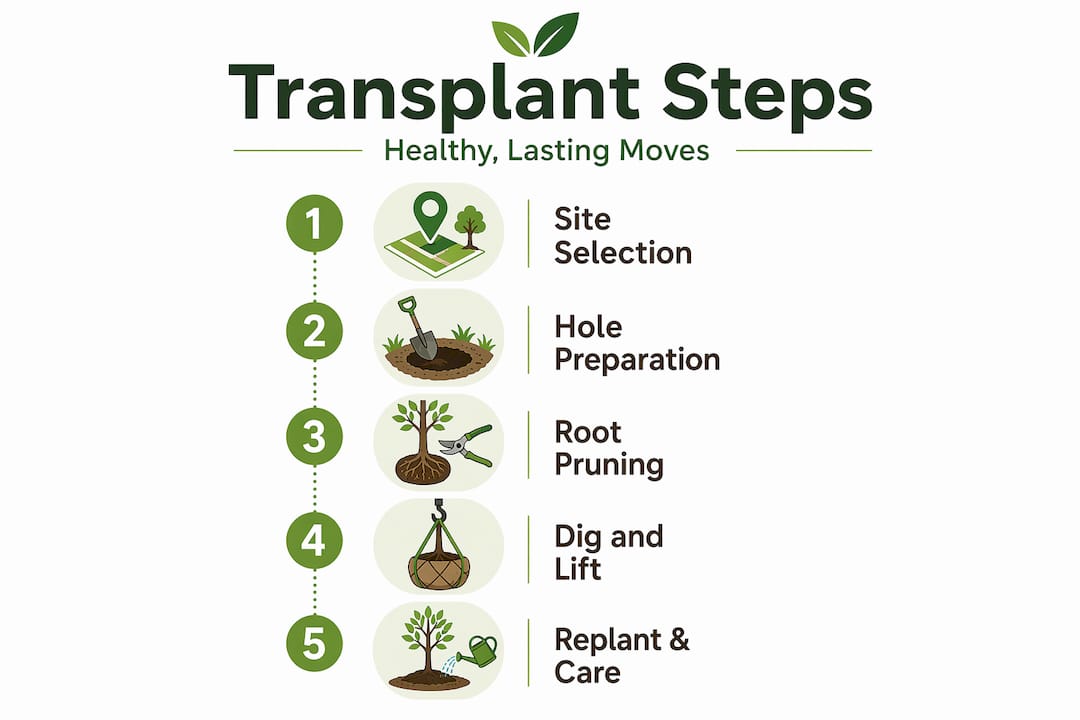
The basic sequence of any transplant follows this path: select the new site, prepare the hole, prune roots months in advance, dig the tree, transport it, replant it, and then provide consistent aftercare. Each step builds on the last, and skipping any one of them reduces the tree’s chances of survival significantly. Professionals stress root pruning well ahead of the actual move to develop a compact, transplant-ready root ball that travels without major shock.
Here is a quick comparison to help you decide whether a DIY or professional move fits your situation:
| Factor | DIY move | Professional move |
|---|---|---|
| Recommended tree size | Trunk under 2 inches in diameter | Any size, including large mature trees |
| Equipment needed | Shovel, burlap, hand tools | Spades, cranes, hydraulic equipment |
| Root ball handling | Manual, high risk of damage | Precision tools minimize damage |
| Typical survival rate | Lower, depending on technique | Higher with root pruning and aftercare plans |
| Cost | Low upfront, higher failure risk | Higher upfront, better long-term results |
| Best for | Small ornamentals, young saplings | Specimen trees, large canopy trees |
For Central Florida homeowners, reviewing planting considerations for Central Florida before choosing your new site is a smart first step that many people skip.
How to prepare a tree for transplantation: The critical prep phase
With a clear view of the overall steps, let’s dig deeper into how to properly prepare for a successful transplant. Preparation is where most homeowners cut corners, and it is also where most transplant failures begin.
Root pruning is the single most important prep action you can take. The goal is to cut outer, far-reaching roots several months before the move so the tree responds by growing new feeder roots closer to the trunk. Root pruning months in advance encourages these compact new roots that make transport easier and dramatically improve survival odds. For most landscape trees, start root pruning three to six months before moving day.
Here is a step-by-step overview of the preparation phase:
- Identify your timeline. Schedule root pruning three to six months before the planned move, ideally before the growing season accelerates.
- Mark the root pruning circle. Use the trunk diameter to estimate how far out to cut. A general rule is 10 to 12 inches of root ball radius per inch of trunk diameter.
- Make clean, vertical cuts. Use a sharp spade to slice cleanly through roots along the marked circle. Clean cuts heal faster and cause less stress than torn roots.
- Select and prepare the new site. Evaluate sunlight exposure, soil drainage, and available space for the tree’s mature canopy and root spread.
- Dig the new hole before moving day. The hole should be ready and waiting so the tree spends minimal time with its roots exposed.
- Water consistently in the weeks before moving. A well-hydrated tree tolerates transplant stress far better than one that was already stressed by drought.
Pro Tip: Before digging the tree, mark its north-facing side with a piece of flagging tape or paint. When you replant, orient the same side toward north. Trees develop their bark and internal structures in response to sun direction, and preserving that orientation reduces the physiological stress of the move.
“Transplanting large trees depends heavily on biological timing, and aftercare is essential for re-establishment.” Poor timing alone can cut a tree’s survival odds in half, regardless of how carefully you handle the root ball.
The success rates for transplanted trees in Central Florida vary widely based on species, timing, and prep quality. Knowing those numbers before you invest in a large tree move can help you set realistic expectations and plan your aftercare budget accordingly.
Digging, lifting, and moving: Protecting the root ball and ensuring survival
Proper preparation sets the stage. Here is how to execute the dig and move while keeping the root system intact and healthy.
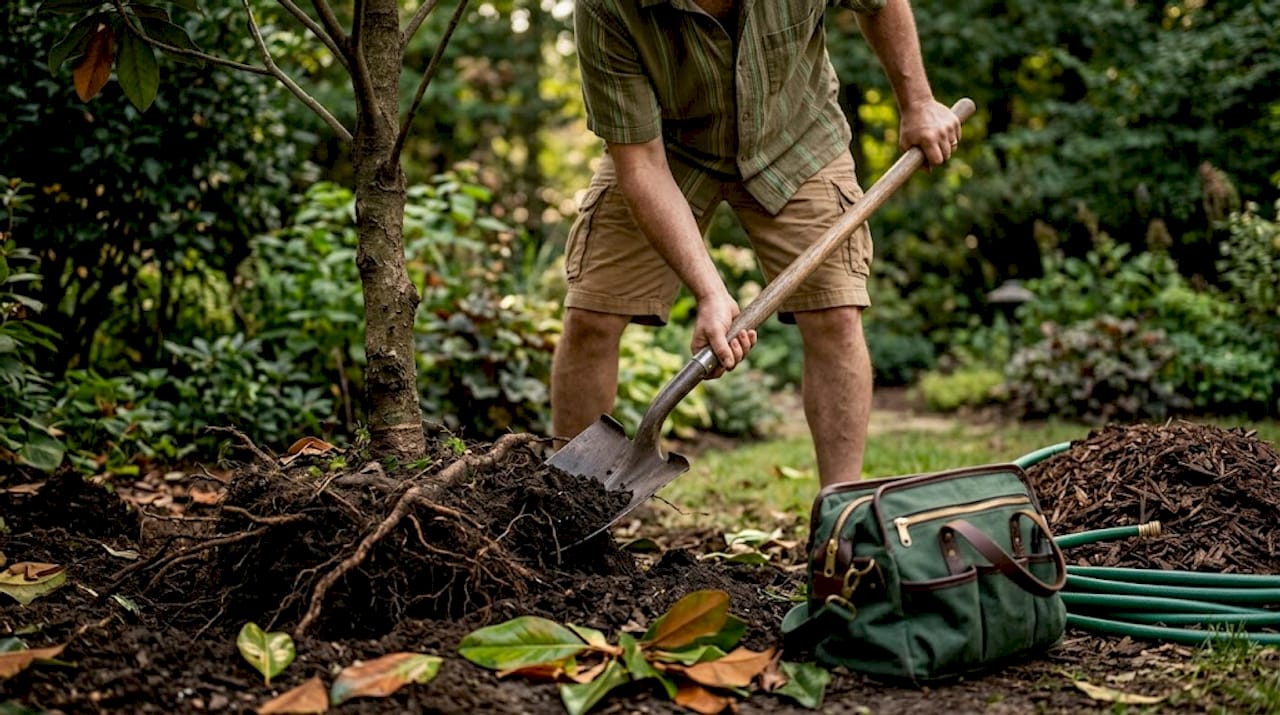
The most critical rule during digging is to go wide, not deep. You want to preserve as much of the root mass as possible, which means working outward from the tree rather than straight down. Always keep the root flare, the visible transition point where the trunk widens at the base, above grade and intact. Cutting through the root flare during digging is a common mistake that causes long-term decline.
For balled-and-burlapped trees, wrap the root ball tightly in burlap as soon as the tree is free from the ground. Secure it with twine or wire so the ball does not shift or crack during transport. Allowing roots to dry out can kill a tree within hours, so moving quickly from old hole to new hole is essential.
| Common mistake | Best practice |
|---|---|
| Digging straight down, cutting deep roots | Angle outward to undercut the root ball cleanly |
| Letting the root ball sit exposed for hours | Replant the same day, limit air exposure to minutes |
| Breaking the burlap wrap during transport | Secure with wire cage and handle the ball, not the trunk |
| Lifting the tree by the trunk | Always lift from underneath the root ball |
| Not watering the new hole before planting | Pre-soak the hole so roots contact moist soil immediately |
Minimizing time between digging and replanting is not just a suggestion. It is the difference between a tree that establishes and one that declines slowly over the next year. The root ball protection tips and handling techniques used by experienced crews on professional job sites reflect this urgency at every stage.
Pro Tip: Always prepare the new planting hole before you ever put a shovel in the ground near the tree’s current location. Having the hole ready means the tree goes directly from one location to the other with no waiting time. Professionals follow this rule on every job they do, and it is one of the simplest ways to improve outcomes.
You can see how these principles play out in real projects by reviewing safe tree removal best practices that apply the same handling care during large-scale tree work.
Replanting and aftercare: Setting up your tree for a new life
Once your tree is ready to move, proper replanting and ongoing care make the difference between a tree that thrives and one that slowly declines.
The new hole is where many well-meaning homeowners make a hidden mistake. They dig the hole too deep, bury the root flare, and create conditions for rot and long-term root stress. The planting hole should be 2 to 3 times the width of the root ball but no deeper than the root ball’s height. The root flare should sit at or slightly above the surrounding grade after the hole is backfilled.
Follow these steps immediately after placing the tree in its new location:
- Set the root flare correctly. Confirm the flare is visible at or just above grade before backfilling. Adjust the depth now, because correcting it later requires digging the tree again.
- Backfill with native soil. Use the soil you removed from the hole. Do not add amendments to the backfill, because research shows it can create a “soil interface” that discourages roots from spreading outward.
- Water deeply right away. Saturate the entire root zone immediately after planting. This removes air pockets and puts roots in contact with moist soil.
- Apply 3 to 4 inches of organic mulch. Spread mulch in a wide ring around the tree but keep it several inches away from the trunk to prevent rot. Mulch conserves moisture and moderates soil temperature, both critical during establishment.
- Stake only if necessary. Newly transplanted trees in exposed areas may need temporary staking for six to twelve months. Use flexible ties and remove stakes as soon as the tree shows stability.
- Schedule consistent follow-up watering. Deep, infrequent watering encourages roots to spread downward and outward. In Central Florida’s heat, this typically means watering two to three times per week for the first several months.
Aftercare over months and years is critical for root re-establishment and long-term survival. A tree that received a textbook-perfect move can still fail without disciplined watering and monitoring during its first two growing seasons.
Pro Tip: Most transplant failures happen in the aftercare phase, not during the move itself. A tree that looks fine after planting may not show stress symptoms until three to six months later, when you assume it is already established. Set a calendar reminder to check soil moisture, inspect leaves for wilting, and review mulch levels through the first full year.
Detailed guidance on watering and care after planting can help you build a consistent routine that gives your transplanted tree the best chance of establishing strong new roots.
DIY vs professional tree transplantation: What homeowners need to know
Understanding the full process makes one thing clear: tree transplantation is physically demanding, technically precise work. The question of whether to tackle it yourself comes down to tree size, location, and the tools you have available.
Iowa State Extension limits homeowners to trees with trunk diameters of 2 inches or less, directing anything larger to experienced professional contractors. That is a small tree. Most landscape trees that property owners want to move are well beyond that limit.
Here are clear signs that you need to call a professional:
- The trunk diameter exceeds 2 inches
- The tree is located near power lines, structures, or underground utilities
- You are transplanting during warm summer months when stress is highest
- The tree is showing any signs of disease, pest damage, or poor health before the move
- You do not have access to proper lifting and transport equipment
- The new location requires significant grading or soil work
- You want a meaningful survival guarantee backed by professional experience
Professional arborists bring more than muscle. They assess whether a tree is even a good candidate for transplanting before any work begins. They evaluate the new site for compatibility, plan root pruning schedules, and provide aftercare guidance that significantly raises survival odds. Explore professional arborist services to understand the full scope of what a qualified team brings to a tree move.
Pro Tip: A professional can assess not only the physical move but also the long-term compatibility of your chosen site. Choosing the wrong location is one of the leading causes of transplant failure, and an arborist catches those issues before you commit to the move. When choosing professional tree help, look for certified arborists who offer a site evaluation as part of their service.
What most property owners miss about tree transplantation
Here is something we see repeatedly in this business: homeowners do everything right on moving day and still lose the tree. They researched the process, hired good help, and watched the root ball get placed perfectly. Then they watered for three weeks, saw green leaves, assumed success, and stopped paying attention. The tree died by September.
The honest truth about tree transplantation is that the move itself is only about 30 percent of the outcome. The other 70 percent is everything that happens in the following 18 months. Trees do not immediately show transplant stress. They draw on stored energy to push out new leaves even when their roots are struggling to establish. By the time stress becomes visible, the window to intervene is often closing fast.
The second thing most property owners miss is site selection. A tree moved to a spot with compacted soil, poor drainage, or too much competition from nearby roots will decline even with excellent aftercare. We see this frequently with Florida’s sandy soils, where properties look well-drained on the surface but have hard, impermeable layers just 12 to 18 inches down. Roots hit that layer, circle back on themselves, and the tree stagnates or dies over several years.
The third overlooked truth is that patience and upfront investment almost always cost less than replacing a failed tree. A mature specimen tree can cost thousands of dollars. Losing it because the aftercare budget ran out or the site evaluation was skipped is an expensive lesson. The reasons why trees fail after transplanting are well documented, and most of them are entirely preventable with the right professional guidance from the start.
We believe every property owner in Central Florida deserves a realistic picture of what successful tree transplantation actually requires. It is not a weekend project for most trees. It is a months-long commitment that starts with planning and ends with consistent, attentive aftercare.
Get expert help for stress-free tree moves
Tree transplantation done right is one of the most rewarding investments you can make in your property’s long-term landscape. Done poorly, it is an expensive loss that leaves a gap in your yard and your budget.
At McCullough Tree Service, our certified arborist expertise covers every phase of the transplantation process, from root pruning plans to site evaluation and aftercare support across Orlando and Central Florida. You can browse our tree removal work to see the precision we bring to large-scale tree projects, and learn how we support care for new trees through every season. Contact us today for a professional assessment and take the guesswork out of your next tree move.
Frequently asked questions
How long does it take for a transplanted tree to recover?
Most trees take several months to establish initial roots, with true recovery and active growth resuming after one to two years of consistent aftercare for re-establishment.
What is the best season for tree transplantation in Central Florida?
Transplant trees during the dormant season, generally late fall through early spring, when biological timing improves survival and the tree is under less heat stress.
Can I move a large, mature tree on my own?
No. Trees over 2 inches in trunk diameter require professional equipment and expertise, making them unsuitable for DIY moves.
How do I select a new location for a transplanted tree?
Choose a spot with adequate sunlight, space for mature growth, and well-draining soil that matches the tree’s needs, since poor site conditions cause decline even after a successful move.
Is root pruning really necessary?
Yes. Root pruning months ahead promotes compact feeder root development closer to the trunk, which is directly linked to higher transplant survival rates.
Recommended
- Tree Removal – McCullough Tree Service
- Central Florida tree planting guide: steps for lasting results
- How to Trim Trees Safely for Healthier Growth
- Step by Step Tree Trimming for Healthy Growth