By: | Published: April 25, 2026
TL;DR:
- Improper planting depth is a leading cause of early tree failure, often unnoticed until damage occurs.
- Correct planting techniques, including proper root flare elevation and soil handling, significantly increase tree longevity and property value.
- Regional considerations like soil type and storm exposure demand tailored planting practices for Central Florida landscapes.
Somewhere between 20% and 50% of urban trees die within their first five years, and improper planting depth is one of the leading causes. That number should stop any homeowner or property manager in their tracks. Most people assume a tree either thrives or dies because of the weather, the species, or sheer luck. The truth is far less glamorous: the way a tree goes into the ground on day one shapes everything that follows. This guide walks you through the science, the step-by-step process, and the local factors that matter most for Central Florida landscapes.
Table of Contents
- The hidden risks of improper tree planting
- Why proper technique matters: health, sustainability, and value
- Step-by-step: how to plant trees the right way in Central Florida
- Exceptions, nuances, and local factors to consider
- A fresh perspective: what most people miss about tree planting
- Get expert help for tree planting and care
- Frequently asked questions
Key Takeaways
| Point | Details |
|---|---|
| Root flare matters | Planting with the root flare exposed prevents most long-term tree health problems. |
| Proper depth boosts survival | Getting planting depth right can cut tree mortality in half and foster healthy growth for decades. |
| Sustainability is practical | Correct technique saves water, reduces maintenance, and adds value to your property. |
| Central Florida has unique needs | Local climate, storms, and soils require adjustments from generic tree planting guides. |
The hidden risks of improper tree planting
Let’s dig into what really goes wrong beneath the soil when trees aren’t planted correctly.
The most damaging mistakes in tree planting are invisible. You can’t see them from the sidewalk, and you won’t notice them for months or even years. By the time symptoms show up above ground, the damage is already deeply rooted (quite literally) in the soil.
Here are the most common planting errors that lead to long-term failure:
- Planting too deep: Burying the root flare under several inches of soil is the single most destructive mistake.
- Covering the root flare: The root flare is the widened base where the trunk meets the roots. When it’s buried, the tree essentially drowns slowly.
- Tightly packed soil around roots: Roots need oxygen to grow. Compacted backfill cuts off that oxygen supply.
- Circling roots left intact: Roots that circle the root ball in a container will continue to circle after planting, eventually girdling (strangling) the trunk.
- Volcano mulching: Piling mulch against the trunk traps moisture and promotes rot right at the base of the tree.
The long-term effects of these errors aren’t just cosmetic. Root rot, girdling roots, poor oxygen exchange, and stunted growth are all direct results of incorrect planting. A tree buried too deeply struggles to move water and nutrients upward through its vascular system. It spends years fighting to survive rather than growing, and it becomes structurally unstable in the process.
“A tree planted wrong doesn’t just grow slowly, it grows toward failure. The clock starts ticking the moment the root flare goes underground.”
Research backs this up clearly. Studies show that deep planting causes 30% or more long-term mortality in certain species, even when every other care factor is handled correctly. That’s not a small margin. That’s nearly one in three trees condemned before they’re given a real chance.
The consequences extend far beyond the tree itself. A failing tree becomes a property liability. Weak root systems and rotting trunks are more likely to topple during storms, which in Central Florida means real and recurring danger. You can learn more about Central Florida tree failure rates and why local conditions amplify these risks in specific ways.
Beyond safety, there’s the financial side. Removing a failed tree, grinding the stump, and replanting costs far more than doing it right the first time. Property values take a hit when mature trees die prematurely. Ecosystem benefits like shade, stormwater absorption, and habitat disappear with them.
Why proper technique matters: health, sustainability, and value
Understanding the problems is just the start. Here’s why your approach makes all the difference for your landscape.
When a tree is planted correctly, everything changes. It grows faster, lives longer, costs less to maintain, and contributes more to the property around it. The benefits aren’t abstract. They show up in your water bill, your insurance risk, your property appraisal, and the air temperature on your patio in August.
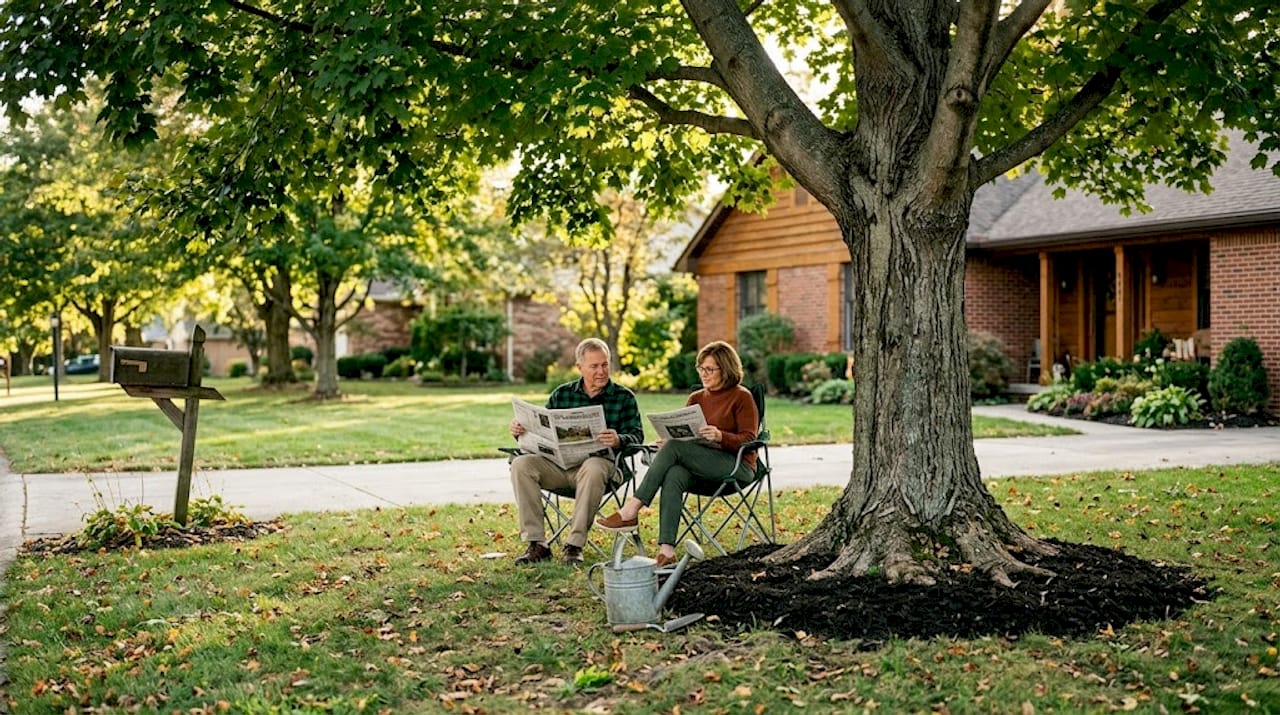
Research from the University of Florida confirms that proper planting boosts tree longevity, storm resilience, and overall sustainability for Central Florida landscapes. Specifically, well-planted trees require less supplemental irrigation once established, tolerate wind loading better during hurricane season, and provide measurable cooling benefits through canopy shade.
Here’s a breakdown of how correct planting technique compares to careless planting across several key outcomes:
| Outcome | Correctly planted tree | Incorrectly planted tree |
|---|---|---|
| First-year survival | High, with routine watering | Low to moderate, unpredictable |
| Storm resistance | Strong root anchoring | Shallow or circling roots fail |
| Water needs after establishment | Reduced, soil-efficient | Elevated due to stressed roots |
| Long-term maintenance | Minimal | Frequent intervention needed |
| Property value impact | Positive, measurable | Neutral to negative |
| Risk of becoming a liability | Low | Elevated significantly |
The connection between property value and tree health is real and well-documented. Mature, healthy trees increase curb appeal, provide energy savings through shading, and signal a well-maintained property to buyers and appraisers alike. But they only deliver those benefits when they’re planted and maintained correctly from the start.
Pro Tip: Don’t think of proper planting as a one-time task. The decisions you make during planting set the trajectory for the tree’s entire lifespan. A small investment in technique now eliminates expensive corrections later.
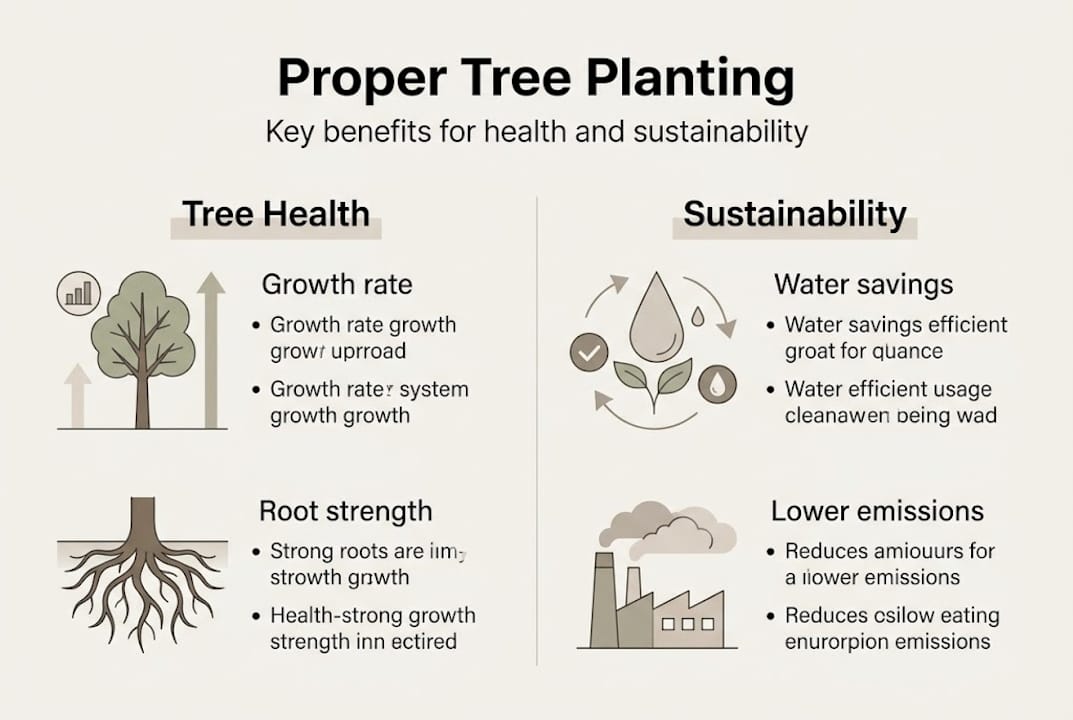
A correctly planted tree also contributes to sustainable landscaping in ways that go well beyond aesthetics. It absorbs more carbon, filters more air, and intercepts more rainwater runoff than a stressed or struggling tree. For property managers overseeing multiple trees across a commercial site, these benefits for Central Florida landscapes add up quickly in both environmental and financial terms.
Step-by-step: how to plant trees the right way in Central Florida
Now, let’s break down exactly how to get tree planting right in Central Florida.
The process is straightforward when you know what to prioritize. Every step below is grounded in research and adapted specifically for Central Florida’s sandy soils, humid climate, and storm exposure.
-
Choose the right species for the site. Before digging anything, confirm the tree is appropriate for the location’s light, soil drainage, and available space. A poor species match creates problems no technique can fix.
-
Dig a wide, saucer-shaped hole. The hole should be three times the width of the root ball but no deeper than the root ball itself. The wide, shallow shape encourages roots to spread outward into looser soil rather than circling downward.
-
Set the root flare at or just above grade. The root flare should sit 1 to 2 inches above the surrounding soil level. This accounts for slight settling and ensures the critical trunk-root junction stays exposed and well-oxygenated. Never bury it.
-
Address soil drainage before backfilling. Central Florida’s soils range from sandy and fast-draining to poorly drained flatwoods soils. For compacted or poorly draining sites, mound the soil slightly and plant the tree higher. This technique, called mounding, keeps roots from sitting in standing water after rain.
-
Unwind or score circling roots. If the tree came from a container, check the root ball for roots that have begun to circle. Straighten them gently or score the outside of the root ball with a clean cut to encourage outward growth. Leaving them to circle will cause girdling within years.
-
Backfill with the original soil. Skip the potting soil or heavy amendments in the backfill. The goal is for roots to transition smoothly into the native soil. Amending only the hole creates a soil interface that roots resist crossing.
-
Mulch correctly, keeping it away from the trunk. Apply 2 to 3 inches of organic mulch in a ring around the tree, extending to the drip line if possible. Keep mulch 4 to 6 inches away from the trunk. This is where volcano mulching fails: piling mulch against the bark holds moisture and invites rot and pest damage.
-
Water deeply and consistently during the first year. In sandy Central Florida soils, first-year watering two to three times per week effectively doubles survival odds. Deep watering encourages roots to follow moisture downward rather than staying shallow.
Pro Tip: Use a soil moisture meter during the first few months. Sandy soils drain fast, and what feels damp at the surface can be bone dry just a few inches down where the roots actually are.
For additional guidance tailored to this region, our Central Florida tree planting guide covers site selection, species recommendations, and timing in detail. You can also review our planting considerations page for specific soil and drainage scenarios. If you want a single reference that covers everything from selection to establishment, our lasting results guide is the place to start.
Exceptions, nuances, and local factors to consider
Of course, some situations call for tweaks or a second look. Let’s explore exceptions and important local factors.
Tree planting has firm best practices, but it also has real-world exceptions. Not every site, species, or situation fits the same template, and knowing when to adjust is part of doing the job well.
Some key factors that may require adjusting your approach include:
- Riparian species near water: Trees like baldcypress and green ash evolved in flood-prone environments. Research from the University of Florida extension shows that deep planting has limited effect or even aids establishment in these riparian species. That said, it’s still not a recommended default practice outside those specific conditions.
- Poorly drained flatwoods soils: Much of Central Florida sits on soils that look well-drained on the surface but hold water at depth after heavy rain. Mounding is often the right adjustment here rather than digging deeper.
- HOA and permitting requirements: Many communities and municipalities in Central Florida regulate tree species, placement, and removal. Always check HOA covenants and local permitting rules before planting, especially for large canopy trees near property lines or utility easements.
- Storm risk assessment: Before selecting a planting location, consider the tree’s mature size and proximity to structures, power lines, and drainage areas. A well-planted tree in the wrong location is still a future liability.
Here’s a quick comparison of standard planting recommendations versus exception cases:
| Factor | Standard practice | Exception case |
|---|---|---|
| Planting depth | Root flare 1-2 in. above grade | Riparian species in flood zones may tolerate slightly deeper |
| Soil amendment | No backfill amendments | High-organic sites may need minor adjustment |
| Mounding | Flat grade on well-drained sites | Required on poorly drained or compacted soils |
| Species selection | Drought-tolerant natives preferred | Wetland species for low-lying or riparian areas |
| Mulching zone | Keep clear 4-6 in. from trunk | Same rule applies universally, no exceptions |
Developers and contractors dealing with multiple trees across larger sites face additional complexity. Our survival tips for developers page addresses large-scale planting considerations, sequencing, and common mistakes at the project level. For anyone managing trees heading into hurricane season, our storm-ready practices resource is essential reading.
A fresh perspective: what most people miss about tree planting
Stepping back, there’s a lesson many learn the hard way. Here’s our take.
Most people agonize over which tree to plant and barely think about how it goes in the ground. We’ve seen it happen repeatedly across Central Florida properties. A homeowner does real research on species, spends good money on a quality specimen from a reputable nursery, and then has it planted four inches too deep by whoever showed up with a shovel. Two years later, the tree looks stressed. Three years later, it’s declining. The blame goes to drought, pests, or bad luck.
But the truth is, technique matters more than species selection in determining long-term success. A modest, well-suited native tree planted correctly will outlast a premium specimen buried to the wrong depth every single time. The failures we see most often aren’t from storms or disease. They start at planting and unfold slowly from there.
Central Florida’s climate doesn’t leave much margin for error. The combination of sandy soils, intense summer rain, and storm season stress means that structurally compromised trees fail faster and more dramatically than they would in more forgiving climates. Quick-fix approaches like volcano mulching or cutting corners on root flare exposure nearly always backfire here within a few years.
If there’s one thing we’d want every homeowner and property manager to take away, it’s this: invest your attention in the details of the planting process. Follow the step-by-step guide, take your time with root preparation, and never rush setting the depth. Those extra twenty minutes on planting day can add decades to a tree’s life.
Get expert help for tree planting and care
Knowing the right technique is one thing. Executing it on a challenging site, with the right tools, in Central Florida’s heat, is another matter entirely.
At McCullough Tree Service, our certified arborists bring the expertise and local knowledge needed to plant trees that genuinely thrive. We understand the soil conditions, drainage patterns, and storm exposure factors specific to this region, and we apply that knowledge to every planting project. When trees do need maintenance or removal, our professional tree trimming and tree removal services ensure your landscape stays healthy and safe year-round. Reach out today for an estimate and let us help you build a landscape that lasts.
Frequently asked questions
What is the most common mistake in tree planting?
Planting too deeply and covering the root flare is the most common and damaging mistake, and exposing the root flare at or slightly above grade is essential to prevent root rot, girdling, and early tree death.
How does proper tree planting promote sustainability?
Correctly planted trees need less water, grow stronger, and live longer. Research confirms that proper planting boosts longevity and storm resilience while reducing ongoing maintenance and water needs.
Are there any tree species where deep planting is acceptable?
Some riparian species like baldcypress and green ash tolerate deeper planting, but deep planting in these species is still not considered best practice except under specific wetland conditions.
What is the best watering schedule for newly planted trees in Central Florida?
Water two to three times per week during the first year. In sandy soils, consistent first-year watering effectively doubles survival odds compared to infrequent or shallow watering.
How does tree planting affect property value?
Healthy, properly planted trees increase curb appeal and reduce long-term maintenance costs. Research shows that sustainable planting practices directly support higher property values through improved tree health, shade, and reduced maintenance burden.
Recommended
- Tree planting: boost property value in Central Florida
- Costs and Benefits of Planting Trees
- Tree Pruning Importance: Key Benefits Explained
- Tree planting for Central Florida landscapes: 50% fail